 1 citations
,
January 2017 in “Evolutionary studies”
1 citations
,
January 2017 in “Evolutionary studies” This chapter discusses genetic polymorphisms related to phenotypes that differentiate between populations and reports no new results; it highlights the role of DNA technology in understanding human adaptation history.
 1 citations
,
July 2016 in “Elsevier eBooks”
1 citations
,
July 2016 in “Elsevier eBooks” Understanding skin structure and development helps diagnose and treat skin disorders.
 1 citations
,
September 2010 in “The journal of investigative dermatology/Journal of investigative dermatology”
1 citations
,
September 2010 in “The journal of investigative dermatology/Journal of investigative dermatology” This article reviews a variety of research presentations from the Society for Investigative Dermatology's annual meeting, highlighting advances in dermatological research without reporting new clinical results.
 March 2026 in “Frontiers in Immunology”
 This review discusses the multifaceted roles of regulatory T cells in cutaneous wound healing and highlights potential therapeutic strategies targeting these cells to enhance wound repair in chronic and diabetic wounds, but reports no new clinical results.
 February 2026 in “Clinical Cosmetic and Investigational Dermatology”
 This study highlights how combining genetic and environmental risk assessments could advance early screening and personalized prevention for vitiligo, given its genetic complexity and environmental interactions.
 January 2026 in “International Journal of Dermatology Venereology and Leprosy Sciences”
 This study suggests that metformin's ability to enhance insulin sensitivity may improve acanthosis nigricans by addressing the underlying insulin resistance.
 November 2025 in “Frontiers in Immunology”
 This review integrates studies on mouse models and human clinical observations to highlight the role of immune cells in skin development and how their dysregulation leads to skin disorders, suggesting potential therapeutic pathways for skin regeneration.
 November 2025 in “Frontiers in Medicine”
 In this prospective cohort, baseline severity, disease activity, and relapse history were identified as key factors influencing response and recurrence in alopecia areata, suggesting that implementing standardized assessments could enhance risk stratification and personalized care approaches.
 October 2025 in “Turkish Journal of Biochemistry”
 This study found that patients with tropical chronic pancreatitis exhibited significantly reduced plasma amino acid levels and antioxidant capacity, with folate deficiency identified as a key factor in hyperhomocysteinemia.
 August 2025 in “Cermin Dunia Kedokteran”
 This article discusses Human Metapneumovirus (HMPV) and highlights the need for continued research, noting that while supportive treatments exist, no vaccines or specific therapies are currently available.
This study examined the molecular communication in psoriasis cells, highlighting unique immune cell interactions and identifying new features of the hair follicle cell-psoriasis axis. It suggests the potential for targeted therapies at the single-cell level to improve psoriasis treatment.
 December 2023 in “bioRxiv (Cold Spring Harbor Laboratory)”
 This research examined the transcriptional landscape of quiescent melanocyte stem cells (qMcSCs) in adult female mice, revealing significant heterogeneity within this cell population and identifying novel subpopulations that vary in immune privilege regulation, melanocyte differentiation potential, and neural crest potential.
 December 2023 in “Frontiers in endocrinology”
 This review explores the role of hyperandrogenism, including adrenal-derived 11-oxygenated androgen, in the development of polycystic ovarian syndrome and discusses potential therapeutic strategies targeting androgen excess, without reporting new clinical results.
 October 2023 in “Frontiers in endocrinology”
 This review investigates molecular mechanisms behind PCOS pathogenesis and discusses potential therapies, but reports no new clinical results.
 June 2023 in “Research Square (Research Square)”
 This study identified shared gene expression changes and immune cell infiltration patterns that may contribute to hair loss in alopecia areata and cutaneous lupus erythematosus, but also highlighted factors that might preserve hair in psoriasis patients.
 November 2021 in “Research, Society and Development”
 This review covers different treatment options for alopecia areata and androgenetic alopecia and emphasizes individualized treatment plans, combining pharmacological therapy with psychological support; no new clinical results are reported.
 May 2018 in “White Rose eTheses Online (University of Leeds, The University of Sheffield, University of York)”
 In this study, researchers found that alopecia areata patients show a significant reduction in suppressive regulatory T-cells and an increase in inflammatory T-cell populations, suggesting an immunological imbalance contributing to the disease.
 September 2015 in “University of Southern Denmark Research Portal (University of Southern Denmark)”
 This guideline provides a concise evidence-based overview of various aspects of polycystic ovary syndrome, including diagnosis and follow-up of secondary effects, but reports no new clinical results.
This study utilized a pigmented human epidermal equivalent model to incorporate melanocytes into the epidermis and found enhanced differentiation potential compared to conventional in vitro systems, reflecting in vivo cellular trajectories and highlighting melanocyte-to-keratinocyte communication pathways.
 June 2026 in “Frontiers in Oncology”
 In this study, researchers found that deficiencies in Gsdma1/2/3 significantly inhibited the initiation and progression of cutaneous squamous cell carcinoma (cSCC) in mice, suggesting GSDMA's role in promoting cSCC proliferation and its potential as a therapeutic target.
 June 2026 in “Frontiers in Immunology”
 This review synthesizes both traditional and emerging molecular mechanisms of tissue remodeling across different organs, aiming to establish a theoretical basis for precision interventions in pathological conditions, according to the authors.
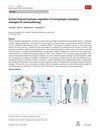
This review highlights that surface mechanical regulation can program macrophage behavior through specific mechanical cues on material surfaces, potentially advancing immunotherapies and regenerative medicine by enabling precise control over macrophage functions.
 April 2026 in “Inflammopharmacology”
 This study found that Punica granatum ethanolic leaf extract may alleviate skin fibrosis in rats by modulating inflammation-related pathways and reducing dermal alterations.
 April 2026 in “Nature Communications”
 This study found that dedifferentiated corneal epithelial cells can revert to a stem-cell-like state, aiding tissue homeostasis and repair, with this plasticity limited to the epithelial lineage and enhanced by niche-derived cytokines.
 April 2026 in “Experimental & Molecular Medicine”
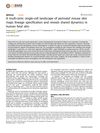
 This study used integrated single-cell chromatin and transcriptomic analyses in developing mouse skin to uncover gene networks involved in skin lineage specification and identified Mef2c+ upper fibroblasts as potential precursors to certain muscle-like structures, with cross-species findings in human skin.
 April 2026 in “npj Regenerative Medicine”
 This review discusses the processes of melanocyte stem cell quiescence and activation, focusing on their interaction with hair follicle stem cells, and highlights current research on hair graying mechanisms; it reports no new results.
 March 2026 in “Egyptian Journal of Forensic Sciences”
 This review critically examines Forensic DNA Phenotyping, highlighting high accuracy in predicting certain traits but also legal and ethical challenges, particularly around regulatory fragmentation and issues of genetic privacy.
In this clinical trial, patients with lichen planopilaris treated with the oral TYK2 inhibitor deucravacitinib showed significant improvement in PGA, LPPAI, and Skindex-16 scores over 24 weeks, with transcriptomic analyses indicating decreased inflammatory and immune pathway activity post-treatment.
 March 2026 in “American Journal of Clinical Dermatology”
 This narrative review highlights important religious and cultural factors influencing dermatologic care for Muslim patients and proposes culturally sensitive strategies to improve patient-centered care, emphasizing respect for privacy, dignity, and spiritual values.
 January 2026 in “Frontiers in Pharmacology”
 This review highlights the potential of wedelolactone from the plant Wedelia Chinensis, summarizing its reported pharmacological effects, including anti-inflammatory, antiviral, antibacterial, antitumor, anti-osteoporosis activities, and organ protection based on existing in vitro and in vivo research findings.