 February 2023 in “Acta Scientific Women s Health”
 This review examines emerging and past therapies for recurrent implantation failure, focusing on three innovative strategies: PBMC, G-CSF, and PRP, but reports no new clinical results.
March 2026 in “Anais Brasileiros de Dermatologia” Lichen planopilaris and frontal fibrosing alopecia are likely distinct diseases with different tissue involvement.
February 2024 in “bioRxiv (Cold Spring Harbor Laboratory)” This study found that Pik3r1 Y657* mice, which model human SHORT syndrome, show increased energy expenditure despite insulin resistance, but this is not due to changes in locomotion, thermoregulation, or Ucp1-dependent thermogenesis, suggesting a different metabolic mechanism may protect against lipotoxicity.
 July 2018 in “Plastic and Aesthetic Nursing”
 This research abstract provides information about the publisher, Wolters Kluwer Health, and the journal's subscription services, but it doesn’t describe a specific study or research findings. Results are not reported.
 June 2026 in “IP Indian Journal of Clinical and Experimental Dermatology”
 This bibliometric analysis of the IP Indian Journal of Clinical and Experimental Dermatology reveals a steady annual publication growth rate of 5.49% from 2019 to 2025, moderate citation impact, and limited international collaboration.
220 citations
,
June 2013 in “The Journal of Pathology” This study found that immune privilege collapse in the hair follicle bulge and associated immune responses may contribute significantly to the pathogenesis of lichen planopilaris, suggesting a potential autoimmune basis for the disease.
20 citations
,
October 1995 in “PubMed” This study identified CYP3A4 as a key isozyme involved in the oxidative metabolism of finasteride in human liver microsomes.
 37 citations
,
October 2015 in “Anais Brasileiros de Dermatologia”
37 citations
,
October 2015 in “Anais Brasileiros de Dermatologia” This study found diverse clinical presentations of lichen planopilaris, with classic lichen planopilaris being the most common, highlighting the importance of recognizing this variability for accurate diagnosis.
December 2004 in “Annales d Urologie” This article examines the PCPT study on whether daily finasteride can reduce prostate cancer incidence, describing its methodology and findings but reporting no new clinical results.
April 2020 in “The FASEB journal” In in-vitro experiments, this study found that poncirin showed higher inhibitory activity against JAK3 than tofacitinib, suggesting potential for alopecia areata treatment.
 5 citations
,
January 2021 in “IEEE Access”
5 citations
,
January 2021 in “IEEE Access” In this study, researchers demonstrated that treating platelet rich plasma with microsecond pulsed electric fields effectively activates platelets and induces similar or higher growth factor release compared to traditional bovine thrombin, suggesting a potential clinical use that may be more cost-effective and practical.
 12 citations
,
June 2020 in “Journal of The American Academy of Dermatology”
12 citations
,
June 2020 in “Journal of The American Academy of Dermatology” This article discusses platelet-rich plasma therapy for cicatricial alopecias like lichen planopilaris and reports no confirmed new clinical results; the authors highlight ongoing uncertainty about its effectiveness and potential risks.
9 citations
,
January 2021 in “Mediators of Inflammation” In this study, 15d-PGJ2 administered in a topical cream inhibited oxidative and inflammatory skin changes caused by UVB radiation in hairless mice, suggesting it as a promising treatment approach.
 April 2019 in “Journal of Investigative Dermatology”
 This study observed that people with autoimmune blistering skin disorders report higher food intolerance rates, particularly avoiding alcohol, citrus, and spicy foods, and suggests potential dietary influences on symptom management.
This study found that PRL-1-overexpressing PD-MSCs reduced adipogenesis in orbital fibroblasts from Graves' ophthalmopathy patients by secreting IGFBPs and modulating the FAK pathway.
 January 2023 in “Skin appendage disorders”
 This case report describes a patient who experienced proton-induced alopecia after proton therapy for a frontal meningioma, which was effectively treated with topical minoxidil, resulting in full hair regrowth after 4 months.
1 citations
,
February 2025 in “International Journal of Dermatology” This case report by the researchers observed a complete remission of lichen planopilaris in a 58-year-old woman after treatment with the JAK-1 inhibitor abrocitinib, although they noted that concurrent topical therapy might have contributed to this outcome.
38 citations
,
April 2018 in “Diseases” This study observed that fibrin rich in leukocytes and platelets (L-PRF) might effectively heal diabetic foot ulcers with osteomyelitis, showing positive preliminary results in all three patients treated.
 April 2026 in “Human Genome Variation”
 In this study, researchers identified a recurrent MBTPS2 splice-site variant as a mutational hotspot in IFAP syndrome across diverse families, with phenotype severity suggesting the influence of additional modifiers.
October 2025 in “Clinical and Experimental Dermatology” Among patients with biopsy-proven FAPD in specialized hair clinics, this study found the condition is common in females around 52.5 years old, with treatment generally stabilizing or slightly improving hair loss, despite challenges in differentiating FAPD from androgenetic alopecia.
22 citations
,
April 2013 in “International Journal of Dermatology” Frontal fibrosing alopecia can occur with lichen planus pigmentosus, needing careful diagnosis and treatment.
 11 citations
,
April 2020 in “Journal of The American Academy of Dermatology”
11 citations
,
April 2020 in “Journal of The American Academy of Dermatology” This commentary reviews the evidence for microinflammation's role in pattern hair loss and suggests that further studies with age- and sex-matched controls are needed to substantiate the findings.
2 citations
,
June 2018 in “International Journal of Pharmacological Research” This article reviews treatments for progeria, including aspirin, hydrotherapy, and farnesyl transferase inhibitors, but reports no new clinical results.
 February 2026 in “Cosmetics”
 This review examines the clinicopathologic features of perifollicular elastolysis and indicates that, while its presentation is consistent, there is a lack of high-certainty evidence for effective treatments.
 February 2023 in “Research Square (Research Square)”
 This study reports that a new mouse model with a CARD14 mutation successfully mimics key human PRP symptoms, and anti-IL-17A antibody significantly reduces these symptoms.
 1 citations
,
October 2023 in “Clinical, cosmetic and investigational dermatology”
1 citations
,
October 2023 in “Clinical, cosmetic and investigational dermatology” In this report, a 35-year-old female with palmoplantar pustulosis undergoing secukinumab treatment developed alopecia areata, a rare side effect attributed to paradoxical reactions with IL-17 inhibitors; switching to tofacitinib improved both conditions.

The researchers reported a case where treatment with tofacitinib improved both hair loss and skin lesions in a patient with Graham-Little-Piccardi-Lassueur Syndrome and hidradenitis suppurativa over six months, with no recurrence or adverse events during two-year follow-up.
 6 citations
,
October 2012 in “Journal of Heredity”
6 citations
,
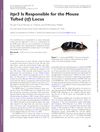
October 2012 in “Journal of Heredity” This study identified the Itpr3 gene as responsible for the tufted hair loss phenotype in the BTBR mouse strain.
December 2020 in “The journal of investigative dermatology/Journal of investigative dermatology” This study suggests that IL-1β may play a role in inflammatory signaling pathways in papulopustular rosacea, contributing to its pathogenesis.
 1 citations
,
May 2021 in “Annals of the rheumatic diseases”
1 citations
,
May 2021 in “Annals of the rheumatic diseases” This study found that tofacitinib may be effective for treating pediatric rheumatic diseases, with especially promising results in patients with autoinflammatory diseases, arthritis and alopecia, and juvenile dermatomyositis.