1 citations
,
June 2022 in “Pharmaceutics” This study found that paracellular transport significantly contributes to the intestinal permeability of minoxidil, suggesting its limited suitability as a Biopharmaceutics Classification System reference drug due to potential variability.
 55 citations
,
September 2017 in “Expert Opinion on Drug Discovery”
55 citations
,
September 2017 in “Expert Opinion on Drug Discovery” This review examines the main absorption sites and influencing factors for orally administered drugs, highlighting variables such as solubility and gastrointestinal conditions that affect drug absorption in the small intestine and the development of effective drug delivery systems.
 14 citations
,
February 2011 in “Drug Metabolism and Disposition”
14 citations
,
February 2011 in “Drug Metabolism and Disposition” This study examined the pharmacokinetics of finasteride in pigs and found that ketoconazole coadministration affected its distribution across various plasma compartments, bile, and urine.
January 2022 in “Carolina Digital Repository (University of North Carolina at Chapel Hill)” April 2010 in “The FASEB Journal” This study found that knockout mice lacking intestinal hephaestin are smaller and anemic compared to wild-type, suggesting other mechanisms may compensate for iron absorption.
 82 citations
,
April 1981 in “Clinical endocrinology”
82 citations
,
April 1981 in “Clinical endocrinology” This study describes a case of vitamin D resistant rickets in a young girl due to end organ unresponsiveness, highlighting a possible new subtype of the disorder with distinct clinical features.
 14 citations
,
August 2016 in “Journal of nanomedicine research”
14 citations
,
August 2016 in “Journal of nanomedicine research” This animal study found that biscuits fortified with zinc oxide nanoparticles improved growth, appetite, and hair growth in zinc-deficient rats more effectively than traditional zinc forms, without apparent toxicity.
2 citations
,
March 2013 in “BMJ Case Reports” In this case study, zinc deficiency persisted despite supplementation in a patient with severe malnutrition and empyema, potentially due to nutrient absorption competition and proton pump inhibitor use.
3 citations
,
July 1992 in “Clinics in Dermatology” This article reviews the role of vitamin D and its metabolites in regulating calcium homeostasis and highlights their effects on the intestine, kidney, bone, and parathyroid gland, without reporting new clinical results.
115 citations
,
December 1996 in “PubMed” This study observed that the intestinal absorption of selenium varies depending on its chemical form, with selenomethionine being absorbed efficiently and selenium as selenodiglutathione or selenodicysteine being absorbed faster than selenite.
October 2014 in “Transfusion Clinique et Biologique” This review discusses symptoms and syndromes associated with iron deficiency, with or without anemia, but reports no new clinical findings; the authors highlight the potential influence of intestinal factors on iron absorption.
 1 citations
,
December 2022 in “Pharmaceuticals”
1 citations
,
December 2022 in “Pharmaceuticals” This study found that a sub-fraction of Noni fruit, FEA-3, showed hair growth-promoting effects in a rabbit model of androgenic alopecia, similar to Minoxidil.
18 citations
,
January 1977 in “Annals of Nutrition and Metabolism” This article reviews inherited mineral and trace element disturbances and reports no clinical results; it highlights conditions like hypomagnesaemia and acrodermatitis enteropathica linked to impaired nutrient absorption.
9 citations
,
October 1946 in “Experimental biology and medicine” This study reported that supplementation with inositol, biotin, cystine, or methionine prevented hair loss in rats fed soybean oil meal, with cystine and methionine also significantly increasing growth rates.
January 2000 in “The Journal of Trace Elements in Experimental Medicine” In this case report, an 11-year-old girl with acrodermatitis enteropathica experienced a complete resolution of symptoms following oral zinc therapy, highlighting its effectiveness in managing this condition.
 9 citations
,
October 2012 in “PubMed”
9 citations
,
October 2012 in “PubMed” This study observed that telogen effluvium was the most common pattern of diffuse hair loss among 100 female patients, often associated with factors like stress and fever.
March 1993 in “Neuroscience letters” This summary outlines the essential roles and recommended daily intakes of biotin, while discussing consequences and mechanisms of deficiency, but presents no new research findings.
February 1994 in “Neuroscience letters” This review provides an overview of biotin's role in metabolism and the consequences of deficiency but reports no new clinical findings; it highlights that intestinal bacteria usually meet biotin needs.
January 2019 in “Columbia Academic Commons (Columbia University)” This study used cryo-electron microscopy to reveal the structural mechanisms by which TRPV6 and TRPV3 ion channels open, close, and are regulated, providing insights for potential future research.
 53 citations
,
October 1978 in “Archives of dermatology”
53 citations
,
October 1978 in “Archives of dermatology” This study reports two cases of acquired zinc deficiency presenting with skin symptoms such as hair loss and acrodermatitis, suggesting these manifestations may help in diagnosing zinc deficiency in humans.
 May 2024 in “Our Dermatology Online”
 In this case report, a mother and daughter with celiac disease experienced hair loss as their primary or initial extraintestinal symptom, highlighting the potential link between celiac disease and alopecia.
 184 citations
,
August 1983 in “The journal of pediatrics/The Journal of pediatrics”
184 citations
,
August 1983 in “The journal of pediatrics/The Journal of pediatrics” In this study, biotinidase deficiency in children usually presented with neurological or skin symptoms, while metabolic ketoacidosis and organic aciduria appeared later.
 2 citations
,
November 2022 in “Bioscience Reports”
2 citations
,
November 2022 in “Bioscience Reports” This review explores the similarities between polycystic ovary syndrome and hemochromatosis in terms of iron overload and suggests that addressing gut dysbiosis might help manage iron levels in these conditions.
June 1998 in “Pathophysiology” This summary offers an overview of selenium's forms, its biological roles, and dietary sources, but reports no specific research findings.
1 citations
,
June 2018 in “Ukrainian Journal of Dermatology Venerology Cosmetology” Oral collagen improves skin, nails, hair, and reduces cellulite.
107 citations
,
March 2014 in “BoneKEy Reports” This abstract reviews hereditary vitamin D-resistant rickets, a rare genetic condition causing severe early childhood rickets, and reports no new results; effective treatment typically requires high doses of calcium to address hypocalcemia and secondary hyperparathyroidism.
September 1989 in “Neuroscience letters” This review discusses the role of biotin in metabolism and its dietary requirements, but provides no new experimental findings.
 82 citations
,
August 2017 in “Cell Reports”
82 citations
,
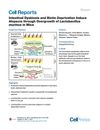
August 2017 in “Cell Reports” This study found that antibiotic-induced gut dysbiosis, particularly overgrowth of Lactobacillus murinus, can lead to hair loss in mice by depleting biotin.
 November 2020 in “Journal of Pharmaceutical Sciences”
 This study suggests a decision tree using in vitro metabolic clearance to identify early drug candidates likely to experience nonlinear pharmacokinetics due to intestinal CYP3A-related metabolism.
 22 citations
,
January 1968 in “THE JOURNAL OF VITAMINOLOGY”
22 citations
,
January 1968 in “THE JOURNAL OF VITAMINOLOGY” This study found that α-tocopheryl acetate is well absorbed through healthy skin, with absorption occurring through specific pathways and showing high affinity for small blood vessels.