 13 citations
,
January 2015 in “Molecular Pharmaceutics”
13 citations
,
January 2015 in “Molecular Pharmaceutics” This study suggests that minoxidil may serve as a suitable reference drug for high permeability classification in the Biopharmaceutics Classification System due to its consistent permeability across different intestinal segments and pH levels.
 156 citations
,
August 2016 in “Journal of controlled release”
156 citations
,
August 2016 in “Journal of controlled release” This review summarizes current knowledge on tight junctions in mammalian skin and their role in drug delivery and interaction with other barrier components, but reports no new experimental results.
 282 citations
,
April 2007 in “Journal of Agricultural and Food Chemistry”
282 citations
,
April 2007 in “Journal of Agricultural and Food Chemistry” This study found that apple polyphenol extract, particularly oligomeric procyanidins, inhibited pancreatic lipase activity and reduced triglyceride absorption in both mice and humans.
 22 citations
,
June 2005 in “Clinical Oncology”
22 citations
,
June 2005 in “Clinical Oncology” This case report documents an instance of symptomatic hypothyroidism developing in a patient with papillary thyroid carcinoma after beginning treatment with orlistat.
 8 citations
,
January 2008 in “European Journal of Pediatrics”
8 citations
,
January 2008 in “European Journal of Pediatrics” This report describes two prepubertal children with autoimmune gastritis, highlighting the need to screen paediatric patients with organ-specific autoimmune diseases for co-existing conditions.
 5 citations
,
January 2024 in “American Journal of Translational Research”
5 citations
,
January 2024 in “American Journal of Translational Research” This research highlighted that the gut microbiota may influence ovarian health, suggesting it could be used as a biomarker for early diagnosis and treatment of diseases like PCOS, ovarian insufficiency, and ovarian cancer due to its impact on hormone levels.
 137 citations
,
April 2015 in “Nature Reviews Molecular Cell Biology”
137 citations
,
April 2015 in “Nature Reviews Molecular Cell Biology” This review discusses the distinct roles and surprising developmental flexibility of multiple somatic stem cell types in tissue maintenance and repair, reporting no new results but highlighting emerging questions about their regulation and origins.
 8 citations
,
April 2019 in “ACS Biomaterials Science & Engineering”
8 citations
,
April 2019 in “ACS Biomaterials Science & Engineering” This study found that a new SIS-PEG sponge promoted rapid skin defect healing in mice and showed potential for reconstructing reconstituted skin with regenerated hair.
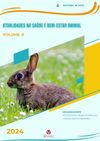 January 2024 in “Editora In Vivo eBooks”
 In this case report, a female mixed-breed dog was observed with dermatophytosis, presenting with alopecia in the neck and ear, highlighting the zoonotic nature of the infection caused by fungi that can affect both animals and humans.
 11 citations
,
June 2005 in “Stem Cells and Development”
11 citations
,
June 2005 in “Stem Cells and Development” This study demonstrated that stem cells from the small intestine can differentiate into skin cells and reduce skin damage in irradiated mice, supporting the theory of stem cell plasticity.
 57 citations
,
December 2021 in “Nature Communications”
57 citations
,
December 2021 in “Nature Communications” In this study, enteroendocrine cells were shown to coordinate intestinal stem cell migration towards a wound in Drosophila by releasing a ligand that activates non-canonical Wnt signaling, aiding efficient tissue repair.
 146 citations
,
June 2012 in “PLoS ONE”
146 citations
,
June 2012 in “PLoS ONE” This study observed that quiescent label-retaining cells in the intestine, identified by Paneth cell markers, can switch to a proliferative state and activate Bmi1 expression during tissue injury, contributing to tissue regeneration.
 May 2025 in “The Journal of Rheumatology”
 This case report describes a young female with pediatric SLE and latent TB who was found to have gastrointestinal tuberculosis, a rarely recognized and often misdiagnosed condition, highlighting the diagnostic challenges and need for early recognition in such cases.
 326 citations
,
February 2009 in “The American journal of pathology”
326 citations
,
February 2009 in “The American journal of pathology” This review discusses the role of Lgr5 as a marker for identifying adult stem cells, particularly in the intestine and hair follicles, and reports no clinical results.
 January 2026 in “Frontiers in Pharmacology”
 This study suggests that cedrol may improve mitochondrial function, gut microbiota, and intestinal barrier integrity, indicating its potential value in treating inflammatory bowel disease.
 June 2023 in “Research Square (Research Square)”
 This study demonstrated that dietary cupric citrate improved growth performance and nutrient utilization in broilers, while also altering their intestinal microbiota and increasing the pH in the duodenum and jejunum.
 46 citations
,
May 2020 in “Cureus”
46 citations
,
May 2020 in “Cureus” This review analyzes the molecular and genetic roles of zinc, its connection to diarrheal disease, dietary recommendations, and the impacts of zinc deficiency on health, but reports no new data.
 August 2025 in “International Journal of Research in Dermatology”
 This case report highlights an atypical presentation of acrodermatitis enteropathica in an 18-year-old male, exhibiting symptoms like erythrokeratoderma variabilis with a positive response to high-dose oral zinc, underscoring the importance of considering zinc deficiency in unusual skin conditions.
This chapter reviews the presence and roles of stem cells in various body systems, focusing on their lifelong function in animals and humans, and reports no new experimental findings.
 December 2016 in “Journal of Evolution of Medical and Dental Sciences”
 This case report highlights that inherited zinc deficiency can persist into adulthood and emphasizes the importance of selecting optimal chelating agents to improve oral zinc bioavailability.
 47 citations
,
June 1996 in “International Journal of Legal Medicine”
47 citations
,
June 1996 in “International Journal of Legal Medicine” This article discusses how drug molecules integrate into hair fibers, focusing on biological transport mechanisms and physicochemical factors, but reports no new experimental findings.
 18 citations
,
August 2019 in “Nutrients”
18 citations
,
August 2019 in “Nutrients” In this study, lifelong barley intake in SAMP8 mice was associated with extended lifespan, improved aging-related phenotypes, and beneficial shifts in the intestinal microbiome.
9 citations
,
August 2024 in “Pharmacological Reviews” This review summarized advancements in intestinal lymphatic drug delivery, emphasizing the evolving understanding of lymphatics as active players in health and disease, which has led to innovative therapeutic strategies and enhanced pharmacokinetic outcomes via this delivery route.

This study found that enhancing quercetin bioavailability with EubioQuercetin significantly improved external aging signs in mice and influenced gut microbiota and intestinal gene expression, suggesting potential modulation through the gut microbiota–intestinal barrier axis.
37 citations
,
October 2021 in “Journal of Clinical Investigation” This study suggests that inflammation in the skin can exacerbate intestinal inflammation in inflammatory bowel diseases by activating fibroblasts in the colon through hyaluronan fragments released during skin inflammation.
 26 citations
,
May 2021 in “International Journal of Molecular Sciences”
26 citations
,
May 2021 in “International Journal of Molecular Sciences” In this review, researchers examined the physiological benefits of Cheonggukjang, a salt-free fermented soybean paste, highlighting its various health-promoting components that may contribute to improved heart health, diabetes management, and cancer prevention, among other benefits.
 13 citations
,
October 2012 in “InTech eBooks”
13 citations
,
October 2012 in “InTech eBooks” Nanocarriers could improve how drugs are delivered through the skin but require more research to overcome challenges and ensure safety.
1 citations
,
October 2023 in “Animals” This study found that supplementing raccoon dogs' diets with 0.25 g/kg Platycladus orientalis leaf extract improved growth performance and altered intestinal microbiota, but higher doses may have adverse effects.
 April 2026 in “Preprints.org”
 The study found that enhancing quercetin bioavailability with EubioQuercetin may amplify its anti-aging effects in mice by modulating the gut microbiota and improving intestinal barrier function.
 February 2026 in “Animals”
 In this study, supplementing low-protein diets with 0.75% methionine maintained growth performance, improved fur quality, enhanced nutrient utilization, and supported intestinal microbiota balance in blue foxes, with significant results on several biochemical parameters and nutrient digestibility observed.