 November 2022 in “The journal of investigative dermatology/Journal of investigative dermatology”
 This study found that Imaging Mass Cytometry effectively visualizes multiple biomarkers in alopecia areata, enhancing analysis of immune cell and tissue interactions in hair pathology.
 July 2022 in “The journal of investigative dermatology/Journal of investigative dermatology”
 This study suggests that particulate matter can induce inflammation in human outer root sheath cells, potentially affecting hair growth, through oxidative stress-dependent MAPK and JAK-STAT signaling pathways.
May 2022 in “Journal of Cutaneous Immunology and Allergy” This case report highlights that asymptomatic domestic cats can transmit Microsporum canis, leading to tinea capitis in humans, as seen in a four-year-old girl in the study.
 June 2020 in “Annals of the Rheumatic Diseases”
 This study surveyed patients with idiopathic inflammatory myopathy and found that glucocorticoid treatment commonly leads to adverse effects, particularly sleep disturbance, mood swings, and weight gain, with more severe effects reported by female patients.
August 2019 in “Journal of the American Academy of Dermatology” Frontal fibrosing alopecia may be caused by an autoimmune reaction and hormonal imbalance.
April 2019 in “Journal of the Endocrine Society” This study found that androgen-regulated genes in hidradenitis suppurativa skin lesions are strongly linked to innate immunity pathways, indicating a potential connection between androgen signaling and inflammation in this condition.
 September 2018 in “Fertility and Sterility”
 This study observed that inflammatory stimuli significantly altered gene expression in rat theca-interstitial cells, affecting pathways related to growth and androgen production, which are central features of polycystic ovary syndrome.
 March 2018 in “Suez Canal University Medical Journal”
 This review examines targeting the JAK-STAT pathway in inflammatory skin diseases, highlighting existing JAK inhibitors and potential developments, but presents no new experimental or clinical results.
 February 2018 in “BMJ case reports”
 This case report describes an 18-year-old woman with a pruritic rash featuring extensive confluent scaly erythema, hyperkeratotic follicular plugging, and waxy keratoderma on palms and soles.
January 2016 in “mediaTUM – the media and publications repository of the Technical University Munich (Technical University Munich)” This thesis presents a new scientific approach using specific models to gain insights into psoriasis and eczema, highlighting a molecular classifier that improves diagnostic accuracy and predicts therapeutic response for these conditions.
 January 2014 in “Pathology”
 The document concludes that understanding nail anatomy is key for diagnosing nail diseases, early signs of nail melanoma may allow for less aggressive treatment, and specific genetic mutations are important in thyroid cancer prognosis and treatment.
 February 2013 in “Journal of The American Academy of Dermatology”
 Most children with skin inflammation taking methotrexate had lab abnormalities, but liver issues often improved without changing the medication dose.
January 2012 in “Hair therapy & transplantation” This commentary discusses informal observations of poor or worsening outcomes in some patients after hair transplant surgery for androgenetic alopecia, suggesting the need for further research.
 September 1997 in “JEADV. Journal of the European Academy of Dermatology and Venereology/Journal of the European Academy of Dermatology and Venereology”
 Anti-IL-1 treatments might help with certain types of hair loss in people with high inflammation.
 November 2020 in “DOAJ (DOAJ: Directory of Open Access Journals)”
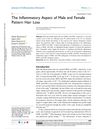
 This perspective highlights evidence suggesting inflammation plays a significant role in male and female pattern hair loss, indicating that targeting inflammatory pathways may improve future therapeutic options.
 194 citations
,
March 2003 in “American Journal of Pathology”
194 citations
,
March 2003 in “American Journal of Pathology” This study found that psychoemotional stress disrupts hair growth in mice by terminating anagen and suggests a potential pathway for pharmacological management of stress-related hair loss in humans.
 119 citations
,
January 2012 in “Nutrition & Metabolism”
119 citations
,
January 2012 in “Nutrition & Metabolism” This article suggests that modern lifestyle changes, including diet, stress, and chronic anti-inflammatory medication use, may disrupt the natural process of inflammation resolution, increasing vulnerability to chronic disease.
77 citations
,
September 2017 in “Journal of Investigative Dermatology” This study found that TRPV3 ion channels on human epidermal keratinocytes suppress cell proliferation, induce cell death, and trigger a proinflammatory response, suggesting a role in cutaneous inflammatory processes.
 61 citations
,
September 2010 in “Fitoterapia”
61 citations
,
September 2010 in “Fitoterapia” This study found that the EtOAc extract of Tridax procumbens aerial parts significantly inhibited rat paw edema and COX enzyme activity, suggesting its potential anti-inflammatory properties.
57 citations
,
August 2006 in “Journal of the American Academy of Dermatology” This case report describes a woman who developed extensive nonscarring inflammatory hair loss after two years of gefitinib treatment, highlighting potential cutaneous side effects associated with epidermal growth factor receptor blockers.
39 citations
,
January 2008 in “World Journal of Gastroenterology” This report documents the first known case of acute inflammatory demyelinating polyneuropathy potentially linked to pegylated interferon-alpha 2a in a woman undergoing treatment for chronic hepatitis C.
 32 citations
,
January 2015 in “Annals of diagnostic pathology”
32 citations
,
January 2015 in “Annals of diagnostic pathology” This study highlights the importance of recognizing oral lesions in diagnosing syphilis, as illustrated by three reported cases.
23 citations
,
September 2020 in “Journal of Dermatological Science” This pilot study suggests that skin-resident γδT-cells may play a significant role in the early stages of alopecia areata pathogenesis, indicating a potential new target for therapeutic management.
19 citations
,
January 2009 in “OpenSIUC (Southern Illinois University Carbondale)” This study found that extracts from Calotropis gigantea and Tridax procumbens individually demonstrated greater anti-inflammatory activity than Ibuprofen in a carrageenin-induced paw edema model.
15 citations
,
March 2023 in “BioMed” This review discusses multisystem inflammatory syndrome in adults (MIS-A) related to SARS-CoV2 and outlines the existing knowledge and unanswered questions, reporting no new clinical results.
 13 citations
,
May 2021 in “Plants”
13 citations
,
May 2021 in “Plants” This study found that the n-hexane fraction from Leea indica leaves significantly increased hair growth in mice and showed potential as a natural treatment for alopecia.
 9 citations
,
November 2020 in “Journal of Inflammation Research”
9 citations
,
November 2020 in “Journal of Inflammation Research” This perspective highlights the role of inflammation in male and female pattern hair loss and its implications for developing future therapeutic options.
 7 citations
,
February 2019 in “Journal of pharmacological sciences”
7 citations
,
February 2019 in “Journal of pharmacological sciences” This study found that Bazhengsan significantly reduced inflammation and hyperplasia in male rats with nonbacterial prostatitis, indicating potential as a treatment for chronic prostatitis.
 7 citations
,
May 2018 in “Indian Journal of Pharmacology”
7 citations
,
May 2018 in “Indian Journal of Pharmacology” This study found that the methanolic extract of Carthamus caeruleus roots significantly reduced inflammation, promoted wound healing, and enhanced hair growth in experimental models, supporting its traditional use in Northern Algeria as a skincare remedy.
6 citations
,
April 2012 in “Muscle & nerve” This letter to the editor documents a case where chronic inflammatory demyelinating polyneuropathy is associated with alopecia totalis and Sjögren syndrome, but reports no new clinical findings.