 July 2025 in “Frontiers in Medicine”
 In this case study, an 8-year-old boy with alopecia totalis experienced significant hair regrowth after baricitinib treatment, suggesting KRT74 variants may influence immune dysregulation in this condition.
 June 2008 in “Springer eBooks”
 The document concludes that permanent hair loss conditions are complex, require early specific treatments, and "secondary permanent alopecias" might be a more accurate term than "secondary cicatricial alopecia."
 January 2023 in “Discovery immunology”
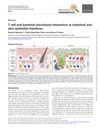
 T cells and bacteria in the gut and skin help maintain health and protect against disease.
 January 2012 in “Yearbook of Dermatology and Dermatologic Surgery”
 Some African American women experience central scalp hair loss, often linked to a history of fungal scalp infection.
28 citations
,
October 2010 in “Targeted Oncology” This case report presents an instance of tufted hair folliculitis in a woman treated with trastuzumab, highlighting a previously unreported skin side effect of this selective HER2 inhibitor.
 9 citations
,
January 2018 in “Acta dermato-venereologica”
9 citations
,
January 2018 in “Acta dermato-venereologica” This study found that carbonic anhydrase II was significantly upregulated in human keratinocytes when treated with toll-like receptor 3 agonist and Th2 cytokines, suggesting its potential role in inflammatory skin conditions.
2 citations
,
February 2021 in “PubMed” This case report describes a 25-year-old woman with alopecia areata and nail spooning, which regressed almost completely after treatment with oral corticosteroids.
2 citations
,
October 2015 in “Mikrobiyoloji bülteni” This case report describes a 20-year-old female with favus caused by T. schöenleinii, which initially improved with antifungal treatment but recurred due to poor adherence, underscoring favus as an ongoing health issue in Turkey.
 290 citations
,
December 2017 in “Journal of The American Academy of Dermatology”
290 citations
,
December 2017 in “Journal of The American Academy of Dermatology” This article reviews the epidemiology, clinical evaluation, and pathogenesis of alopecia areata and highlights recent advancements, but it does not report new clinical findings.
69 citations
,
December 2006 in “Archives of dermatology” This entry contains no research abstract, so no scientific findings or conclusions are reported.
 30 citations
,
January 2013 in “Obesity Surgery”
30 citations
,
January 2013 in “Obesity Surgery” This review summarizes the effects and complications of bariatric surgery on skin, noting it can alter existing skin conditions like psoriasis and trigger new dermatoses, but provides no new clinical results.
16 citations
,
January 2024 in “World Journal of Stem Cells” This review highlights the need for optimizing mesenchymal stromal/stem cell therapy through tailored in vitro strategies to unlock their full potential for treating specific diseases.
13 citations
,
July 2015 in “Archives of dermatological research” This study found that the spermidine analog N1-methylspermidine prolonged hair follicle growth and decreased inflammation and oxidative stress in cultured hair follicles, suggesting potential relevance for treating inflammatory scalp diseases.
 10 citations
,
September 2021 in “International Journal of Nanomedicine”
10 citations
,
September 2021 in “International Journal of Nanomedicine” This review explores the potential diagnostic and therapeutic applications of extracellular vesicles in treating various skin conditions but reports no new clinical study results.
4 citations
,
January 2025 in “The Journal of Cell Biology” This study found that deleting ceramide synthase 4 in skin epidermis stem cells disrupts hair follicle and skin barrier function, leading to immune responses similar to atopic dermatitis, due to imbalances in lipid composition affecting differentiation.
3 citations
,
September 2025 in “Frontiers in Immunology” This review discusses the complex role of immune disturbances and the JAK-STAT pathway in alopecia areata, noting the success of JAK inhibitors in treatment, while highlighting ongoing debates and challenges in targeting other pathways like IL-17 and TNF-α.
 2 citations
,
January 2021 in “Scandinavian Journal of Child and Adolescent Psychiatry and Psychology”
2 citations
,
January 2021 in “Scandinavian Journal of Child and Adolescent Psychiatry and Psychology” This study found that children and adolescents with dermatological disorders had significantly higher rates of psychiatric comorbidity, including mood and anxiety disorders, compared to healthy controls.
 January 2026 in “International Research Journal of Modernization in Engineering Technology and Science”
 This review outlines the existing understanding of alopecia areata, detailing its autoimmune nature, clinical presentation, histology, and management strategies, with corticosteroids highlighted as the most popular treatment option.
March 2026 in “Journal of Investigative Dermatology” Early diagnosis and tailored treatment are crucial to prevent permanent hair loss and support self-esteem in children with scarring alopecia.

research TOC
September 2003 in “Clinics in Family Practice” The document lists dermatology topics across life stages and notes hair loss can affect self-esteem and early skin cancer treatment is crucial.
 28 citations
,
January 2018 in “Biochemical Society Transactions”
28 citations
,
January 2018 in “Biochemical Society Transactions” This review explores the role of fatty acids and bioactive lipid mediators in skin health and suggests targeting this metabolic network to control inflammation and improve skin conditions, but it reports no new findings.
 26 citations
,
December 2015 in “International Journal of Dermatology”
26 citations
,
December 2015 in “International Journal of Dermatology” This abstract reviews the symptom of trichodynia, a painful scalp sensation linked to hair loss, and highlights its potential connection to inflammation but reports no new research findings.
 22 citations
,
July 2003 in “Military medicine”
22 citations
,
July 2003 in “Military medicine” This article reviews the causes, classification, and new treatments for pseudofolliculitis barbae but provides no new research findings.
5 citations
,
March 2025 in “Pediatric Dermatology” This study found that alopecia areata is linked to genetic factors, specifically HLA haplotypes on chromosome 6, and involves immune privilege collapse at hair follicles which is mediated by the JAK-STAT pathway and pro-inflammatory cytokines like IFN-γ.
 4 citations
,
September 2021 in “Dermatopathology”
4 citations
,
September 2021 in “Dermatopathology” This study suggests that erosive pustular dermatosis of the scalp may be part of the spectrum of autoinflammatory dermatoses, rather than a unique skin disorder.
2 citations
,
September 2025 in “Frontiers in Nutrition” This review reports that various bioactive compounds in Aloe vera demonstrate significant anti-inflammatory, antioxidant, antibacterial, and immunomodulatory effects, supporting its validated use in treating metabolic disorders, gastrointestinal recovery, dermatological conditions, and wound healing due to its nutritional and therapeutic properties.
1 citations
,
April 2022 in “JAAD case reports” In this case report, researchers observed that a 47-year-old woman developed pityriasis amiantacea after using topical minoxidil, suggesting a potential new etiology for this scalp condition.

In this case report, a 65-year-old woman with lichen planopilaris achieved stabilization of her condition through early recognition and systemic corticosteroid therapy, emphasizing the critical role of coordinated management between primary care and dermatology.
January 2025 in “Indian Dermatology Online Journal” This case study highlights the importance of a multidisciplinary approach in diagnosing and managing Vogt-Koyanagi-Harada syndrome, particularly emphasizing the role dermatologists can play in identifying early signs such as hair loss.
 April 2024 in “Journal of cutaneous pathology”
 In this case report, the authors identified that sebaceous gland atrophy, traditionally associated with psoriatic or drug-induced alopecia, can also appear in seborrheic dermatitis, complicating the histopathological evaluation of alopecia biopsies and emphasizing the need to consider seborrheic dermatitis in differential diagnoses.