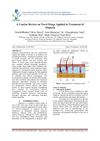
This review highlights new treatment options for alopecia, including JAK inhibitors and Wnt pathway-targeting therapies, which may offer better efficacy and safety than traditional treatments like minoxidil and finasteride, but notes the need for more research on long-term effects and patient-specific responses.
 January 2025 in “Journal of Cosmetic Dermatology”
 This source reported that early evidence supports the potential efficacy of exosomes in treating conditions like alopecia, facial rejuvenation, hyperpigmentation, and scarring, but noted that standardization issues need addressing through further studies to better understand their use in aesthetic dermatology.
 January 2019 in “Revista Medicina Cutánea Ibero-Latino-Americana”
 This article reviews the influence of vitamin D on various dermatological diseases and suggests that vitamin D supplementation might aid in maintaining skin cell homeostasis; it reports no new clinical results.
 176 citations
,
May 2020 in “Dermatologic Therapy”
176 citations
,
May 2020 in “Dermatologic Therapy” This review discusses the cutaneous symptoms associated with COVID-19 and their potential use in diagnosing and assessing the severity of the disease, but it reports no new clinical results.
37 citations
,
August 2024 in “Current Issues in Molecular Biology” This review summarizes recent findings on keratins 6, 16, and 17, highlighting their role in keratinocyte behavior and nuclear functions, and discusses their potential as biomarkers for various skin pathologies, including damage, inflammation, and cancer, rather than in healthy skin.
3 citations
,
March 2024 in “Viruses” This study found that γδ T cells in the skin contribute to wound healing after vaccinia virus infection by promoting cytokine and growth factor induction, without affecting virus replication control.
 March 2026 in “Science China Materials”
 SeV-Tp speeds up healing of drug-resistant infections by targeting wounds and killing bacteria with light activation.
This study found that androgens decreased splenic macrophage FcgammaR expression and impaired the clearance of IgG-coated cells in an experimental guinea pig model.
848 citations
,
October 2020 in “International Journal of Molecular Sciences” This review discusses the potential of platelet-rich plasma applications in regenerative medicine and explores recent progress and challenges in translating non-clinical PRP findings into human treatments, but reports no new clinical results.
32 citations
,
December 2017 in “Stem Cells Translational Medicine” This review discusses how studying regenerative biology in certain mammalian models could enhance our understanding of complex tissue regeneration, but it reports no new clinical findings.
14 citations
,
October 2024 in “Nano Convergence” This study found that an injectable hydrogel dressing with silver nanoparticles showed promise in healing MRSA-infected wounds by reducing inflammation, supporting tissue regeneration, and maintaining prolonged antibacterial activity, highlighting its potential as an effective treatment strategy.
13 citations
,
January 2023 in “Frontiers in Nutrition” This review explored the chemical makeup and pharmacological effects of Lindera aggregata, identifying 349 components including sesquiterpenoids, flavonoids, and alkaloids, with various potential benefits demonstrated in vitro and in vivo, such as anti-inflammatory and antioxidant effects.
11 citations
,
December 2024 in “Stem Cell Research & Therapy” In this study, hUCMSCs-Exo significantly accelerated wound healing in rat perianal fistulas with notable safety, potentially through the activation of the HIF-1α/TGF-β/Smad signaling pathway.
9 citations
,
April 2024 in “Heliyon” This review highlighted significant properties of probiotics that can promote hair growth and reduce dandruff, offering guidance for future research to scale these findings to pilot studies.
4 citations
,
September 2024 in “Cell Reports” This study found that mice lacking the CXCR2 receptor regenerated tissue scarlessly in various injury models and that administering plasma or G-CSF from these mice to wild-type mice also reduced scarring, suggesting potential therapeutic strategies to improve human skin wound healing.
 June 2025 in “International Journal of Clinical Medical Research”
 Healthcare professionals need better training and systems for drug interaction reporting, injectable vitamin B12 helps tingling, oral helps numbness, probiotics may help ulcerative colitis, and more research is needed on Post-Finasteride Syndrome.
49 citations
,
July 2000 in “Journal of Histochemistry & Cytochemistry” This study found cell-specific variations in POMC mRNA and peptide expression in murine skin, suggesting that PC1 and PC2 convertases contribute to differential POMC processing.
3 citations
,
February 2025 in “Frontiers in Cell and Developmental Biology” Wharton's Jelly stem cell medium may help treat skin issues in Systemic Sclerosis.
3 citations
,
December 2021 in “IntechOpen eBooks” This article reviews the potential of bionanomaterials, derived from natural biomolecules, for wound healing and reports no new clinical results; it emphasizes the need for further research in this area.
 October 2024 in “Frontiers in Nutrition”
 This study found that patients with alopecia, particularly alopecia areata and female pattern hair loss, often have vitamin D deficiency, suggesting that screening for vitamin D could benefit these patients.
1 citations
,
August 2025 in “IBRO Neuroscience Reports” This review discusses preclinical data suggesting that isoflavones, found in soy and other legumes, may help reduce inflammation and enhance myelin repair in models of multiple sclerosis.
 February 2024 in “bioRxiv (Cold Spring Harbor Laboratory)”
 This study found that tissue damage in adult mice triggers the release of mitochondrial DNA, which activates the TLR9 pathway and influences hair regeneration by recruiting gamma delta T cells, ultimately affecting healing outcomes such as fibrosis.
24 citations
,
August 2021 in “Biologics” This review discusses the use of stem cells and stem cell-derived products in burn wound healing, highlighting various stem cell sources, associated signaling pathways, and delivery methods, but reports no new clinical results.
 2 citations
,
April 2018 in “Natural Product Communications”
2 citations
,
April 2018 in “Natural Product Communications” This review summarizes the bioactive compounds and pharmacological functions of Cynomorium songaricum Rupr., emphasizing its potential in developing health-related products, and notes that further research is needed.
July 2024 in “Journal of Investigative Dermatology” INTASYL is a promising, adaptable RNAi technology for treating skin cancers.
63 citations
,
September 2021 in “Journal of Fungi” In this review, the authors highlighted the broad range of therapeutic and health benefits of mushrooms, including antiviral, antibacterial, anticancer, and other protective effects, due to their complex chemical components like polysaccharides and glucans.
 June 2017 in “Journal of The European Academy of Dermatology and Venereology”
 This meta-analysis found that patients with androgenetic alopecia have an atherogenic lipid profile, with higher LDL, triglycerides, and total cholesterol, and lower HDL, potentially explaining increased cardiovascular risk.
 119 citations
,
July 2016 in “Annals of the New York Academy of Sciences”
119 citations
,
July 2016 in “Annals of the New York Academy of Sciences” This review examines the impact of vitamin D signaling in extraskeletal tissues and notes that expected benefits from animal and cell studies have not been consistently replicated in human clinical trials.
 September 2025 in “PubMed”
 This review discusses recent advances in hair regeneration strategies, including mechanical stimulation and complementary therapies like MSC transplantation and platelet-rich plasma, and reports no new clinical results.
 May 2017 in “Journal of The American Academy of Dermatology”
 PLAU and SerpinB2 affect cell death differently in various forms of leprosy and could be targets for new treatments.