 9 citations
,
May 2019 in “Experimental Cell Research”
9 citations
,
May 2019 in “Experimental Cell Research” This study found that Hedgehog signaling likely contributes to cervical carcinogenesis, and while itraconazole reduced growth in mice, it did so through pathways other than inhibiting Hedgehog signaling.
 January 2025 in “Journal of Materials Chemistry B”
  13 citations
,
August 2007 in “Bioorganic & medicinal chemistry letters”
13 citations
,
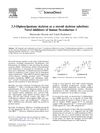
August 2007 in “Bioorganic & medicinal chemistry letters” This study developed a new competitive 5alpha-reductase inhibitor with an IC(50) of 0.84 microM using a novel chemical structure.
61 citations
,
January 2013 in “International Journal of Biological Macromolecules” This study found that applying both dehydrothermal treatment and carbodiimide crosslinking improved the mechanical properties of porcine acellular dermal matrix scaffolds without added cytotoxicity, suggesting potential applications in tissue engineering.
 11 citations
,
March 2020 in “Cellular Signalling”
11 citations
,
March 2020 in “Cellular Signalling” In this study, knockdown of XIST in 3D-cultured dermal papilla cells inhibited hair follicle regeneration by interfering with miR-424 and hedgehog signaling, highlighting XIST's role in hair development.
 108 citations
,
December 2003 in “Lasers in surgery and medicine”
108 citations
,
December 2003 in “Lasers in surgery and medicine” This study found that combining near-infrared laser phototherapy with indocyanine green application may improve acne vulgaris by reducing active lesions and inflammation without side effects.
 40 citations
,
November 1998 in “The journal of investigative dermatology/Journal of investigative dermatology”
40 citations
,
November 1998 in “The journal of investigative dermatology/Journal of investigative dermatology” This study found that the S100A3 gene is exclusively expressed in hair follicle cells differentiating into hair shaft components in mice, suggesting its important role in hair formation.
 November 2023 in “International Journal of Pharmaceutics”
 This study reported that a novel ionic liquid delivery system combining ferulic acid and finasteride enhanced the solubility, skin permeation, and effectiveness in promoting hair regrowth in androgenetic alopecia mice, suggesting an improved topical treatment approach.
21 citations
,
March 2018 in “American Journal Of Pathology” In this study, it was observed that NIPAL4 mutations linked to autosomal recessive congenital ichthyosis lead to abnormal skin barrier function due to cytotoxic effects disrupting lipid structure and organization, which topical treatments only partially ameliorated.
21 citations
,
January 1995 in “Molecular Biology Reports” This study identified a novel human type I hair keratin, hHa3-II, as an isoform of a previously described hHa3 keratin, with distinct sequence differences indicating separate gene encoding.
February 2017 in “Cancer Research” In this study involving women undergoing taxane-based chemotherapy, a twice-daily topical application of BPM31543 was well-tolerated and showed potential in reducing severe hair loss, prompting further investigation at higher doses.
 April 2018 in “Journal of Investigative Dermatology”
 In this study, researchers reported that IL-17C plays a key pro-inflammatory role in human skin diseases and may be a promising therapeutic target for inflammatory skin conditions.
3 citations
,
July 2024 in “Journal of Vascular Diseases” This review compiles existing research on ischemia-modified albumin (IMA) as a biomarker for myocardial ischemia, highlighting current gaps in understanding its formation and detection, with no new clinical results reported.
July 2026 in “Frontiers in Immunology” In this case report, a 28-year-old male with severe atopic dermatitis, prurigo nodularis-like lesions, and alopecia areata showed rapid improvements in skin and hair following treatment with the JAK1 inhibitor, ivarmacitinib, suggesting its potential benefit for complex AD phenotypes with immune-mediated hair loss.
 April 2023 in “Advanced functional materials”
 This study created a Wnt3a protein gradient using Multiphoton Microfabrication technology, which improved hair-inductive properties in mouse and human hair dermal papilla cells, suggesting potential applications in hair regeneration research and drug screening.

This study describes the development and testing of an IoT-based smart pot system designed for optimal lavender plant care, utilizing temperature, pH, and soil type monitoring via a Node MCU to control watering based on soil moisture levels.
24 citations
,
March 2022 in “Genome biology” This study introduces scINSIGHT, a method that showed improved performance over existing approaches in identifying gene expression patterns and cellular processes in heterogeneous scRNA-seq datasets from different biological conditions.
3 citations
,
January 2013 in “Journal of cosmetics, dermatological sciences and applications” This study found that the new HCC additive enhances the permeation of pigments and active ingredients into hair, suggesting potential use in developing functional cosmetic hair products.
1 citations
,
November 2024 in “Blood” This study found that inhibiting the PI3Kδ enzyme in murine models of cutaneous chronic graft-versus-host disease (cGVHD) reduced skin scores and fibrosis, prevented pathogenic lymphoid structures, and improved survival, suggesting it as a promising therapeutic approach to address the disease's hypoxic pathophysiology.
 October 2018 in “Annals of oncology”
 This study reported that topical BPM31543 was safe and well-tolerated for patients on taxane-based chemotherapy, with some efficacy indicated in reducing hair loss at all dosages tested.
July 2024 in “Journal of Investigative Dermatology” INTASYL is a promising, adaptable RNAi technology for treating skin cancers.
 8 citations
,
July 1996 in “Annals of Internal Medicine”
8 citations
,
July 1996 in “Annals of Internal Medicine” This report documented a case of thrombocytopenia and leukopenia linked to the long-term use of itraconazole in a patient with acute myelogenous leukemia.
 9 citations
,
January 2023 in “International Journal of Biological Sciences”
9 citations
,
January 2023 in “International Journal of Biological Sciences” This study suggests that CTHRC1, a protein expressed in cardiac fibroblasts, may improve wound repair and prevent cardiac rupture after myocardial infarction by activating a specific signaling pathway.
February 2026 in “ACS Applied Materials & Interfaces” This study developed a novel treatment method using carbon dots from Cinnamomum burmannii leaves, which improved hair regeneration and thickness in an AGA mouse model by promoting cell proliferation, angiogenesis, and reducing inflammation through multiple signaling pathways.
29 citations
,
February 2001 in “Proceedings of the National Academy of Sciences” This study found that the HS III element in the K14 gene's regulatory sequence promotes gene expression in inner root sheath keratinocytes, highlighting cooperative interactions in keratinocyte-specific gene regulation.
June 2023 in “Zenodo (CERN European Organization for Nuclear Research)”  January 2024 in “International Journal of Dermatology Venereology and Leprosy Sciences”
 This study reports that an intervention decreased glucose and insulin levels, indicating improved insulin resistance, which is linked to a skin condition called acne vulgaris and other disorders associated with insulin resistance.
2 citations
,
October 2020 169 citations
,
September 2002 in “British journal of dermatology/British journal of dermatology, Supplement” This study reports that ZD1839 (Iressa), an anticancer drug, was associated with acneiform eruptions and hair growth abnormalities due to its inhibition of epidermal growth factor receptor signaling in the skin.
 109 citations
,
January 2011 in “Frontiers in Systems Neuroscience”
109 citations
,
January 2011 in “Frontiers in Systems Neuroscience” The researchers reported that differences in brain functional connectivity between unmedicated seasonal affective disorder patients and healthy controls vary with ICA model order, peaking in volume at model order 70.