 3 citations
,
April 2012 in “Internal and Emergency Medicine”
3 citations
,
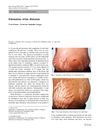
April 2012 in “Internal and Emergency Medicine” In this case report, a 14-year-old girl with nephrotic syndrome developed large edematous striae distensae due to high-dose steroid use and rapid body size increase from edema fluid accumulation.
 September 2025 in “Cureus”
 In this case report, a male patient with hair loss showed unusually high testosterone levels without other symptoms or supplement use; follow-up testing revealed normal levels, showcasing the importance of considering testosterone-protein binding differences and using equilibrium dialysis for accurate assessment.
May 2021 in “Journal of the Endocrine Society” This case report describes severe hypothyroidism exacerbated by nephrotic syndrome in a 62-year-old woman, with a diagnosis of membranous nephropathy linked to significant proteinuria.
April 2026 in “Almanac of Clinical Medicine” In this study, pemphigus vulgaris patients treated with high-dose prednisolone developed symptoms similar to those seen in corticosteroma, such as weight gain and muscle weakness, with increased risks of arterial hypertension and glucose metabolism disorders after 6 months of therapy.
May 2025 in “Journal of the ASEAN Federation of Endocrine Societies” This case study highlights the aggressive progression and complex management challenges of metastatic insulinomas, with an emphasis on considering early systemic chemotherapy and advanced therapies like everolimus and PRRT for improved outcomes.
 April 2022 in “PANACEA JOURNAL OF MEDICAL SCIENCES”
 This study found that serum prolactin levels were significantly higher in patients with subclinical and clinical hypothyroidism compared to controls, indicating altered prolactin regulation in these patients.
 10 citations
,
December 2008 in “Journal of Clinical Neuromuscular Disease”
10 citations
,
December 2008 in “Journal of Clinical Neuromuscular Disease” This report describes a case where a man developed reversible myalgia and significant hyperCKemia after long-term finasteride use for male frontal baldness, with symptoms resolving upon discontinuation.
117 citations
,
September 2003 in “Molecular & cellular proteomics” This study demonstrated the development of high-density protein microarrays allowing for antibody binding characterization and serum profiling from patients with autoimmune diseases, suggesting potential for diagnostic marker discovery.
 June 2022 in “International journal of research and review”
 This study highlights the increasing prevalence of hyperuricemia as a metabolic and vascular disorder due to lifestyle changes, emphasizing the need for early diagnosis of prehyperuricemia to prevent related non-communicable diseases and complications.
 118 citations
,
February 2009 in “Fertility and Sterility”
118 citations
,
February 2009 in “Fertility and Sterility” This study found that approximately 75% of women with PCOS exhibited hyperandrogenemia, with free testosterone being the most frequently elevated marker.
 26 citations
,
April 2007 in “Journal of pediatric gastroenterology and nutrition”
26 citations
,
April 2007 in “Journal of pediatric gastroenterology and nutrition” This case report describes an adolescent girl with polycystic ovarian syndrome and endogenously elevated androgen levels who developed a hepatic adenoma, suggesting a link between the two conditions.
 1 citations
,
January 1996 in “Gynecological endocrinology”
1 citations
,
January 1996 in “Gynecological endocrinology” This article describes a case of severe hyperandrogenism in a 35-year-old woman where high-resolution imaging ruled out tumors, and treatment with cyproterone acetate normalized testosterone levels.
 October 2023 in “Journal of the Endocrine Society”
 This case report describes a unique instance where elevated prolactin levels from a pituitary adenoma were associated with hirsutism due to increased dihydrotestosterone, with treatment leading to normalization.
 January 2025 in “JCEM Case Reports”
 This report describes a 27-year-old patient with Ehler-Danlos syndrome who also presented with hypophosphatasia and mastocytosis, and suggests enzyme replacement therapy might alleviate symptoms in such overlapping genetic conditions.
21 citations
,
January 1997 in “Nephron” In this study, two dialysis patients with high plasma silicon levels exhibited symptoms like painful skin eruptions and unusual hair growth, suggesting silicon may influence calcium metabolism similarly to aluminum.
April 2019 in “Journal of the Endocrine Society” In this case study, the researchers reported that treating a woman with type B insulin resistance using rituximab, dexamethasone, and cyclophosphamide greatly reduced her insulin needs, but her hyperandrogenic state persisted, suggesting ovarian hyperthecosis.
73 citations
,
April 2006 in “BioTechniques” This essay reviews the potential of protein microarrays in proteomics and diagnostics, highlighting no new clinical results but emphasizing the need for advanced high-quality proteins and antibodies.
 December 2024 in “Turkish Society of Clinical Biochemistry”
 This study found that women with idiopathic hyperandrogenemia had higher urinary Bisphenol A levels compared to healthy controls, suggesting a potential role of this chemical in the condition.
 December 2021 in “International Journal of Biomedicine”
 This review discusses the conflicting perspectives on the relationship between hyperprolactinemia and polycystic ovarian syndrome, emphasizing the need for further evaluation before diagnosing PCOS in the presence of hyperprolactinemia.
23 citations
,
June 2016 in “Journal of Veterinary Internal Medicine” This case series reports three cats diagnosed with hypersomatotropism due to GH-secreting pituitary adenomas without concurrent diabetes mellitus, highlighting the potential for underdiagnosis in non-diabetic cats.
 2 citations
,
October 2021 in “Clinical Epidemiology and Global Health”
2 citations
,
October 2021 in “Clinical Epidemiology and Global Health” The researchers reported a high incidence of hyperuricemia in women with PCOS, with positive correlations to testosterone, SHBG, HOMA-IR, and LDL levels, but negative correlations to HbA1C, FPG, and FSI.
16 citations
,
September 2009 in “Schweizer Archiv für Tierheilkunde” This case report describes an 8-year-old Russian Blue cat with bilateral adrenal carcinomas secreting high levels of progesterone, showing symptoms similar to hypercortisolism.
 November 2023 in “Manuju”
 This paper discusses the complex relationship between polycystic ovary syndrome (PCOS) and hyperprolactinemia, noting a decrease in prolactin levels following bromocriptine treatment, but reports no new clinical findings.
 19 citations
,
September 2010 in “The American journal of pathology”
19 citations
,
September 2010 in “The American journal of pathology” This study demonstrated that elevated glucocorticoid levels in transgenic mice led to pancreatic exocrine cells transforming into hepatocyte-like cells, resulting in pancreatic dysfunction.
 52 citations
,
November 2009 in “International journal of gynaecology and obstetrics”
52 citations
,
November 2009 in “International journal of gynaecology and obstetrics” This study found that hyperandrogenemia in Chinese women with PCOS is associated with higher risks of type 2 diabetes and obesity, suggesting it should be prioritized in managing PCOS-related infertility.
5 citations
,
January 2015 in “Molecular Genetics and Metabolism” July 1993 in “学術講演梗概集. A, 材料施工,防火,海洋,情報システム技術” This study observed that hyperprolactinemia in women may be associated with skin and hair symptoms similar to those induced by androgens, suggesting hormone level evaluations in such cases.
3 citations
,
July 2025 in “Gels” This review explores how recombinant protein hydrogels, employing molecular engineering and crosslinking strategies, offer advanced applications in regenerative medicine by mimicking extracellular matrix dynamics and providing enhanced mechanical, environmental, and biological properties.
 19 citations
,
January 2017 in “Hormone Molecular Biology and Clinical Investigation”
19 citations
,
January 2017 in “Hormone Molecular Biology and Clinical Investigation” This study found a high prevalence of hyperandrogenemia in women with PCOS, with distinct biochemical differences according to BMI and presence of hyperandrogenemia.
 7 citations
,
October 2019 in “Case reports in endocrinology”
7 citations
,
October 2019 in “Case reports in endocrinology” This case report describes a woman with hyperandrogenism and menstrual disturbances, where an ovarian steroid cell tumor was identified and removed, leading to resolution of symptoms.