July 2004 in “Transplantation” This study found that enalapril treatment reduced hematocrit levels in posttransplant erythrocytosis patients and increased transferrin saturation index and ferritin levels in those with iron deficiency among long-term renal transplant recipients.
 11 citations
,
February 2013 in “Clinical Endocrinology”
11 citations
,
February 2013 in “Clinical Endocrinology” This study found that the prevalence of hyperprolactinaemia in healthy premenopausal female blood donors is low and not affected by hormonal contraceptive use, with stress-related factors being the most common cause.
21 citations
,
June 1991 in “Journal of Inherited Metabolic Disease” This case report observed that a selenium-deficient diet in a child with propionic acidaemia led to macrocytosis and hair abnormalities, which improved with selenium supplementation.
 September 2025 in “Cureus”
 In this case report, a male patient with hair loss showed unusually high testosterone levels without other symptoms or supplement use; follow-up testing revealed normal levels, showcasing the importance of considering testosterone-protein binding differences and using equilibrium dialysis for accurate assessment.
 2 citations
,
February 2014 in “Journal of the European Academy of Dermatology and Venereology”
2 citations
,
February 2014 in “Journal of the European Academy of Dermatology and Venereology” This letter reports three cases of diffuse hair loss linked to hyperprolactinaemia but does not present new research findings.
 10 citations
,
December 2008 in “Journal of Clinical Neuromuscular Disease”
10 citations
,
December 2008 in “Journal of Clinical Neuromuscular Disease” This report describes a case where a man developed reversible myalgia and significant hyperCKemia after long-term finasteride use for male frontal baldness, with symptoms resolving upon discontinuation.
 5 citations
,
February 1977 in “Archives of Dermatology”
5 citations
,
February 1977 in “Archives of Dermatology” In this study, increased protein intake during modified fasting nearly eliminated hair loss observed in patients with significant weight loss and negative nitrogen balance.
 19 citations
,
January 2012 in “Dermato-endocrinology”
19 citations
,
January 2012 in “Dermato-endocrinology” This study suggests that moderate elevated prolactin levels are unlikely to cause significant hair loss in women, but still warrant further diagnostic investigation to rule out a prolactin-producing pituitary tumor.
 October 2023 in “Journal of the Endocrine Society”
 This case report describes a unique instance where elevated prolactin levels from a pituitary adenoma were associated with hirsutism due to increased dihydrotestosterone, with treatment leading to normalization.
20 citations
,
September 1998 in “PubMed” In this study, a dietary protein deficiency was identified as the cause of alopecia and weight loss in captive western lowland gorillas, and protein supplementation improved their condition.
 5 citations
,
January 2003 in “Oilseeds and fats, crops and lipids/OCL. Oilseeds & fats crops and lipids”
5 citations
,
January 2003 in “Oilseeds and fats, crops and lipids/OCL. Oilseeds & fats crops and lipids” This review discusses the effects of dietary protein and its components on cholesterol, essential fatty acids, and possible health consequences, but presents no new clinical findings.
November 2025 in “JDDG Journal der Deutschen Dermatologischen Gesellschaft” This study documented a case of an 11-month-old with PKU who developed acrodermatitis enteropathica-like symptoms due to severe phenylalanine deficiency, requiring dietary adjustment to restore phenylalanine levels.
73 citations
,
April 2006 in “BioTechniques” This essay reviews the potential of protein microarrays in proteomics and diagnostics, highlighting no new clinical results but emphasizing the need for advanced high-quality proteins and antibodies.
 22 citations
,
June 1993 in “Calcified Tissue International”
22 citations
,
June 1993 in “Calcified Tissue International” This study found that women with hyperandrogenic amenorrhea do not show reduced bone mineral density compared to controls, indicating they may be protected from osteopenia.
 January 2025 in “JCEM Case Reports”
 This report describes a 27-year-old patient with Ehler-Danlos syndrome who also presented with hypophosphatasia and mastocytosis, and suggests enzyme replacement therapy might alleviate symptoms in such overlapping genetic conditions.
July 1993 in “学術講演梗概集. A, 材料施工,防火,海洋,情報システム技術” This study observed that hyperprolactinemia in women may be associated with skin and hair symptoms similar to those induced by androgens, suggesting hormone level evaluations in such cases.
 1 citations
,
December 2016 in “Journal of Evolution of Medical and Dental Sciences”
1 citations
,
December 2016 in “Journal of Evolution of Medical and Dental Sciences” This study found significant associations between pruritus and elevated parathormone levels, and xerosis and elevated serum creatinine levels, in chronic kidney disease patients undergoing haemodialysis.
 3 citations
,
January 1988 in “PubMed”
3 citations
,
January 1988 in “PubMed” This study observed that functional hyperprolactinemia in several women was associated with skin symptoms such as seborrhea, acne, and hair-related issues, resembling androgen-induced conditions.
 7 citations
,
July 1976 in “PubMed”
7 citations
,
July 1976 in “PubMed” This study found that increased protein intake during fasting can nearly eliminate hair loss associated with weight loss, suggesting that protein availability is more critical than the speed of weight loss for hair growth.
 March 2024 in “World Academy of Sciences Journal”
 This narrative review explores how exercise might help maintain skin homeostasis disrupted by protein deficiency, potentially by promoting processes like increased collagen synthesis and stimulating anti-inflammatory effects, though the exact mechanisms are not entirely understood.
 1 citations
,
January 2015 in “Hair therapy & transplantation”
1 citations
,
January 2015 in “Hair therapy & transplantation” This investigation found that certain supplements, particularly whey protein isolate, growth hormones, and anabolic steroids, can negatively impact hair loss by affecting biochemical pathways.
117 citations
,
September 2003 in “Molecular & cellular proteomics” This study demonstrated the development of high-density protein microarrays allowing for antibody binding characterization and serum profiling from patients with autoimmune diseases, suggesting potential for diagnostic marker discovery.
2 citations
,
March 2013 in “BMJ Case Reports” In this case study, zinc deficiency persisted despite supplementation in a patient with severe malnutrition and empyema, potentially due to nutrient absorption competition and proton pump inhibitor use.
March 2020 in “Endocrinology research and practice.” In this study, treating prolactinoma with cabergoline normalized prolactin levels and affected some androgen-related parameters, but did not significantly improve hirsutism in affected women.
126 citations
,
November 1987 in “The Journal of Pediatrics” This study reports that selenium deficiency in children on long-term total parenteral nutrition may lead to symptoms like erythrocyte macrocytosis and skin and hair depigmentation, which improved with selenium supplementation.
July 1971 in “The journal of nutrition/The Journal of nutrition” This study found that rats fed a diet with different protein qualities and levels showed significant differences in hair cycle length, daily weight gain, and hair density.
September 2017 in “Springer eBooks” This paper reports that certain supplements, particularly whey protein isolate, growth hormones, and anabolic precursors, have a significant negative effect on hair loss.
 47 citations
,
July 1967 in “Science”
47 citations
,
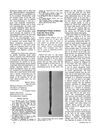
July 1967 in “Science” This study observed morphological changes in scalp hair follicles of humans deprived of protein for 15 days, which suggests potential use in diagnosing protein-calorie malnutrition.
 1 citations
,
August 2023 in “South Asian Research Journal of Pharmaceutical Sciences”
1 citations
,
August 2023 in “South Asian Research Journal of Pharmaceutical Sciences” This study examined the relationship between asprosin levels and polycystic ovary syndrome, finding no statistically significant difference in asprosin levels between patients and healthy controls, although differences in fetuin a levels were significant.
 29 citations
,
December 2017 in “Molecular therapy”
29 citations
,
December 2017 in “Molecular therapy” This study found that enzyme replacement therapy in mice with a severe form of classical homocystinuria improved metabolic patterns and alleviated many clinical symptoms.