June 2025 in “JCEM Case Reports” In this case study, authors reported that a 43-year-old female patient initially showed persistently high testosterone levels due to immunoassay interference, later verified as normal using liquid chromatography-tandem mass spectrometry (LC-MS/MS), highlighting the need to consider assay artifacts in diagnosing hyperandrogenism without clinical signs.
September 2025 in “British Journal of Hospital Medicine” This study found that certain plasma protein ratios, specifically AGRN/HSPG2 and DECR1/FKBP1B, were significantly associated with an increased risk of alopecia areata, indicating potential causal relationships but reverse causality was not supported.
 19 citations
,
January 2017 in “Hormone Molecular Biology and Clinical Investigation”
19 citations
,
January 2017 in “Hormone Molecular Biology and Clinical Investigation” This study found a high prevalence of hyperandrogenemia in women with PCOS, with distinct biochemical differences according to BMI and presence of hyperandrogenemia.

This case report details a 38-year-old woman in Sri Lanka diagnosed with systemic lupus erythematosus-associated protein-losing enteropathy, identified through hypoalbuminemia and EULAR criteria in a resource-limited setting.
59 citations
,
January 1976 in “Vitamins and hormones” This chapter discusses androgen receptors and protein synthesis in the prostate, reporting that DHT-dependent receptor protein translocation increases protein-synthesizing activity after androgen injection in rat models.
17 citations
,
September 2000 in “Journal of dermatology” This case report describes a rare instance where a child with nonketotic hyperglycinemia developed an acrodermatitis enteropathica-like eruption, likely due to combined zinc and branched chain amino acid deficiencies.
 24 citations
,
March 2017 in “Archives of Gynecology and Obstetrics”
24 citations
,
March 2017 in “Archives of Gynecology and Obstetrics” The study found that women with hyperandrogenic PCOS have higher levels of AKT1 and AKT2 proteins in their cells, which may lead to cell dysfunction.
May 2021 in “Journal of the Endocrine Society” This case report describes severe hypothyroidism exacerbated by nephrotic syndrome in a 62-year-old woman, with a diagnosis of membranous nephropathy linked to significant proteinuria.
 28 citations
,
July 2022 in “Endocrine”
28 citations
,
July 2022 in “Endocrine” This study suggests that young women with low prolactin levels may face higher cardiometabolic risk, and reducing cabergoline dosage reversed related metabolic disturbances.
7 citations
,
July 1979 in “Archives of Dermatology” This article discusses the case of a patient on long-term renal dialysis with high serum vitamin A levels likely due to inadequate removal during dialysis, highlighting the need to reassess vitamin A supplementation in such patients.
1 citations
,
October 2020 in “Journal of the American Society of Nephrology” This case report describes proguanil-related hematologic toxicity in a patient on peritoneal dialysis, suggesting that this malaria prophylaxis should be avoided in chronic kidney disease due to proguanil accumulation.
 5 citations
,
October 2018 in “Medical Science Monitor”
5 citations
,
October 2018 in “Medical Science Monitor” This study concluded that PCOS patients, regardless of weight, have significantly lower serum amylin levels than healthy BMI-matched controls, while serum preptin levels did not vary significantly between groups.
52 citations
,
March 2011 in “Clinical Gastroenterology and Hepatology” This article reviews current therapies for exocrine pancreatic insufficiency in chronic pancreatitis, highlighting the challenges in achieving optimal enzyme dosing and the potential need for treatment even in asymptomatic patients.
 11 citations
,
January 2013 in “Revista Brasileira De Terapia Intensiva”
11 citations
,
January 2013 in “Revista Brasileira De Terapia Intensiva” This article reports a case of rhabdomyolysis in a patient two hours after consuming the freshwater fish Mylossoma duriventre, suggesting a possible link to Haff disease from an unidentified toxin.
66 citations
,
November 1997 in “Nutrition” This study found that while micronutrient abnormalities are common among patients receiving home parenteral nutrition, serious consequences from these abnormalities are rare.
 3 citations
,
January 2015 in “Clinical and Experimental Dermatology”
3 citations
,
January 2015 in “Clinical and Experimental Dermatology” This article discusses a serious side effect associated with a potentially widely used cosmetic product but reports no new experimental results.
16 citations
,
September 2009 in “Schweizer Archiv für Tierheilkunde” This case report describes an 8-year-old Russian Blue cat with bilateral adrenal carcinomas secreting high levels of progesterone, showing symptoms similar to hypercortisolism.
 1 citations
,
August 1978 in “Dicp-The annals of pharmacotherapy”
1 citations
,
August 1978 in “Dicp-The annals of pharmacotherapy” A liquid protein diet caused hair loss in a young woman.
 2 citations
,
April 2023 in “Curēus”
2 citations
,
April 2023 in “Curēus” This study presents a case of a 24-year-old man who developed mild transaminitis and rhabdomyolysis within 24 hours of starting valproic acid for seizures, with symptom resolution following drug cessation.
4 citations
,
April 1978 in “PubMed” This case study describes a six-month-old boy diagnosed with Netherton syndrome, featuring ichthyosiform erythroderma and alopecia, possibly linked to aminoaciduria.
April 2026 in “Almanac of Clinical Medicine” In this study, pemphigus vulgaris patients treated with high-dose prednisolone developed symptoms similar to those seen in corticosteroma, such as weight gain and muscle weakness, with increased risks of arterial hypertension and glucose metabolism disorders after 6 months of therapy.
February 2026 in “Pediatrics in Review” This case report describes an infant with congenital hyperinsulinism linked to a genetic mutation in the ABCC8 gene, illustrating challenges in managing persistent hypoglycemia despite medical interventions, leading to a near-total pancreatectomy.
December 2025 in “Frontiers in Nutrition” This study found that in patients with AIDS-related non-Hodgkin lymphoma undergoing targeted therapy, a positive serum albumin change rate was significantly associated with better treatment outcomes, suggesting the value of dynamic albumin monitoring and nutritional support during treatment.
 April 2013 in “The Journal of Urology”
 Higher CRP levels suggest chronic inflammation is linked to bladder-related urinary symptoms in men with enlarged prostates.
 March 2025 in “FEBS Journal”
 This study found that Epiprofin acts as a negative regulator of parathyroid hormone transcription, with potential implications for controlling PTH production in hyperparathyroidism.
4 citations
,
March 1979 in “Journal of Animal Science” This study suggests that feeding pregnant mares protein blocks with urea is as effective as hand-fed protein supplements in supporting hair follicle development and protein status.
 3 citations
,
April 2012 in “Internal and Emergency Medicine”
3 citations
,
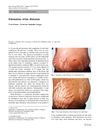
April 2012 in “Internal and Emergency Medicine” In this case report, a 14-year-old girl with nephrotic syndrome developed large edematous striae distensae due to high-dose steroid use and rapid body size increase from edema fluid accumulation.
2 citations
,
January 1989 in “PubMed” In this study, 48% of women with androgenetic alopecia showed hypothyroidism or hyperprolactinemia after TRH stimulation, suggesting these conditions may influence androgen metabolism and contribute to hair loss.
 September 2008 in “Fertility and Sterility”
 This study found that pregnancies with gestational diabetes in a Midwestern U.S. cohort demonstrated elevated androgen levels compared to healthy controls, suggesting a common relationship between impaired glucose tolerance and hyperandrogenemia across diverse ethnic backgrounds.
September 2008 in “Pediatric Rheumatology” This study reports that the symptoms and immunological findings in two children with diverse autoimmune-like conditions were ultimately attributed to lysinuric protein intolerance, confirmed by genetic analysis in one child.