 6 citations
,
April 1996 in “Journal of histochemistry and cytochemistry/The journal of histochemistry and cytochemistry”
6 citations
,
April 1996 in “Journal of histochemistry and cytochemistry/The journal of histochemistry and cytochemistry” This study suggests that TGF-alpha may function in an autocrine or juxtacrine manner rather than promoting cell proliferation during hair growth cycles in ferrets and sheep.
 3 citations
,
November 2005 in “Women's health”
3 citations
,
November 2005 in “Women's health” This narrative review discusses various causes and treatments of hirsutism in women, emphasizing the importance of identifying androgen-secreting tumors, but does not present new study results.
 3 citations
,
November 1999 in “Journal of Cutaneous Medicine and Surgery”
3 citations
,
November 1999 in “Journal of Cutaneous Medicine and Surgery” AGA is a genetic, hormonal hair loss treated with finasteride, minoxidil, and supplements, but new compounds are being developed.
 48 citations
,
July 2002 in “Journal of Cutaneous Medicine and Surgery”
48 citations
,
July 2002 in “Journal of Cutaneous Medicine and Surgery” This review discusses the variety of skin conditions linked to eating disorders and emphasizes that resolving these skin issues often requires treating the underlying disorder.
 41 citations
,
October 2012 in “Australian and New Zealand Journal of Psychiatry”
41 citations
,
October 2012 in “Australian and New Zealand Journal of Psychiatry” Negative expectations can cause adverse effects in patients even without active treatment, and managing this nocebo effect involves better communication and patient-clinician relationships.
 9 citations
,
January 2018 in “American Journal of Men's Health”
9 citations
,
January 2018 in “American Journal of Men's Health” This study analyzed self-reports from discussion forums to categorize and understand adverse effects experienced by individuals using finasteride, suggesting a need for further investigation into post-finasteride syndrome.
 9 citations
,
November 2014 in “Journal of feline medicine and surgery”
9 citations
,
November 2014 in “Journal of feline medicine and surgery” This case study suggests lymphocytic mural folliculitis in a cat might be an early sign of pancreatic carcinoma.
 9 citations
,
September 2009 in “Journal of Cutaneous Medicine and Surgery”
9 citations
,
September 2009 in “Journal of Cutaneous Medicine and Surgery” This study reports cases of androgenetic alopecia patients with depigmented macules on sun-exposed scalp areas, suggesting potential ultraviolet-induced scalp leukoderma not covered in existing dermatology texts.
 6 citations
,
February 2014 in “Human & experimental toxicology”
6 citations
,
February 2014 in “Human & experimental toxicology” This case report describes the first instance of facial and oral mucosal hyperpigmentation and acanthosis nigricans linked to testosterone therapy in a patient with idiopathic hypogonadotropic hypogonadism.
 6 citations
,
May 2011 in “Journal of Pharmacy Technology”
6 citations
,
May 2011 in “Journal of Pharmacy Technology” This article discusses the growing trend of repurposing existing medications for innovative therapeutic uses and highlights the need for pharmacy practitioners to be informed about accessing clinical evidence related to these applications, but it reports no new results.
 4 citations
,
July 2015 in “Journal of Feline Medicine and Surgery Open Reports”
4 citations
,
July 2015 in “Journal of Feline Medicine and Surgery Open Reports” This case report describes a 10-year-old British Shorthair cat with lethargy, weight loss, alopecia, and spontaneous pruritus, revealing severe skin changes upon examination.
 2 citations
,
March 2016 in “InnovAiT”
2 citations
,
March 2016 in “InnovAiT” This article discusses the signs, symptoms, and associated risks of polycystic ovary syndrome, without providing new clinical results; it emphasizes the link between being overweight and increased metabolic risks.
 1 citations
,
December 2010 in “InnovAiT”
1 citations
,
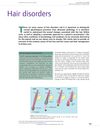
December 2010 in “InnovAiT” This article reviews common causes of hair loss and hair excess and discusses their management in primary care settings, but it reports no new clinical results.
 November 2008 in “Journal of Generic Medicines”
 The document updates on EU legal changes, including pharmaceutical patents, class actions in Italy, and various drug-related rulings.
 July 2007 in “Journal of Generic Medicines”
 The UK High Court revoked Lundbeck's patent for Escitalopram, and second medical use claims based on dosage were not considered novel.
 March 2000 in “The Journal of pharmacy technology”
 This review discusses the use of finasteride for treating androgenetic alopecia in men, noting its effectiveness in maintaining and regrowing hair on the scalp and top of the head.
 6 citations
,
October 2020 in “medRxiv (Cold Spring Harbor Laboratory)”
6 citations
,
October 2020 in “medRxiv (Cold Spring Harbor Laboratory)” This study found that early pharmacological treatment of COVID-19 in females, including those with hyperandrogenic conditions, significantly improved clinical outcomes, with spironolactone users experiencing milder symptoms and faster recovery.
6 citations
,
November 2024 in “Molecular Medicine” This review highlights that hormones significantly influence the wound healing process by coordinating cellular and molecular activities, and hormonal therapy is emerging as a promising treatment, with current research focusing on optimizing dosages and minimizing side effects.
 November 2024 in “Journal of Family Medicine and Primary Care”
 This review highlights that 5 Alpha Reductase Inhibitors, used for treating conditions like benign prostatic hypertrophy, can cause side effects that sometimes persist after stopping the medication, urging physicians to consider these drugs as potential sources of new symptoms in patients.
 1 citations
,
May 2021 in “Mayo Clinic Proceedings”
1 citations
,
May 2021 in “Mayo Clinic Proceedings” This medical case report describes a 69-year-old man's diagnosis and management of ANCA-associated vasculitis leading to rapidly progressive glomerulonephritis, ultimately treated with glucocorticoids and rituximab.
December 2025 in “Fertility and Sterility” Both LNG-IUD and systemic progestins are effective for fertility-sparing treatment, but close monitoring is needed due to recurrence risk.
6 citations
,
July 2021 in “International Wound Journal” In this study, a novel biofilm-dispersing wound gel did not interfere with healing and may enhance it by reducing inflammation in murine models with full-thickness skin wounds.
4 citations
,
October 2018 in “Journal of Mind and Medical Sciences” This article reviews challenges in managing malignant ureteral obstruction and emphasizes prompt treatment to preserve renal function, but reports no clinical results.
 1 citations
,
August 2022 in “Biomedicines”
1 citations
,
August 2022 in “Biomedicines” This review assesses the potential of dutasteride as a promising treatment for ALS due to its reported neuroprotective, antioxidant, and anti-inflammatory effects, but emphasizes that clinical studies are needed for confirmation.
 September 2015 in “Korean Journal of Clinical Pharmacy”
 In this study, topical minoxidil 7% with dutasteride 0.5 mg showed higher efficacy but more adverse effects compared to minoxidil 7% with finasteride 1 mg for treating androgenetic alopecia.
3 citations
,
April 2021 in “Journal of Clinical Medicine” This pilot study found that bacterial cultures in axillary lymph nodes, skin lesions, and fistulae matched in one hidradenitis suppurativa patient, but the small sample size limits definitive conclusions.
 3 citations
,
December 2016 in “Universal journal of pharmaceutical research”
3 citations
,
December 2016 in “Universal journal of pharmaceutical research” This study concluded that Finasteride can be effectively delivered in matrix tablets using different polymer ratios for sustained release.
October 2024 in “Journal of Cutaneous Pathology” In this study of folliculitis decalvans, researchers found that compound follicular structures in scalp biopsies are primarily composed of terminal anagen follicles, surrounded by fibrosis and inflammatory cell infiltrate, which could enhance understanding of this condition.
 December 2024 in “Therapeutic Delivery”
 This review discusses the current therapies for androgenic alopecia, emphasizing topical formulations like minoxidil and finasteride and exploring the potential of dutasteride-loaded nanocarriers for targeting hair follicles to minimize systemic side effects from oral treatment.
 17 citations
,
January 2013 in “Indian Journal of Pharmacology”
17 citations
,
January 2013 in “Indian Journal of Pharmacology” This case report highlights an interest in exploring the relationship between serum levels of sodium valproate and hair loss, though no case reports currently establish this link.