 January 2025 in “International Journal of Dermatology”
 This case report describes a patient with eruptive tumor of follicular infundibulum, emphasizing the need for dermatologists to include it in the differential diagnosis of acquired facial hypopigmentation.
69 citations
,
May 2002 in “Journal of Investigative Dermatology” This study suggests that congenital atrichia with papular lesions may be more common than previously thought and proposes diagnostic criteria including the observation of hypopigmented whitish streaks on the scalp.
 4 citations
,
January 2011 in “Annals of Dermatology”
4 citations
,
January 2011 in “Annals of Dermatology” This article discusses the role of HR gene mutations in differentiating atrichia with papular lesions from alopecia universalis, but presents no new experimental results.
48 citations
,
August 1998 in “Journal of the American Academy of Dermatology” This review discusses the structural differences between black and white skin, noting that black skin has more compact stratum corneum, larger melanosomes, and increased transepidermal water loss.
7 citations
,
January 2008 in “Indian Journal of Dermatology” This review discusses the clinical manifestations and genetic basis of pigmentary mosaicism, highlighting its varied phenotypic expressions, but reports no new clinical results.
4 citations
,
November 2020 in “Case reports in dermatology” This report summarizes recent cases of the rare condition erythromelanosis follicularis faciei et colli to illustrate its varied clinical presentations.
 April 2026 in “SHILAP Revista de lepidopterología”
 This case report illustrates that prompt diagnosis and treatment of myositis in an SLE patient can lead to symptom resolution and highlights this condition as a rare SLE complication.
This case report illustrates that prompt diagnosis and management of myositis, a rare manifestation of Systemic Lupus Erythematosus, can lead to favorable patient outcomes, as demonstrated by symptom resolution and normal electromyocardiography findings.
34 citations
,
October 2011 in “Journal of the American Academy of Dermatology” This review covers the diverse cutaneous and systemic presentations of sarcoidosis in patients with skin of color, emphasizing the importance of early recognition to improve outcomes despite a generally poorer prognosis compared to Caucasians.
 14 citations
,
January 2012 in “International Journal of Dermatology”
14 citations
,
January 2012 in “International Journal of Dermatology” This case report describes oleoma on the thighs and buttocks appearing two years after an injection for cellulite treatment, suggesting the need for more research to ensure the procedure's safety and efficacy.
 January 2017 in “Dermatology Review”
 This article discusses skin lesions in chronic graft-versus-host disease and highlights the importance of coordinated care between haematologists and dermatologists for effective management; it presents no new clinical results.
 May 2015 in “Actas Dermo-Sifiliográficas”
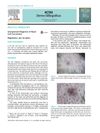
 A young man was unexpectedly diagnosed with basal cell carcinoma after a scalp examination and confocal microscopy.
 June 2023 in “Pediatric investigation”
 This case report describes a 7-year-old boy with pityriasis versicolor presenting as scalp hypopigmentation, a rare distribution for this fungal infection. Diagnosis was confirmed via Wood's lamp examination and microscopy, and the condition resolved after treatment with topical terbinafine hydrochloride cream.
 March 2017 in “BIRDEM Medical Journal”
 This report discusses two cases of sarcoidosis with cutaneous manifestations that posed a diagnostic challenge, without presenting new clinical results.
 November 2023 in “Berkala Ilmu Kesehatan Kulit dan Kelamin/Berkala ilmu kesehatan kulit dan kelamin (Periodical of dermatology and venerology)”
 This study suggests that using a dermoscope, a handheld microscope, can effectively help distinguish between Pityrosporum folliculitis and Acne vulgaris by revealing unique lesion characteristics that are not visible to the naked eye, offering a practical diagnostic alternative when KOH examinations are unavailable.
 12 citations
,
January 2005 in “Pediatric Dermatology”
12 citations
,
January 2005 in “Pediatric Dermatology” Fox Fordyce disease might be more common in prepubertal girls than thought and can be managed with treatment.
 9 citations
,
July 2010 in “British Journal of Dermatology”
9 citations
,
July 2010 in “British Journal of Dermatology” This article reports on lentiginosis observed within plaques of linear atrophoderma of Moulin and discusses its potential classification as a twin-spotting phenomenon but provides no new clinical research results.
3 citations
,
November 2018 in “Journal of osteopathic medicine” This case study describes a 64-year-old woman with sarcoidosis who experienced scalp alopecia and hypopigmented patches, which improved with topical clobetasol propionate.
7 citations
,
January 2013 in “Indian dermatology online journal” This report describes a rare case of a three-day-old male with ichthyosis hystrix type of epidermal nevus, featuring specific skin and hair symptoms but no nail or skeletal abnormalities.

In this case report, a 59-year-old woman experienced burning sensations and developed atrophic, hypopigmented, ivory papules and plaques on her palms and soles over three years, which worsened after walking for extended periods.
 1 citations
,
January 2009
1 citations
,
January 2009 In this case report, a 25-year-old man with nevus comedonicus showed no improvement from keratolytics and topical tretinoin, but had success with surgical excision of the lesions.
 December 2025 in “Cureus”
 In this case report, a unique immunological mechanism was observed in an 11-year-old girl where the presence of one autoimmune disease appeared to prevent the manifestation of another, leading to the withdrawal of one type of lesion when another appeared.
4 citations
,
May 2012 in “BMJ Case Reports” This case report describes a male infant born to a mother with systemic lupus erythematosus, presenting with neonatal lupus, who improved with conservative management and whose skin lesions resolved by 6 months of age.
 5 citations
,
January 2018 in “Annals of Dermatology”
5 citations
,
January 2018 in “Annals of Dermatology” A 308 nm excimer laser successfully treated a boy with a rare skin condition after about a year of weekly sessions.
January 2026 in “Annals of Dermatology” This review outlines evidence-based strategies for diagnosing pediatric hypopigmented disorders and emphasizes distinguishing vitiligo from self-limiting conditions through a systematic clinical approach; no new results are reported.
February 2026 in “Contact Dermatitis” This study reports a case of phytodermatitis in a 58-year-old male due to exposure to Axonopus compressus, commonly known as carpet grass, during open defecation, highlighting an unusual cause of contact dermatitis linked to sanitation practices.
 September 2024 in “Electronic Journal of General Medicine”
 This case report describes a healthy Thai male who developed severe folliculitis following diode laser hair removal, which improved significantly with prednisolone and benzoyl peroxide treatment.

In this case report, researchers observed that a malnourished male patient developed pseudoglucagonoma syndrome, characterized by necrolytic migratory erythema and diffuse hair loss, following Frey's surgery, which rapidly improved with enhanced nutrition.
 February 2010 in “Journal of the American Academy of Dermatology”
 Lactic acid cream can help improve skin bumps known as eruptive vellus hair cysts.
 May 2002 in “British Journal of Dermatology”
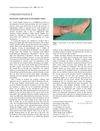
 A pregnant woman's skin condition improved after giving birth, possibly due to high estrogen levels during pregnancy.