 20 citations
,
January 2014 in “Journal of the European Academy of Dermatology and Venereology”
20 citations
,
January 2014 in “Journal of the European Academy of Dermatology and Venereology” This article includes no new results; it discusses ongoing treatment approaches for frontal fibrosing alopecia and lichen planopilaris.
 5 citations
,
January 2017 in “Anais brasileiros de dermatologia/Anais Brasileiros de Dermatologia”
5 citations
,
January 2017 in “Anais brasileiros de dermatologia/Anais Brasileiros de Dermatologia” This review reports two new cases of porokeratotic eccrine and hair follicle nevus and analyzes all known cases in the Spanish and English literature, suggesting a link to a GJB2 gene mutation.
 May 2021 in “Dermatopathology”
 This review discusses the adnexotropic presentations of interface dermatitides and highlights the importance of recognizing adnexal involvement to aid in accurate diagnosis and avoid misinterpretation.
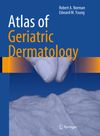 2 citations
,
January 2014 in “Springer eBooks”
2 citations
,
January 2014 in “Springer eBooks” The book details skin conditions in older adults, their link to mental health, cancer treatment importance, hair loss remedies, and managing autoimmune and itchy skin.
 19 citations
,
October 2019 in “Dermatology Practical & Conceptual”
19 citations
,
October 2019 in “Dermatology Practical & Conceptual” This review discusses the expanding applications of dermoscopy in dermatological diagnosis beyond its initial use for detecting dysplastic nevi and reports no new clinical results.
 July 2023 in “Clinical, cosmetic and investigational dermatology”
 In this study, reflectance confocal microscopy was used to diagnose periorificial dermatitis, revealing specific skin changes such as hair follicle dilatation, increased vascular density, and inflammation, which help distinguish it from similar conditions.

The document concludes that dermatology training and grading scales need to better represent dark-skinned individuals to improve diagnosis and assessment of skin conditions.
 157 citations
,
June 2011
157 citations
,
June 2011 Dermatoscopy and videodermatoscopy are useful for diagnosing and monitoring various skin, hair, and nail conditions.
 July 2013 in “British Journal of Dermatology”
 The document reviews key historical figures and discoveries in dermatology.
33 citations
,
May 2015 in “JAMA Dermatology” This study identifies comedonal or cystic fibrofolliculomas as novel diagnostic clues for earlier recognition of Birt-Hogg-Dube syndrome, potentially facilitating timely surveillance of associated systemic complications.
 3 citations
,
October 2021 in “Clinical, Cosmetic and Investigational Dermatology”
3 citations
,
October 2021 in “Clinical, Cosmetic and Investigational Dermatology” This review discusses the epidemiology, risk factors, clinical features, and management of scalp melanomas, highlighting their high mortality rates and specific challenges in diagnosis and treatment; it reports no new research findings.
 2 citations
,
October 2023 in “Dermatology practical & conceptual”
2 citations
,
October 2023 in “Dermatology practical & conceptual” This systematic review evaluated 60 studies on trichoscopy in hair and scalp disorders, revealing gaps in accounting for variables like disease stage or hair texture, and underscoring a need for more comprehensive analyses to fully understand trichoscopic patterns.
 305 citations
,
February 2007 in “Hormone and metabolic research”
305 citations
,
February 2007 in “Hormone and metabolic research” This review discusses the roles of androgens and estrogens in skin functions and disorders, and highlights the use of estrogen-progestin treatments and anti-androgens in managing hirsutism and acne, without reporting new results.
 36 citations
,
June 2018 in “Journal of The American Academy of Dermatology”
36 citations
,
June 2018 in “Journal of The American Academy of Dermatology” This review examines the increasing clinical applications of dermoscopy in diagnosing various skin conditions and highlights its potential to improve diagnostic accuracy and reduce unnecessary histologic confirmation.
 1 citations
,
October 1984 in “Clinics in dermatology”
1 citations
,
October 1984 in “Clinics in dermatology” This article discusses the psychological impact of skin imperfections and suggests establishing a Cosmetic Dermatology Service within public health systems to address these issues ethically.
 34 citations
,
September 1992 in “Journal of the American Academy of Dermatology”
34 citations
,
September 1992 in “Journal of the American Academy of Dermatology” This article provides dermatology residents with essential information on cosmetic use to help manage skin conditions and reactions, without reporting new clinical results.
 December 2024 in “Journal of Cutaneous and Aesthetic Surgery”
 The researchers observed that dermoscopy is valuable for assessing acne scars and their response to treatment, with shorter-duration scars responding more effectively.
12 citations
,
January 2013 in “Indian dermatology online journal” This case report details a 21-year-old woman with dermatopathia pigmentosa reticularis, presenting with generalized reticulate hyperpigmentation, diffuse noncicatricial alopecia, onychodystrophy, palmoplantar keratoderma, and poorly developed dermatoglyphics.
January 2020 in “Revista Dermatológica Centro Uraga” This article describes how recognizing distinct trichoscopic features aids in diagnosing various dermatological conditions and hair loss, but it reports no new clinical findings.
 5 citations
,
October 2022 in “Cosmetics”
5 citations
,
October 2022 in “Cosmetics” This article reviews in-vitro and cell-free methods for assessing the efficacy of herbal ingredients in cosmetic formulations for skin health and hair growth, but it reports no new clinical results.
14 citations
,
January 2018 in “Skin Appendage Disorders” This case report suggests that identifying hyperpigmentation on the upper eyelid with specific dermoscopy patterns could help diagnose facial lichen planus pigmentosus without needing a facial biopsy.
 14 citations
,
January 2005 in “Pediatric Dermatology”
14 citations
,
January 2005 in “Pediatric Dermatology” This case report describes a child with hypopigmented mycosis fungoides successfully treated with UVA1 light therapy.
1 citations
,
December 2024 in “Case Reports in Dermatology” In this case study, the researchers reported a rare incidence of bilateral hyperpigmented macules on a patient's lower legs, possibly due to cyclophosphamide, suggesting that this chemotherapy drug may directly stimulate hair follicles to cause skin discoloration.
October 2024 in “Indian Journal of Dermatology” In this case report, a 13-year-old boy was diagnosed with a rare variant of cutaneous sarcoidosis presenting as Lichen Planus Pigmentosus-like hyperpigmentation, highlighting the diagnostic challenges associated with identifying uncommon manifestations of this disease.
 October 2019 in “International journal of research in dermatology”
 This case report describes two instances of hyper-pigmentation induced by prolonged misuse of Betnovate cream, where cessation and appropriate treatment led to significant improvement within 15 days.
 5 citations
,
January 2018 in “Annals of Dermatology”
5 citations
,
January 2018 in “Annals of Dermatology” A 308 nm excimer laser successfully treated a boy with a rare skin condition after about a year of weekly sessions.
 January 2025 in “International Journal of Dermatology”
 This case report describes a patient with eruptive tumor of follicular infundibulum, emphasizing the need for dermatologists to include it in the differential diagnosis of acquired facial hypopigmentation.
 September 2017 in “Journal of Investigative Dermatology Symposium Proceedings”
 This review discusses the clinical features of hypopigmented mycosis fungoides in primary cutaneous T cell lymphoma and reports no new clinical results.
January 1991 in “Linchuang pifuke zazhi” 2 citations
,
June 2009 in “Journal of the American Academy of Dermatology” This case report describes a healthy 27-year-old woman with progressive alopecia and hyperpigmentation on her forehead and frontal scalp, with limited response to triamcinolone acetonide treatment.