 288 citations
,
June 2009 in “Human reproduction update”
288 citations
,
June 2009 in “Human reproduction update” This review examines various methods for assessing hair growth in women, highlighting the usefulness of the mFG visual scoring method for diagnosing hirsutism despite its limitations.
46 citations
,
July 1974 in “The Journal of Clinical Endocrinology & Metabolism” In this study, women with hirsutism and amenorrhea showed lower serum estradiol and sex hormone binding globulin concentrations but higher levels of unbound testosterone compared to normal individuals.
7 citations
,
July 2004 in “Endocrine practice” This case report highlights how persistent hyperphosphatemia, albeit often overlooked, can precede clinical acromegaly symptoms in women, complicating diagnosis due to overlapping features with oral contraceptive use and polycystic ovary syndrome.
 March 2025 in “Pakistan journal of physiology.”
 This hospital-based cross-sectional study found that a substantial proportion of women with female pattern hair loss also had metabolic syndrome, with no significant differences in frequency across age, disease duration, or hair loss pattern subgroups.
 111 citations
,
November 2010 in “Human Reproduction”
111 citations
,
November 2010 in “Human Reproduction” This study found that young indigenous South Asian women with polycystic ovary syndrome are more likely to be centrally obese and have metabolic syndrome, particularly with increasing age, higher BMI, and acanthosis nigricans.
 July 2023 in “Annals of King Edward Medical University”
 This randomized clinical trial compared bimatoprost 0.03% solution and mometasone furoate 0.1% cream for treating alopecia areata in 60 patients, finding that mometasone furoate led to better hair regrowth, while both treatments showed significant effectiveness.
12 citations
,
March 2012 in “JEADV. Journal of the European Academy of Dermatology and Venereology/Journal of the European Academy of Dermatology and Venereology” This study observed that some patients with homozygous c.736T>A mutation in LIPH may have mild hypotrichosis with long hairs in adulthood.
 2 citations
,
February 2021 in “Endocrinology, diabetes & metabolism case reports”
2 citations
,
February 2021 in “Endocrinology, diabetes & metabolism case reports” This case report describes a 15-year-old girl with severe hyperandrogenaemia linked to both an ovarian androgen-secreting tumor and HAIR-AN syndrome, highlighting the complexity of diagnosing polycystic ovarian syndrome.
In this case report, topical application of fluocinolone acetonide acetate ointment increased hair length and thickness in three family members with congenital hypotrichosis.
 September 2025 in “Scientific periodicals of Ukraine”
 This study found that a 3-month treatment with metformin significantly reduced serum luteinizing hormone, FSH, and testosterone concentrations in women with PCOS.
 January 2011 in “Journal of pediatric endocrinology & metabolism/Journal of pediatric endocrinology and metabolism”
 This case study reported hyperandrogenism in non-obese triplet sisters with one sister's hyperthyroidism masking its clinical and biochemical signs until treatment increased her androgen levels and hirsutism.
3 citations
,
February 2001 in “British journal of ophthalmology” This case report presents a 28-year-old woman with alopecia universalis and macular dystrophy, highlighting a potential new linkage between these conditions without previously identified associated genes.
 21 citations
,
November 2015 in “Archives of Gynecology and Obstetrics”
21 citations
,
November 2015 in “Archives of Gynecology and Obstetrics” Greek women with PCOS have a higher risk of metabolic syndrome and are more likely to be overweight compared to healthy controls.
January 2026 in “International Journal of Gynaecology Sciences” This review discusses the proposal to rename Polycystic Ovary Syndrome as PolyMetabolic Ovarian Syndrome and reports no new clinical results, highlighting diagnostic misconceptions and the importance of personalized management.
 4 citations
,
June 2019 in “Revista brasileira de ginecologia e obstetrícia”
4 citations
,
June 2019 in “Revista brasileira de ginecologia e obstetrícia” This article discusses the prevalence of hirsutism in women and highlights that many cases exhibit normal androgen levels, suggesting a need for broader diagnostic approaches.
 52 citations
,
November 2003 in “Journal of Investigative Dermatology”
52 citations
,
November 2003 in “Journal of Investigative Dermatology” In this study, mutations in the CDH3 gene were identified as the cause of hypotrichosis with juvenile macular dystrophy, and the researchers observed substantial phenotypic variability among affected individuals.
 November 2025 in “Asian Journal of Medical Sciences”
 In this study of women with PCOS in a rural setting, researchers observed no significant differences in hormonal or metabolic profiles based on age at menarche, but early menarche was associated with higher hirsutism, suggesting it could serve as an indicator of hyperandrogenism risk.
 January 2019 in “Global Dermatology”
 This review discusses the genetic disorder, monilethrix, characterized by fragile, brittle hair and its inheritance patterns, and reports no new clinical results.
 4 citations
,
July 2013 in “Journal of dermatology”
4 citations
,
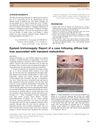
July 2013 in “Journal of dermatology” Malnutrition can cause unusual eyelash growth and hair loss.
April 2023 in “International journal of medical and biomedical studies” This study observed that among 126 Indian patients with androgenetic alopecia, 29.4% had metabolic syndrome, with higher severity of alopecia correlating with increased prevalence of metabolic syndrome components such as obesity and hypertension, suggesting early screening for metabolic risks could be beneficial.
September 2025 in “Indian Journal of Dermatology” In this case report, researchers detailed a 22-year-old Turkish woman diagnosed with autosomal recessive woolly hair/hypotrichosis (ARWH/H), linked to a mutation in the LIPH gene, resulting in sparse, poorly growing, curly hair, highlighting the need for genetic consideration in similar hair conditions.
26 citations
,
June 2003 in “Obstetrics and gynecology clinics of North America” This review discusses the use of insulin-sensitizing agent metformin for treating PCOS in adolescents, noting potential benefits but emphasizing the need for more rigorous trials due to current study limitations.

This study found that women with PCOS had significant hormonal imbalances, increased central obesity, and a lower 2D:4D digit ratio, suggesting prenatal androgen exposure may play a role in the condition's development.
November 2025 in “Journal of Clinical Medicine” This review article explores the potential systemic nature of alopecia areata, highlighting the association with ocular abnormalities and suggesting that shared pathogenic pathways may lead to eye symptoms occurring at younger ages than usual.
 13 citations
,
March 2019 in “Medicina Clínica (english Edition)”
13 citations
,
March 2019 in “Medicina Clínica (english Edition)” This paper reviews the complexities of diagnosing and managing polycystic ovary syndrome, emphasizing the importance of individualized treatment to address symptoms due to hyperandrogenism, ovarian dysfunction, and metabolic issues, but reports no new results.
 September 2023 in “Cutis”
 This study presents a case of a 6-month-old infant girl with hypotrichosis and an alopecic plaque in the occipital region, characterized by broken and dystrophic hairs with follicular papules and perifollicular hyperkeratosis, suggesting a diagnostic consideration.
13 citations
,
July 2004 in “Pediatric dermatology” This case study describes a 9-year-old boy with monilethrix and associated abnormalities, suggesting a new, severe autosomal recessive variant termed "monilethrix syndrome.
January 2013 in “Obstetrical & gynecological survey” This review discusses diagnostic and management approaches for hirsutism, emphasizing that most cases are due to polycystic ovary syndrome or obesity-related disorders, with idiopathic hirsutism often treated cosmetically.
 April 2016 in “Journal of The American Academy of Dermatology”
 This study found that dermatology consultations in a tertiary care center often led to treatment changes, particularly for complex dermatologic conditions potentially linked to systemic disease.
 February 2005 in “Journal of The American Academy of Dermatology”
 This discussion covers various nail disorders, including tumors and non-neoplastic issues, emphasizing that not all nail abnormalities are due to fungal infections, but it reports no new clinical findings.