 September 2024 in “Journal of the American Academy of Dermatology”
 In this retrospective case-control study, researchers reported that patients with alopecia areata had significantly increased odds of venous thromboembolism compared to matched controls, suggesting a potential association between alopecia areata and risk of VTE.
1 citations
,
August 2024 in “Archives of Dermatological Research” In this case-control study using the All of Us database, no significant association was observed between alopecia areata and venous thromboembolism after controlling for hypercoagulable risk factors.
This article reviews potential drug and herbal interactions with warfarin that may increase bleeding risk, and reports no new clinical results.
 April 2020 in “Journal of the Endocrine Society”
 This case report describes the first known instance of a testosterone-secreting steroid cell ovarian tumor causing pulmonary embolism and erythrocytosis in a postmenopausal woman, highlighting its potential role as a rare cause of hypercoagulable state.
 January 2023 in “International journal of dermatology, venereology and leprosy sciences”
 This study found that patients with alopecia areata had altered levels of inflammatory and coagulation markers, suggesting an association with disease pathogenesis and potential predictive value.
 1 citations
,
January 2019 in “Open Journal of Internal Medicine”
1 citations
,
January 2019 in “Open Journal of Internal Medicine” This case report describes a 19-year-old patient with systemic lupus and a composite heterozygosis SC with thalassemic component, highlighting the diagnostic challenge when symptoms of both conditions occur simultaneously.
3 citations
,
April 2020 in “American Journal of Case Reports” This case report describes the first instance of juvenile hemochromatosis type 2A associated with secondary hypothyroidism, linked to a novel mutation in the HJV gene.

This article suggests that alopecia areata may be an early skin manifestation of hereditary hemochromatosis in individuals predisposed to autoimmunity, recommending iron status evaluation during AA diagnosis; it reports no new clinical results.
1 citations
,
May 2007 in “PubMed” This case study of a subfertile couple highlighted the importance of considering haemochromatosis, particularly involving the C282Y mutation of the HFE gene, in patients with endocrine disorders linked to hypogonadism.
December 2024 in “AACE Clinical Case Reports” This study highlights a rare case of ovarian hyperthecosis in a 58-year-old postmenopausal woman, presenting with polycythemia and severe hyperandrogenism symptoms, with resolution of symptoms following laparoscopic bilateral oophorectomy.
1 citations
,
November 2011 in “InTech eBooks” This review discusses the challenges of anticoagulation in hemodialysis, including the limitations and risks of current methods, and emphasizes the need for better solutions, but reports no new clinical results.
 21 citations
,
July 2016 in “Gynecological Endocrinology”
21 citations
,
July 2016 in “Gynecological Endocrinology” This study found that women with polycystic ovary syndrome have elevated cardiovascular risk markers, with levels being higher in obese participants compared to non-obese participants.
 70 citations
,
February 2012 in “Human Reproduction”
70 citations
,
February 2012 in “Human Reproduction” This study found a high prevalence of clinical signs and functional disorders of androgen excess in premenopausal women, with idiopathic hyperandrogenism and idiopathic hirsutism rates similar to PCOS.
 January 2019 in “Springer Reference Medizin”
 This article reviews the role of factor Xa inhibitors like Rivaroxaban and suggests they may eventually replace vitamin K antagonists, but their side effects require further clarification.
7 citations
,
May 2024 in “Gels” This study evaluated a new collagen and tannic acid hydrogel in rat liver and heart bleeding models, finding it reduced blood loss and hemostatic time compared to commercial products, with benefits such as enhanced biodegradability and potential for clinical use.
January 2015 in “Current Sports Medicine Reports” This case study highlights the need for individualized assessment and discussion for athletes with idiopathic thrombocytopenic purpura due to the lack of definitive guidelines on safe participation in contact sports, noting a low bleeding risk when platelet counts are above 50,000.
 2 citations
,
November 1995 in “American Journal of Obstetrics and Gynecology”
2 citations
,
November 1995 in “American Journal of Obstetrics and Gynecology” This article reviews the need for multicenter clinical trials to establish reference data for ultrasound screening protocols for Down syndrome and reports no new findings.
 22 citations
,
September 2015 in “Clinical lymphoma myeloma & leukemia/Clinical lymphoma, myeloma and leukemia”
22 citations
,
September 2015 in “Clinical lymphoma myeloma & leukemia/Clinical lymphoma, myeloma and leukemia” This review describes the various cutaneous manifestations of essential thrombocythemia and how treatments like hydroxycarbamide, interferon-alfa, and anagrelide may lead to skin complications, but does not report new clinical findings.
27 citations
,
April 2018 in “Artificial Cells Nanomedicine and Biotechnology” This study reported that recombinant human hair keratins, K37 and K81, showed higher purity and enhanced fibrin clot formation compared to traditional extracts, reducing bleeding time and blood loss in rat injury models.
 31 citations
,
November 2014 in “Journal of Endocrinological Investigation”
31 citations
,
November 2014 in “Journal of Endocrinological Investigation” This article reviews androgen excess and cardiometabolic risks in women, highlighting increased cardiovascular disease risk in those with polycystic ovary syndrome, but reports no new clinical results.
 22 citations
,
October 2018 in “British Journal of Haematology”
22 citations
,
October 2018 in “British Journal of Haematology” This review examines the gender-specific challenges in preventing and treating venous thromboembolism in women and highlights the need for further research on safe and optimal treatment strategies.
 4 citations
,
June 2019 in “Revista brasileira de ginecologia e obstetrícia”
4 citations
,
June 2019 in “Revista brasileira de ginecologia e obstetrícia” This article discusses the prevalence of hirsutism in women and highlights that many cases exhibit normal androgen levels, suggesting a need for broader diagnostic approaches.
 May 2025 in “The Journal of Rheumatology”
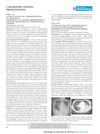
 This case report highlights a rare instance of diffuse alveolar hemorrhage in a patient with catastrophic antiphospholipid syndrome, emphasizing the importance of early recognition and multidisciplinary management.
 1 citations
,
April 2016 in “Journal of The American Academy of Dermatology”
1 citations
,
April 2016 in “Journal of The American Academy of Dermatology” A woman had a delayed allergic reaction to the blood thinner enoxaparin, treated with a steroid cream.
 8 citations
,
August 2020 in “Experimental dermatology”
8 citations
,
August 2020 in “Experimental dermatology” This study observed that platelet-rich plasma samples from female patients show significant variability in growth factor secretion, which may influence the inconsistent clinical response in alopecia treatment.
 May 2025 in “The Journal of Rheumatology”
 This case report details a 56-year-old woman's diagnosis with an overlapping syndrome of dermatomyositis, systemic lupus, and secondary antiphospholipid syndrome, highlighted by purpura fulminans, treated successfully with immunosuppressants and plasmapheresis.
January 2025 in “Dermatologic Therapy” In this study, patients with alopecia areata were found to have higher high-sensitivity cardiac troponin T levels compared to healthy controls, indicating a potential link between the condition and cardiovascular risk.
 6 citations
,
November 1980 in “Clinical Endocrinology”
6 citations
,
November 1980 in “Clinical Endocrinology” This study measured plasma testosterone glucosiduronate levels and found no overlap in those with hyperandrogenism compared to normal females, despite normal testosterone and dihydrotestosterone levels in half of the affected patients.

This study found that non-bleeding adverse events associated with NOACs affect multiple organ systems, emphasizing the importance of clinical vigilance. Specific NOACs like dabigatran, apixaban, edoxaban, and rivaroxaban were linked to distinct adverse reactions, including metabolic imbalances, thyroid disorders, and menstrual irregularities.
 6 citations
,
February 2015 in “Anais Brasileiros de Dermatologia”
6 citations
,
February 2015 in “Anais Brasileiros de Dermatologia” This study found that patients with mycosis fungoides have higher levels of cardiovascular risk markers, suggesting an increased cardiovascular risk in this group compared to healthy controls.