 479 citations
,
January 2005 in “BioEssays”
479 citations
,
January 2005 in “BioEssays” This review introduces the morphological and molecular principles of hair follicle development but reports no new experimental results, focusing on recent insights and forming a working hypothesis.
 471 citations
,
October 2012 in “Cellular and Molecular Life Sciences”
471 citations
,
October 2012 in “Cellular and Molecular Life Sciences” This review discusses the roles of key developmental signaling pathways in mammalian skin repair compared to skin development, and suggests these insights could lead to better wound healing therapies, but it reports no new findings.
 211 citations
,
November 2018 in “Nature Cell Biology”
211 citations
,
November 2018 in “Nature Cell Biology” This article discusses the coordinated roles of different epidermal stem cells and other cell types in the skin's wound healing process and reports no new experimental results.
 66 citations
,
April 1995 in “The journal of cell biology/The Journal of cell biology”
66 citations
,
April 1995 in “The journal of cell biology/The Journal of cell biology” In this study, researchers reported that a keratinocyte growth factor-Ig fusion protein could specifically detect and localize KGFRs in epithelial tissues, suggesting a method for histochemical detection of growth factor receptors.
 52 citations
,
May 2003 in “The journal of investigative dermatology/Journal of investigative dermatology”
52 citations
,
May 2003 in “The journal of investigative dermatology/Journal of investigative dermatology” This study found that overexpression of parathyroid hormone-related protein in mice resulted in 30–40% shorter hair due to premature transition into the catagen phase of the hair cycle.
 46 citations
,
December 2001 in “Journal of Endocrinology/Journal of endocrinology”
46 citations
,
December 2001 in “Journal of Endocrinology/Journal of endocrinology” This study found that mouse FLRG protein, a secreted glycoprotein, is expressed in certain tissues and plays a role distinct from follistatin during wound healing, suggesting different functions in vivo.
 36 citations
,
August 2011 in “Journal of Controlled Release”
36 citations
,
August 2011 in “Journal of Controlled Release” This review explores the potential of using genetically-manipulated stem cells as both therapeutic agents and gene delivery vehicles for enhanced wound regeneration, but it reports no new clinical results.
 24 citations
,
October 2017 in “Scientific reports”
24 citations
,
October 2017 in “Scientific reports” This study suggests that controlling light exposure can influence cashmere growth by triggering hair follicles to enter their active growth phase sooner, potentially involving the CSDC2 gene as a key regulator.
 24 citations
,
April 2012 in “Developmental Biology”
24 citations
,
April 2012 in “Developmental Biology” This animal study found that dermal papilla cells in hair follicles of chimeric mice can originate from various fibroblasts in the skin, challenging assumptions about their specific lineage.
 23 citations
,
November 2018 in “Development, Growth & Differentiation”
23 citations
,
November 2018 in “Development, Growth & Differentiation” This review discusses the role of stem cell heterogeneity and compartmentalization within the epidermis and highlights their significance as niches for neighboring cells, without reporting new experimental results.
 19 citations
,
August 2019 in “Expert Opinion on Therapeutic Targets”
19 citations
,
August 2019 in “Expert Opinion on Therapeutic Targets” This review discusses emerging targets for developing drugs to treat hair loss and reports no new clinical results; the authors emphasize the potential for therapies that regenerate hair follicles.
 10 citations
,
October 2015 in “Medicina Clínica (english Edition)”
10 citations
,
October 2015 in “Medicina Clínica (english Edition)” This review discusses the therapeutic potential and safety of bioidentical recombinant human epidermal growth factor (rhEGF) for various skin and mucosa conditions and reports no new clinical results.
 5 citations
,
September 2022 in “Research Square (Research Square)”
5 citations
,
September 2022 in “Research Square (Research Square)” This study identified CD201+ fibroblast progenitors in mouse skin that regulate wound healing through differentiation into specialized cell types, with retinoic acid and hypoxia influencing this process.
 5 citations
,
January 2022 in “PloS one”
5 citations
,
January 2022 in “PloS one” This study found that lineage-restricted loss of p63 in murine thymic epithelial cells resulted in severe thymic hypoplasia and absence of hair follicles, indicating p63's critical role in thymic and hair follicle development.
 5 citations
,
October 2020 in “Journal of radiation research”
5 citations
,
October 2020 in “Journal of radiation research” The researchers found that exosome-like vesicles from irradiated cheek skin in neonatal mice may offer protective effects against hair follicle loss after high-dose radiation exposure.
 4 citations
,
March 2017 in “Development”
4 citations
,
March 2017 in “Development” This study found that specialized nipple epidermis in mice is maintained by the repression of TGFβ signaling through estrogen, which highlights the role of hormonal regulation in epidermal maintenance.
 3 citations
,
July 2025 in “International Journal of Biological Sciences”
3 citations
,
July 2025 in “International Journal of Biological Sciences” This review highlights that the RNA modification N6-methyladenosine (m6A) plays a crucial role in regulating wound healing and tissue remodeling, with dysregulation contributing to complications in chronic wounds, such as diabetic ulcers and burn injuries, through mechanisms like impaired angiogenesis and increased oxidative stress.
 2 citations
,
February 2024 in “Nature cell biology”
2 citations
,
February 2024 in “Nature cell biology” In this research, the authors identify coordinated mechanical forces as crucial for hair follicle development in mammals, with contractile, proliferative, and proteolytic activities facilitating the formation and sectioning of epithelial structures crucial for forming a functional tissue.
 1 citations
,
January 2019 in “Journal of Embryology & Stem Cell Research”
1 citations
,
January 2019 in “Journal of Embryology & Stem Cell Research” This review discusses mesenchymal stem cells' role in tissue regeneration and skin anti-aging, highlighting their migration to damaged sites and secretome effects, but reports no new clinical results.
 June 2026 in “Research Square”
 This study identified a group of dermal fibroblasts near hair follicle stem cells in mice that facilitate hair regeneration by creating a biomechanically compliant extracellular matrix, enhancing stem cell activation and promoting a positive feedback loop for tissue regeneration.
 October 2025 in “Clinical Cosmetic and Investigational Dermatology”
 This study synthesizes knowledge of how dendritic cell signals, epithelial integrins, and fibroblast activity converge on TGF-β1 to maintain or disrupt skin healing, contrasting normal and fibrotic scar formation and suggesting possible integrin and immune-targeted treatments for skin fibrosis.
This study found that ARHGEF3 is crucial for hair follicle development in mice, as its absence leads to defects in placode compaction and impaired follicle downgrowth, highlighting its role in regulating cell shape rearrangements during embryogenesis.
 August 2018 in “Journal of Investigative Dermatology”
 This study found that centrosomes, unlike cilia, are essential for proper epidermal and hair follicle development in mice, with these effects being dependent on the presence of p53.
 156 citations
,
January 1989 in “Genes & Development”
156 citations
,
January 1989 in “Genes & Development” This study found that keratin K14 expression occurs early in epidermal cell differentiation, while a hair-specific keratin is expressed later in hair matrix cells, suggesting developmental divergence between the two cell types.
 133 citations
,
February 2019 in “PLoS Biology”
133 citations
,
February 2019 in “PLoS Biology” This research found that feather pattern formation in birds is regulated by a mechanochemical system involving fibroblast growth factor and bone morphogenetic protein signaling, which is altered in the flightless emu and ostrich.
 86 citations
,
May 2008 in “Cytokine & growth factor reviews”
86 citations
,
May 2008 in “Cytokine & growth factor reviews” This review discusses recent discoveries about the role of Eda and other TNF-related cytokines in skin appendage development and reports no new experimental results, highlighting developments since the last comprehensive summary in 2003.
 43 citations
,
February 2013 in “Developmental dynamics”
43 citations
,
February 2013 in “Developmental dynamics” This study found that Eda and activin A regulate Foxi3 expression, which may contribute to the development of hypohidrotic ectodermal dysplasia by affecting Foxi3 activity in ectodermal appendages like hair and teeth.
 24 citations
,
July 2017 in “Structure”
24 citations
,
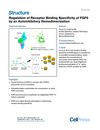
July 2017 in “Structure” In this study, researchers found that ligand homodimerization controls the receptor binding specificity of the FGF9 subfamily, preventing off-target activation of FGFR "b" isoforms.
 24 citations
,
January 2015 in “Evidence-based Complementary and Alternative Medicine”
24 citations
,
January 2015 in “Evidence-based Complementary and Alternative Medicine” In this study, Polygonum multiflorum Radix promoted hair growth in mice, with oral administration being more effective, likely through FGF-7, while topical application favored SHH-related mechanisms.
 11 citations
,
September 1996 in “Neuroscience letters”
11 citations
,
September 1996 in “Neuroscience letters” This study found that fetal calf serum can protect Merkel cells from death and alter their morphology in culture, while serum-free conditions led to high cell mortality.