2 citations
,
January 2020 in “Evidence-based Complementary and Alternative Medicine” This study found that Hataedock may alleviate atopic dermatitis symptoms in mice by maintaining skin homeostasis and improving skin barrier formation through the endocannabinoid system.
April 2019 in “Journal of Investigative Dermatology” This study found that frontal fibrosing alopecia involves distinct molecular changes, such as downregulation of steroid and cholesterol pathways and upregulation of fibrotic and immune response genes, which may help guide treatment strategies.
 4 citations
,
January 2018 in “International Journal of Trichology”
4 citations
,
January 2018 in “International Journal of Trichology” This case report describes a 4-year-old girl with hypotrichosis and juvenile macular dystrophy, linked to mutations in the cadherin 3 gene affecting P-cadherin expression.
September 2023 in “JEADV Clinical Practice” This study identified key dermoscopic features in folliculotropic mycosis fungoides patients, showing that dilation of follicular openings and spiky follicular keratosis are specific indicators of follicular involvement, potentially aiding in diagnosis, classification, and treatment decisions.
 September 2023 in “Journal of the American Academy of Dermatology”
 In this study, no significant differences in hidradenitis suppurativa severity or testosterone levels were found between women with and without polycystic ovary syndrome, suggesting PCOS does not predict poor prognosis in HS patients.
April 2020 in “Journal of the Endocrine Society” This study suggests that hair cortisol measurement could serve as an alternative diagnostic method for Cushing’s disease, showing acceptable concordance with urinary free cortisol despite differing evaluated periods.
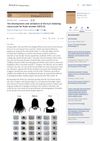 October 2023 in “The Journal of Dermatology”
 This study developed and validated the Hair-Shedding Visual Scale for Asian Women, finding it to be an effective tool for identifying FPHL and TE.
December 2025 in “Biomedicines” In this study, researchers identified two person-centered sexual function profiles among women, linked to physical and psychological factors, with PCOS showing greater, though not significant, presence in the dysfunction profile. The dysfunction was associated with higher adiposity and body-image distress.
23 citations
,
April 2016 in “Journal of Visualized Experiments” This research details a robust method for isolating hair follicle stem cells and epidermal keratinocytes from mouse hair follicles using fluorescence activated cell-sorting technology.
 September 2017 in “Journal of Investigative Dermatology Symposium Proceedings”
 This review discusses the clinical features of hypopigmented mycosis fungoides in primary cutaneous T cell lymphoma and reports no new clinical results.
 1 citations
,
November 2023 in “iScience”
1 citations
,
November 2023 in “iScience” In this study, researchers found that disrupting desmoglein 3 signaling in a mouse model of pemphigus vulgaris activates normally quiescent hair follicle stem cells, compromising their multipotency but prompting a regenerative response that restores stem cell function and structures.
February 2023 in “Archives of Dermatological Research” This study found that despite challenges, a combination of oral antibiotics, anti-androgens, oral retinoids, biologics, and surgery were important in managing hidradenitis suppurativa in patients with intellectual and developmental disabilities.
1 citations
,
April 2016 in “Journal of Investigative Dermatology” Patients with Focal Dermal Hypoplasia often experience skin, nail, hair, and bone issues, and may benefit from calcium and vitamin D supplements.
 19 citations
,
May 2004 in “The American Journal of Dermatopathology”
19 citations
,
May 2004 in “The American Journal of Dermatopathology” In this study, scalp biopsies from HJMD patients revealed histological similarities to chronic telogen effluvium and highlighted the role of CDH3 mutations disrupting normal hair cycles.
148 citations
,
August 2022 in “Stem Cell Research & Therapy” This study found that encapsulating hADSCs-derived exosomes in PF-127 hydrogel improved wound healing in mice, suggesting a promising approach for enhancing skin repair.
1 citations
,
September 2021 in “Frontiers in genetics” This case report identifies a previously undocumented nonsense mutation in DCAF17 in a Chinese patient with Woodhouse-Sakati syndrome, inherited from consanguineous parents.
 April 2020 in “Journal of animal research”
 In this study, researchers identified hair follicle stem cells in the bulge region of canine hair follicles, suggesting potential applications for future translational research.
 3 citations
,
October 2021 in “Postepy Dermatologii I Alergologii”
3 citations
,
October 2021 in “Postepy Dermatologii I Alergologii” This study found that evaluating terminal hair growth on the chin, thighs, and either the upper lip or lower abdomen could streamline the modified Ferriman-Gallwey scoring, aiding hirsutism diagnosis under pandemic conditions.
 1 citations
,
April 2017 in “Journal of Investigative Dermatology”
1 citations
,
April 2017 in “Journal of Investigative Dermatology” This proof-of-concept study reported that a new, ultra-fast, one-step immunohistochemistry method improved the interpretation of Mohs surgery slides, particularly for poorly differentiated tumors.
29 citations
,
January 1996 in “The Journal of Clinical Endocrinology & Metabolism” This study identified a compound heterozygous mutation in the 3 beta-HSD gene that confirmed inherited 3 beta-HSD deficiency in a Pakistani child with salt-wasting congenital adrenal hyperplasia.
9 citations
,
March 2022 in “Military Medical Research” This study developed a method to convert fibroblasts into sweat gland-like cells, suggesting potential for regenerating damaged skin and restoring sweat gland function.
1 citations
,
October 2025 in “International Journal of Molecular Sciences” This study found that zebrafish with a mutation in the GDP-fucose biosynthesis gene exhibited enhanced and faster regeneration of mechanosensory hair cells, implicating the importance of this gene and Notch signalling regulation in hair cell regeneration mechanisms.
 April 2025 in “Cellular and Molecular Biology”
 This study found that human dermal stem/progenitor cells demonstrated greater proliferation and differentiation potential than hair follicle dermal papilla cells, which showed increased expression of hair regeneration markers.
1 citations
,
July 2007 in “Journal of Investigative Dermatology” The mutation causes hairless mice due to mislocalized and dysfunctional HR protein.
1 citations
,
January 2015 in “Journal of clinical case reports” This case report describes two siblings with Keratosis Follicularis Spinulosa Decalvans, illustrating its manifestations in a 9-year-old boy and a 5-year-old girl.
October 2025 in “Journal of Investigative Dermatology” Hair follicle dermal stem cells help control hair growth timing by regulating signals at the hair germ–dermal papilla interface.
 12 citations
,
September 2021 in “Stem Cell Reviews and Reports”
12 citations
,
September 2021 in “Stem Cell Reviews and Reports” This study suggests that StemMACS MSC Expansion Media is more suitable than PowerStem MSC1 media for expanding therapeutic adipose-derived mesenchymal stem cells, with less expression of negative markers and better chromosomal stability.
9 citations
,
December 2021 in “Journal of Cellular and Molecular Medicine” In this study, researchers found that human adipose tissue-derived mesenchymal stromal cells exhibit significant phagocytic ability against various particles and pathogens, which might enhance strategies for addressing specific local and systemic infections due to their regenerative properties.
 21 citations
,
January 2018 in “Anticancer Research”
21 citations
,
January 2018 in “Anticancer Research” This study suggests that NBCCS and BFHS may be the same genetic condition, which could help improve identification and management of misdiagnosed cases with specific surveillance strategies.
4 citations
,
December 2021 in “Journal of clinical laboratory analysis” This study identified a splicing-site deletion in the DCAF17 gene associated with Woodhouse-Sakati syndrome in a large consanguineous pedigree, leading to typical phenotypic features.