 40 citations
,
June 2011 in “Journal of biological chemistry/The Journal of biological chemistry”
40 citations
,
June 2011 in “Journal of biological chemistry/The Journal of biological chemistry” This study revealed that deficiency in the enzyme FA2H in mice affected sebaceous gland function, altered sebum composition, and caused cycling alopecia, highlighting FA2H's role in hair follicle homeostasis.
 72 citations
,
December 2009 in “Organic and Biomolecular Chemistry”
72 citations
,
December 2009 in “Organic and Biomolecular Chemistry” This study describes Hg(OTf)2 as a new and efficient catalyst for various organic synthesis reactions, including alkyne hydration and C–C bond forming cyclizations.
60 citations
,
April 2003 in “Biomaterials” This study found that the controlled release of specific growth factors from biodegradable hydrogels significantly enhanced hair follicle growth and hair shaft length in mice compared to growth factors in solution.
2 citations
,
March 2011 in “Veterinary Dermatology” This study identified fibroblast growth factor 18 in various components of canine hair follicles and other tissues, but found no significant differences in its presence across seasons, body regions, or sexes in beagle dogs.
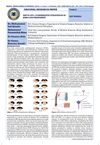 November 2025 in “PARIPEX-INDIAN JOURNAL OF RESEARCH”
 GFC is more effective than PRP for treating hair loss.
11 citations
,
January 2015 in “Journal of cellular physiology” This study suggests that abnormal hair cycles in Hr mutant mice may be caused by HR protein overexpression, which down-regulates miR-31 and increases Tgf-β2 expression.
13 citations
,
November 2005 in “Endocrinology” This study explored the secretion and cellular localization of different forms of follistatin and FST-like-3, revealing variable secretion kinetics and possible intracellular roles, particularly for nuclear FSTL3.
8 citations
,
October 2022 in “Frontiers in Bioengineering and Biotechnology” This study found that HFV70 cryogels, made from Flammulina velutipes extract and hydroxyethyl cellulose, effectively promoted rapid hemostasis and tissue regeneration in full-thickness skin defects in rats, demonstrating improved hemocompatibility, cytocompatibility, antimicrobial, and antioxidant properties.
1 citations
,
October 2025 in “International Journal of Molecular Sciences” This study found that zebrafish with a mutation in the GDP-fucose biosynthesis gene exhibited enhanced and faster regeneration of mechanosensory hair cells, implicating the importance of this gene and Notch signalling regulation in hair cell regeneration mechanisms.
 81 citations
,
January 2003 in “The FASEB Journal”
81 citations
,
January 2003 in “The FASEB Journal” This study found that follistatin and activin interactions are important for hair follicle development and cycling in mice, suggesting that they may regulate processes involving BMP-2 and its antagonist.
6 citations
,
January 2014 in “Genetics and Molecular Research” This study constructed a hair follicle-specific expression vector for IGFBP-5 in Inner Mongolia Cashmere goat cells, allowing for future functional genetic analyses and potential use in nuclear transfer.
10 citations
,
February 2019 in “Journal of cellular physiology” This study found that in yak hair follicles, TGF-β2 significantly contributes to the transition from growth to regression phases via inducing apoptosis, whereas HSP70 appears to inhibit follicle regression by protecting epithelial cells from apoptosis.
 71 citations
,
October 2008 in “The journal of investigative dermatology/Journal of investigative dermatology”
71 citations
,
October 2008 in “The journal of investigative dermatology/Journal of investigative dermatology” This study presents a novel in vitro assay using human folliculoid microspheres to research hair growth, which may facilitate preclinical testing of hair growth-modulatory agents.
 October 2015 in “Regenerative Medicine”
 This review highlights important studies in regenerative medicine, including one where PDGF and FGF2 synergistically maintained hair inductive potential in mouse dermal papilla cells in vitro, with potential implications for human hair loss therapy. It reports no new experimental results, focusing instead on existing research findings.
 December 2016 in “Journal of Dermatology and Dermatologic Surgery”
 In this study, the Instant Follicular Hair Unit Transplant technique demonstrated superior hair growth compared to conventional FUE in patients with androgenetic alopecia, although it requires a steeper learning curve for surgeons.
 15 citations
,
May 2003 in “The Laryngoscope”
15 citations
,
May 2003 in “The Laryngoscope” In this study, researchers observed that spiral ganglion neurites created more branched networks near FGF-1-coupled beads compared to control beads, highlighting FGF-1's role in hair cell innervation development.
3 citations
,
December 2024 in “Journal of Animal Physiology and Animal Nutrition” In this study, researchers found that reducing FGF20 expression in dermal papilla cells of fine-wool sheep impedes the growth and differentiation of hair follicle stem cells, providing insights into wool trait improvement and regenerative medicine applications.
January 2014 in “Ghent University Academic Bibliography (Ghent University)” FGF18 may influence hair loss in dogs.
1 citations
,
December 2021 in “Development & Reproduction” This study found that FPR2 knockout mice experienced excessive hair loss and abnormal hair follicle structures, suggesting FPR2's protective role in hair regeneration through stem cell activity regulation.
39 citations
,
July 1993 in “The journal of investigative dermatology/Journal of investigative dermatology” This study found that daily injections of basic and acidic fibroblast growth factor in newborn mice significantly delayed hair follicle development within the treatment area, while epidermal growth factor affected the entire body coat and caused skin hyperkeratinization.
 14 citations
,
November 2013 in “PloS one”
14 citations
,
November 2013 in “PloS one” This study found that transgenic mice overexpressing HGF/SF are more susceptible to UVA-induced melanoma, with melanin in the papillary dermis interacting with UVA to induce melanoma.
 42 citations
,
March 2014 in “European Journal of Pharmacology”
42 citations
,
March 2014 in “European Journal of Pharmacology” This study found that minor ginseng saponin F2 may promote hair growth more effectively than finasteride by enhancing anagen induction and modulating the Wnt signaling pathway in cell and mouse models.
This study found that FGF5 alternative spliceosomes inhibit dermal papilla cell proliferation and regulate hair follicle growth-related gene expression, impacting hair follicle development in rabbits.
1 citations
,
December 2012 in “Journal of dermatological science” This study introduces ficlatuzumab, an anti-HGF monoclonal antibody, in combination with gefitinib in a phase 2 trial to address EGFR TKI resistance in Asian NSCLC patients.
143 citations
,
January 2012 in “Cell and Tissue Research”  September 2019 in “The journal of investigative dermatology/Journal of investigative dermatology”
 In this study, the researchers observed that post-radiation hair follicle repair in 3D architecture occurs through independent, long-range cell movements along the basal surface, resembling 2D healing processes.
20 citations
,
January 2017 in “Experimental Dermatology” In this study, deleting the Igf1 receptor in specific skin cells of mice affected hair follicle cycling but not overall skin health, suggesting Igf1r's role in hair cycle regulation through Bmp-4 activation.
January 2011 in “Anhui nongye kexue” This study reports that the recombinant expression vector pcDNA3.1-KK demonstrates specific expression in the skin of newborn mice.
11 citations
,
June 2010 in “Medical Molecular Morphology”  13 citations
,
March 2020 in “Genes”
13 citations
,
March 2020 in “Genes” This study found that FGF5-/- rabbits exhibited a significant long hair phenotype by prolonging the anagen phase, suggesting FGF5 acts as a negative regulator of hair growth.