 2 citations
,
September 2022 in “Cellular and molecular biology”
2 citations
,
September 2022 in “Cellular and molecular biology” In this study, Agaricus bisporus derived β-Glucan particles demonstrated antimicrobial, antioxidant, and anticancer effects against cervical cancer HeLa cells, suggesting potential as a therapeutic option.
 9 citations
,
May 2019 in “Experimental Cell Research”
9 citations
,
May 2019 in “Experimental Cell Research” This study found that Hedgehog signaling likely contributes to cervical carcinogenesis, and while itraconazole reduced growth in mice, it did so through pathways other than inhibiting Hedgehog signaling.
In this study, researchers developed a mucoadhesive hydrogel ovule containing retinyl palmitate and curcumin for intravaginal use, showing controlled drug release, selectivity against cancerous HeLa cells, and non-toxicity to healthy cells, which may offer a potential treatment for cervical cancer.
 1 citations
,
January 2023 in “Bioscience Journal”
1 citations
,
January 2023 in “Bioscience Journal” This study found that combining sorafenib with Platycladus orientalis leaf extract effectively suppressed cervical cancer cell growth by increasing tumor suppressor gene expression and reducing anti-apoptotic gene expression, suggesting a potential rationale for further clinical trials.
 January 2026 in “Journal of Applied Pharmaceutical Science”
 This study identified that the ethanol extract of Selaginella doederleinii may enhance the effectiveness of doxorubicin in treating cervical cancer cells while also providing chemopreventive benefits.
January 1980 in “Lluc: revista de cultura i d'idees” This study found that Agaricus bisporus-derived β-Glucan particles showed potential as an anticancer, antimicrobial, and antioxidant agent, inducing apoptosis and disrupting mitochondrial membrane potential in cervical cancer HeLa cells.
 April 2026 in “International Journal of Drug Delivery Technology”
 This study found that Lactobacillus acidophilus cell-free supernatant caused significant cytotoxicity, reduced migratory ability, and induced apoptosis in cervical cancer cell lines, suggesting its potential as a non-toxic adjunct therapy for cervical cancer.
 November 2025 in “Eurasian journal of applied biotechnology”
 In this study, combining L-cysteine and N-acetylcysteine with MET inhibition enhanced cytotoxicity in cancer cell lines by sensitizing them to MET inhibition through redox stabilization, suggesting a promising approach for improving MET-targeted cancer therapies without additional oxidative or chemotherapeutic stress.
7 citations
,
June 2024 in “iScience” This review highlights the significant role of androgens in the development and progression of cervical cancer, emphasizing the need for further research to understand their impact on the disease and improve prevention and treatment strategies in regions with limited HPV screening.
 October 2024 in “Asian Pacific Journal of Cancer Prevention”
 This study found that methanolic extract from Cnicus Benedictus leaves inhibits the growth of human cervical cancer cells in vitro and selectively targets cancer cells over normal cells, suggesting potential safety in its efficacy.
3 citations
,
June 2025 in “Biomedical Reports” This review highlights that nanotechnology shows promise in improving cervical cancer treatment by specifically targeting cancer cells, potentially enhancing treatment efficacy and reducing side effects compared to conventional therapies.
 145 citations
,
May 2008 in “Cancer Science”
145 citations
,
May 2008 in “Cancer Science” This review discusses how increased gene copy number for telomerase components may contribute to telomerase up-regulation in cancer cells, although the exact mechanisms are not fully understood.
December 2025 in “Biomolecules” In this study, the synthesis and testing of new pyrroloquinoline derivatives identified compound 7p, which showed low micromolar cytotoxic activity against MCF-7 and HeLa cells, highlighting its potential for development into a potent anticancer agent.
 43 citations
,
February 2020 in “Clinica chimica acta”
43 citations
,
February 2020 in “Clinica chimica acta” This review discusses the role of phytochemical nanoparticles in cervical cancer therapy and reports no new clinical results; the authors highlight their potential advantages over conventional chemotherapy.
 21 citations
,
January 2019 in “Elsevier eBooks”
21 citations
,
January 2019 in “Elsevier eBooks” The authors suggest that nanoparticles, synthesized from biological sources, may enable targeted cancer therapy with fewer side effects than traditional methods.
 61 citations
,
May 2016 in “Scientific reports”
61 citations
,
May 2016 in “Scientific reports” This study found that IMT-P8, a novel cell-penetrating peptide, effectively facilitated the dermal delivery of proteins and peptides in mouse skin and cell lines, suggesting potential for topical applications in cosmetics and skin diseases.
 March 2022 in “Institutional Repositories DataBase (IRDB)”
 Philippine stingless bee propolis may promote hair growth and fight cancer.
5 citations
,
May 2023 in “Frontiers in Immunology” This review provides an overview of how advancing imaging technologies, such as tissue clearing and intravital microscopy, are enhancing our understanding of tumor architecture and interactions between cancer cells and the tumor microenvironment, aiding both fundamental cancer research and the development of therapies.
 5 citations
,
January 2021 in “iScience”
5 citations
,
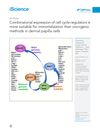
January 2021 in “iScience” Using a combination of specific cell cycle regulators is better for safely keeping hair root cells alive indefinitely compared to cancer-related methods.
 34 citations
,
July 2009 in “Journal of Cell Science”
34 citations
,
July 2009 in “Journal of Cell Science” This study found that ΔNp63α directly regulates VDR expression, which in turn may reduce invasiveness in an epidermoid cancer cell line.
 April 2026 in “Antioxidants”
 In this study, broccoli sprout extract and sulforaphane were found to reduce cell viability, suppress growth, and induce apoptosis in breast cancer cells, and oral broccoli sprout extract inhibited tumor growth in animal models, suggesting it may be effective in managing breast cancer.
 1 citations
,
April 2023 in “International Journal of Molecular Sciences”
1 citations
,
April 2023 in “International Journal of Molecular Sciences” This review discusses advances in CRISPR/Cas9 variants and nanoformulations for cancer treatment, noting challenges and prospects for clinical application, but reports no new research results.
 March 2024 in “Stem cell research & therapy”
 This study found that conditioned medium from human dental pulp stem cells (particularly under hypoxic conditions) improved keratinocyte survival and hair regrowth in a chemotherapy-induced alopecia mouse model and did not promote tumor growth, suggesting potential for safe therapeutic use.
3 citations
,
July 2023 in “Biomolecules” This study reports that some human cell surface HLA-I molecules (including HLA-B27) can appear without their usual peptide component, potentially altering immune interactions, influencing arthritis development in specific mice models, and exhibiting upregulation in certain cancer cells.
 November 2018 in “Atlas of genetics and cytogenetics in oncology and haematology”
 The review discusses the diverse roles of WNT10B in mammary gland development, immune function, and its potential implications in cancer and regenerative processes, with no new experimental results.
 23 citations
,
May 2013 in “Virology”
23 citations
,
May 2013 in “Virology” This study found that HPV16 oncogene expression in multipotent epithelial stem cells led to abnormal mobilization, altering their quiescence without affecting other stem cell markers, suggesting a distinct stem cell compartment.
 1 citations
,
January 2025 in “Frontiers in Oncology”
1 citations
,
January 2025 in “Frontiers in Oncology” This review highlights REV7's crucial roles in maintaining genome stability, its implication in several cancers, and its association with poor prognoses and treatment resistance, while also noting that REV7 suppression may improve chemotherapy sensitivity.
 April 2026 in “Journal of Cancer”
 This review reports that the compound Cepharanthine shows promise as a cancer therapy by inducing cell death, arresting cell growth, inhibiting tumor progression, modulating key oncogenic pathways, and reversing multidrug resistance, suggesting its potential for further investigation in oncology.
57 citations
,
January 2022 in “Biomedicines” This review outlines curcumin's dual role as a radiosensitizer in cancer cells and a radioprotector in healthy cells, drawing on recent experimental and clinical findings.
 112 citations
,
May 2019 in “Pharmacological Research”
112 citations
,
May 2019 in “Pharmacological Research” This review discusses the isolation, structure, and bioactivity of lignans and neolignans from 2016 to mid-2018, reporting no new clinical results but highlighting their potential protective properties against diseases such as cancer and neurodegeneration.