26 citations
,
July 2012 in “Journal of family planning and reproductive health care” This review explores treatment approaches for excess male-pattern body hair in women and emphasizes the importance of effective management, but reports no new clinical findings.
 January 2026 in “Journal of Clinical and Investigative Dermatology”
 This case report describes a father with HOXC13-associated pure hair-nail ectodermal dysplasia, presenting with severe nail dystrophy affecting all digits and notable hypotrichosis or complete alopecia.
May 2009 in “OPAL (Open@LaTrobe) (La Trobe University)” In this study, a transgenic mouse model suggested that suppressing the expression of the HGPS mutation may reverse disease symptoms, including skin abnormalities, supporting the potential for treatment development.
 December 2017 in “British Journal of Dermatology”
 Targeted therapy for skin cancer is complex due to the role of the hedgehog pathway in both cancer and hair growth.
 19 citations
,
August 2020 in “Gastroenterology report”
19 citations
,
August 2020 in “Gastroenterology report” This review discusses the characteristics and challenges in treating Cronkhite–Canada syndrome but reports no new clinical findings, emphasizing the need for better understanding and uniform treatment approaches.
 75 citations
,
March 2009 in “Journal of The American Academy of Dermatology”
75 citations
,
March 2009 in “Journal of The American Academy of Dermatology” This review discusses the evolution and ongoing debate about the causes of central centrifugal cicatricial alopecia in African American women, without presenting new clinical findings.
 19 citations
,
May 2006 in “Clinical and Experimental Dermatology”
19 citations
,
May 2006 in “Clinical and Experimental Dermatology” This study identified a novel insertion mutation in the hairless gene that may contribute to the development of congenital atrichia with papular lesions in a Pakistani family.
23 citations
,
January 2017 in “BMC Medical Genetics” This study presents the first reported Spanish case of Hypotrichosis with Juvenile Macular Dystrophy, identifying a new CDH3 mutation and highlighting the importance of clinical and genetic evaluation for accurate diagnosis.
 6 citations
,
September 1990 in “International Journal of Gynecology & Obstetrics”
6 citations
,
September 1990 in “International Journal of Gynecology & Obstetrics” This case report describes a rare instance of pruritic urticarial papules and plaques of pregnancy in a 25-year-old caucasian primigravida during the third trimester, discussing management recommendations.
 June 2007 in “Journal of Investigative Dermatology”
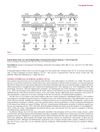
 Title change to "Central Centrifugal Cicatricial Alopecia (CCCA)"; common in African American women; hair-grooming methods may contribute; no effective therapy found; trials needed.
2 citations
,
April 2020 in “International Journal of Dermatology and Venereology” This review summarizes current evidence on how beta-human papillomavirus and Merkel cell polyomavirus may contribute to the development of nonmelanoma and Merkel cell skin carcinomas, respectively, but it reports no new clinical findings.
 1 citations
,
March 2019 in “KnE life sciences”
1 citations
,
March 2019 in “KnE life sciences” This case report suggests that human dermal papillae conditioned media may accelerate wound healing in congenital aplasia cutis due to varicella infection.
25 citations
,
September 2005 in “Journal of the American Academy of Dermatology” This study reported that Rapp-Hodgkin syndrome, AEC syndrome, and EEC syndrome are likely part of a single genetic disorder spectrum linked to mutations in the TP63 gene.
1 citations
,
December 1970 in “European journal of endocrinology” This study reports experience treating 140 women with hirsutism and other virilism signs using cyproterone acetate and ethinyl estradiol, focusing on those treated for over five months.
 1 citations
,
November 2011 in “Annales De Dermatologie Et De Venereologie”
1 citations
,
November 2011 in “Annales De Dermatologie Et De Venereologie” This article reviews clinical signs and treatment options for hyperandrogenism in women, emphasizing cyproterone acetate as the most effective antiandrogen for severe hirsutism, but reports no new clinical results.
October 2025 in “Journal of the Endocrine Society” This case report describes a 35-year-old woman with a Rathke’s cleft cyst presenting with Cushing disease, highlighting the need to evaluate hormonal hypersecretion in atypical pituitary lesions.
 June 2023 in “GSC Advanced Research and Reviews”
 This review covers the history, symptoms, and treatment progress for Hutchinson-Gilford Progeria Syndrome, noting that while no cure exists, understanding its molecular mechanism may improve future treatment strategies.
 1 citations
,
October 2022 in “Curēus”
1 citations
,
October 2022 in “Curēus” This case report highlights the challenges in diagnosing simple-virilizing congenital adrenal hyperplasia, emphasizing the importance of early expert evaluation to prevent irreversible changes such as virilization.
 9 citations
,
February 2013 in “Hormone and Metabolic Research”
9 citations
,
February 2013 in “Hormone and Metabolic Research” This study reported that CYP21A2 heterozygous mutations do not significantly contribute to the pathogenesis of polycystic ovary syndrome.
17 citations
,
January 1984 in “Psychotherapy and psychosomatics” This study reported that 44% of hirsute women undergoing cyproterone acetate treatment experienced impaired sexual enjoyment, highlighting the need to inform patients about potential side effects.
2 citations
,
January 2014 in “Case Reports in Clinical Medicine” This case study presents an 81-year-old woman diagnosed with Cronkhite-Canada syndrome and discusses the importance of recognizing its clinical and histopathological features for timely and accurate diagnosis.
 3 citations
,
March 2010 in “Dermatologica Sinica”
3 citations
,
March 2010 in “Dermatologica Sinica” This study reports the first case of atrichia with papular lesions in a Taiwanese family without a detectable mutation in the HR gene.
 December 2023 in “The journal of investigative dermatology/Journal of investigative dermatology”
 In a mouse model study, researchers observed that the absence of MCPIP1 in myeloid cells decreased susceptibility to chemically induced skin papillomas but caused significant hair loss and skin pigmentation changes, suggesting a role for MCPIP1 in skin carcinogenesis and follicle integrity.
 April 2016 in “Journal of The American Academy of Dermatology”
 This study found that dermatology consultations in a tertiary care center led to treatment changes in most cases, especially for complex conditions potentially linked to systemic disease.
 June 2024 in “Journal of Clinical Oncology”
 This study observed that dalpiciclib is associated with fewer adverse events like diarrhea and hepatotoxicity compared to other CDK4/6 inhibitors, potentially offering better patient-perceived safety and quality of life.
This article reviews the role of the hairless protein in hair cycling and gene regulation, noting the need for further understanding of its JmjC domain and subcellular localization roles.
 March 2026 in “Dermatology Online Journal”
 In this case report, the authors describe a rare cystic panfolliculoma in an 84-year-old man's right conchal bowl, noting its potential to mimic other tumors like basal cell carcinoma, which complicates diagnosis.
 1 citations
,
December 2022 in “Research Square (Research Square)”
1 citations
,
December 2022 in “Research Square (Research Square)” This study observed that patients with certain medical histories and hair care practices, such as using hooded dryers and wearing natural hairstyles, had higher odds of improvement in CCCA treatment outcomes.
 63 citations
,
May 2011 in “Clinical cancer research”
63 citations
,
May 2011 in “Clinical cancer research” In this study, topical CUR61414 was effective in inhibiting basal cell carcinomas in mice, but no clinical activity was observed in human trials.
 2 citations
,
August 2017 in “British Journal of Dermatology”
2 citations
,
August 2017 in “British Journal of Dermatology” Hair loss in Cronkhite-Canada syndrome may be due to an autoimmune response.