 1 citations
,
July 2014 in “Our Dermatology Online”
1 citations
,
July 2014 in “Our Dermatology Online” This article describes a rare case of alopecia with both scarring and non-scarring features, combining histologic signs of central centrifugal cicatricial alopecia with select immunologic features of alopecia areata.
7 citations
,
February 2012 in “Journal of cutaneous pathology” This case report presents unique histopathological findings in skin lesions of hereditary mucoepithelial dysplasia that have not been previously documented.
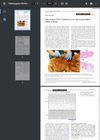 May 2024 in “Animal genetics”
 The researchers investigated a Maine Coon cat with suspected classical Ehlers-Danlos Syndrome and discovered a heterozygous deletion in the COL5A1 gene, underscoring the value of whole-genome sequencing for precise veterinary diagnostics.
 January 2024 in “JCEM case reports”
 In this clinical case report, a man with Birt Hogg Dube syndrome presented with parathyroid cancer, the first such case according to the authors, highlighting a potential link between Folliculin gene mutations and parathyroid cancer development.
11 citations
,
October 2002 in “Genetics” This study mapped a spontaneous mouse hair mutation, "hague," to keratin genes on chromosome 15 but found no gene mutations in hague mice.
3 citations
,
November 2021 in “Skin Appendage Disorders” This study found that home-use diphenylcyclopropenone (H-DPCP) is a cost-effective alternative to office-use for severe alopecia areata, showing similar effectiveness with reduced costs.
 April 2026 in “Journal of Experimental Psychopathology”
 This study suggests that hair cortisol concentration may not reliably indicate psychological distress or differentiate clinical from non-clinical populations, as observed in a female PhD student over nine years.
4 citations
,
December 2022 in “Skin Research and Technology” This study found that downregulation of Sonic hedgehog signaling may promote HPV replication and wart formation by inducing cell cycle arrest in keratinocytes.
 July 2018 in “Hair transplant forum international”
 This abstract contains only author affiliations and mentions the Asian Association of Hair Restoration Surgeons, without presenting any new research findings.
This study found that hair cortisol concentrations in mother-daughter pairs are a potential biomarker for cortisol responses to chronic stress, with daughter-mother similarities affected by parenting styles and children's symptoms.
 19 citations
,
March 2008 in “Nature clinical practice endocrinology & metabolism”
19 citations
,
March 2008 in “Nature clinical practice endocrinology & metabolism” A combined drug and laser treatment improved hirsutism in a PCOS patient, also enhancing her heart health and requiring regular liver and kidney checks.
1 citations
,
September 2016 in “Brain Behavior and Immunity” Hair cortisol levels can indicate stress and are affected by washing frequency, not cosmetic treatments.
11 citations
,
January 1997 in “Journal of Dermatological Science” This study identified a human sequence likely coding for a new ultra-high sulphur protein, which may aid in understanding hair differentiation and the molecular basis of human trichothiodystrophy.
 36 citations
,
October 2000 in “British Journal of Dermatology”
36 citations
,
October 2000 in “British Journal of Dermatology” This study identified a distinct gene near the hairless locus on chromosome 8p that is responsible for hereditary Marie Unna type hypotrichosis in a German family.
 15 citations
,
May 2013 in “American Journal of Medical Genetics - Part A”
15 citations
,
May 2013 in “American Journal of Medical Genetics - Part A” People with X-linked hypohidrotic ectodermal dysplasia have no sweat ducts and less, thinner hair.
September 2019 in “The journal of investigative dermatology/Journal of investigative dermatology” This study found that the PPARγ modulator NAC-GED-0507-Levo may protect hair follicles from chemotherapy-induced damage, potentially offering a strategy to address irreversible hair loss in cancer patients.
11 citations
,
July 2010 in “European Journal of Dermatology” In this study, researchers confirmed linkage of a form of hair-nail ectodermal dysplasia to chromosome 12 in a Pakistani family, suggesting a possible non-coding mutation in KRTHB5 or a mutation in an unknown gene.
January 2010 in “Journal of Animal Science” This study demonstrated that transcutaneous vaccination via cyanoacrylate skin surface stripping effectively induced both CD4 and CD8 T cell responses in humans, offering a promising alternative to intramuscular injection.
2 citations
,
November 2006 in “Pump Industry Analyst” This study found that pilomatricomas exhibit co-expression of hair keratin hHa5 and HOXC13 in lower transitional cells, but lack LEF1 and β-catenin co-expression necessary for canonical Wnt signaling pathway-controlled cortical differentiation.
 3 citations
,
January 2012 in “Hanyang Medical Reviews”
3 citations
,
January 2012 in “Hanyang Medical Reviews” This review discusses the pathogenesis of hirsutism and related diagnostic criteria for polycystic ovary syndrome in Korean women, but reports no new clinical results.
13 citations
,
February 2024 in “Clinical Cosmetic and Investigational Dermatology” This study demonstrated that intradermal treatment with a medical device using Polynucleotides High Purification Technology (PN HPT) significantly improved skin surface, firmness, pigmentation, and radiance in 30 Asian subjects, with benefits lasting up to six months and no adverse events reported.
 37 citations
,
August 2016 in “Clinical, Cosmetic and Investigational Dermatology”
37 citations
,
August 2016 in “Clinical, Cosmetic and Investigational Dermatology” This article discusses central centrifugal cicatricial alopecia, highlighting its prevalence, potential genetic factors, and management challenges, but reports no new clinical conclusions and calls for further research.

This article suggests that alopecia areata may be an early skin manifestation of hereditary hemochromatosis in individuals predisposed to autoimmunity, recommending iron status evaluation during AA diagnosis; it reports no new clinical results.
 8 citations
,
February 2005 in “British Journal of Haematology”
8 citations
,
February 2005 in “British Journal of Haematology” This report describes a case of a man developing hair changes, including Beau's lines and Pohl-Pinkus constrictions, following ABVD chemotherapy.
 April 2017 in “Journal of Investigative Dermatology”
 In this pilot study, researchers observed a correlation between clinical severity and histologic severity of lichen planopilaris, suggesting that an immunohistochemical scoring system could aid in grading disease activity.
October 2017 in “The American Journal of Gastroenterology” This case report details a 71-year-old man diagnosed with Cronkhite-Canada Syndrome, highlighting the importance of early diagnosis and endoscopic evaluation due to the disease's progressive nature and significant mortality risk.
176 citations
,
February 2006 in “Cancer Research” This study found that loss of Ptch1 function in mouse skin's basal cells is sufficient to rapidly induce tumors resembling human basal cell carcinoma, suggesting Ptch1 as a key tumor suppressor.
 December 2020 in “International Journal of Research in Pharmaceutical Sciences”
 This review analyzes the mnemonic MY PCOS, exploring diagnosis and treatment strategies for the metabolic, cosmetic, and reproductive complications of polycystic ovary syndrome, without reporting new clinical findings.
 49 citations
,
April 1997 in “Human reproduction”
49 citations
,
April 1997 in “Human reproduction” This study found that both a high dose of CPA and GnRHa are effective for treating hirsutism in hyperandrogenic women, but GnRHa with add-back therapy may lead to a longer remission period.
26 citations
,
July 2012 in “Journal of family planning and reproductive health care” This review explores treatment approaches for excess male-pattern body hair in women and emphasizes the importance of effective management, but reports no new clinical findings.