This article discusses the cosmetic potential of grapefruit, particularly its skin conditioning and hair growth benefits, but reports no new research findings.
July 2013 in “Indian Journal of Dentistry” This report describes a rare case of Graham-Little–Piccardi–Lassueur syndrome in a 46-year-old male, highlighting its typical features such as scarring alopecia and lichenoid follicular eruptions.
This study found that extracellular Granzyme B contributes to skin aging and impaired healing in ApoE knockout mice by degrading essential extracellular matrix components like decorin and fibronectin.
 October 2012 in “Humana Press eBooks”
 This article discusses the historical and current uses of grape seeds in various industries but reports no new research findings.
August 2012 in “Fertility and Sterility” Premature gray hair may indicate reduced ovarian reserve but doesn't lower pregnancy chances.
 January 2011 in “Journal of The American Academy of Dermatology”
 Treating generalized granuloma annulare is difficult, with PUVA being the most effective option, but relapses are common.
 January 2011 in “Hair transplant forum international”
 This article addresses the role of surgical assistants in graft preparation and placement for hair restoration and reports no new clinical findings.
December 2009 in “Journal of Veterinary Clinics” The authors diagnosed a 5-year-old Pekinese dog with keratoacanthoma with granulomatous inflammation, and the mass did not recur 5 months after surgical removal.
 September 2007 in “Dermatologic Surgery”
 This study found that using 3% hydrogen peroxide for surgical wound care during hair restoration surgery did not significantly impact the survival rate of hair grafts compared to normal saline.
 January 2006 in “Yearbook of Dermatology and Dermatologic Surgery”
 Hair graying is caused by the loss of pigment cells due to poor maintenance of stem cells in the hair follicle.
August 2004 in “Veterinary Dermatology” This case report describes a 9‐year‐old red panda with progressive hair loss linked to bilateral granulosa cell tumors, suggesting an underlying endocrine abnormality.
January 2004 in “Linchuang pifuke zazhi” This study identified specific genes that are more abundantly expressed in black hair than in gray hair, with black hair displaying higher expression of pigment-related proteins and gray hair showing increased expression of keratin-related genes.

This study found that dense-packing hair grafting is a simple, safe, and effective method for restoring scarring alopecia, with high patient satisfaction and significant graft survival rates reported.
 May 1999 in “Dermatologic Surgery”
 The cell culture medium "RPMI" might slightly improve hair graft survival, but not by a significant amount.
 November 1994 in “The Journal of Dermatologic Surgery and Oncology”
 This article in the Journal of Dermatologic Surgery and Oncology provides no abstract or new findings, thus detailing is unavailable.
August 1978 in “Archives of Dermatology” This case report details a rare instance of granulomatosis disciformis chronica et progressiva affecting both skin and lymph node tissue in a 31-year-old man.
February 1842 in “Annals of clinical and laboratory science” This article reviews how environmental pollutants like glyphosate, fluoride, and electromagnetic fields may contribute to mitochondrial dysfunction and adverse health effects such as cancer and chronic diseases, but reports no new research findings.
January 2022 in “Advanced Pharmaceutical Bulletin” This study found that clove oil and LPGSE pretreatment increased finasteride skin permeability, while extending urea pretreatment reduced its penetration.
 152 citations
,
March 1988 in “Journal of The American Academy of Dermatology”
152 citations
,
March 1988 in “Journal of The American Academy of Dermatology” In this study, a unique form of chronic superficial pyoderma gangrenosum with verrucous and ulcerative lesions was reported to heal without systemic corticosteroids in most patients.
 131 citations
,
November 1998 in “The journal of investigative dermatology/Journal of investigative dermatology”
131 citations
,
November 1998 in “The journal of investigative dermatology/Journal of investigative dermatology” This study observed that alopecia areata can be induced and serially transferred in C3H/HeJ mice using skin grafts, providing a useful model for studying the disease in humans.
105 citations
,
April 2005 in “Cell” This article discusses recent findings on hair graying involving melanocyte stem cell maintenance and key regulatory molecules, and reports no new experimental results.
 84 citations
,
January 1990 in “Journal of The American Academy of Dermatology”
84 citations
,
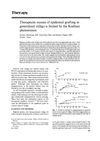
January 1990 in “Journal of The American Academy of Dermatology” This study reported successful repigmentation without scarring in patients with localized and segmental vitiligo after epidermal grafting, but the Koebner phenomenon hindered similar results in some with generalized vitiligo.
72 citations
,
January 2007 in “Dermatology” This study found a correlation between moderate to extensive alopecia and low-grade inflammation, a cardiovascular risk marker, particularly in young men under 35 with central obesity.
69 citations
,
May 1997 in “Veterinary Pathology” This study found that the angora mouse mutation prolongs the anagen phase, resulting in excessively long hair and follicular abnormalities, without involving circulating hair cycle factors.
 66 citations
,
August 2011 in “Parasitology Research”
66 citations
,
August 2011 in “Parasitology Research” This study found that Mentha pulegium essential oil had a stronger protoscolicidal effect against Echinococcus granulosus in vitro than Mentha piperita, showing dose- and time-dependent effects.
64 citations
,
May 1981 in “Clinical and Experimental Dermatology” This case report describes a patient with myasthenia gravis, alopecia, and hair follicle hamartoma, showing notable similarities to a previously reported case.
 62 citations
,
October 2017 in “JAMA facial plastic surgery”
62 citations
,
October 2017 in “JAMA facial plastic surgery” This study reported that using condensed nanofat combined with fat grafts significantly improved the aesthetic and functional aspects of atrophic facial scars in 20 patients, as assessed by both patients and plastic surgeons using the Patient and Observer Scar Assessment Scale.
60 citations
,
February 1992 in “British Journal of Dermatology” In this study, serum from patients with alopecia areata or universalis did not affect hair growth in transplanted scalp skin grafts on nude mice, despite increased deposition of immunoreactants.
 57 citations
,
July 2018 in “Scientific Reports”
57 citations
,
July 2018 in “Scientific Reports” This study found that prevascularizing dermal matrices with adipose tissue-derived microvascular fragments improved vascularization and allowed earlier successful skin grafting in a bradythrophic wound model.
 56 citations
,
March 2016 in “International Wound Journal”
56 citations
,
March 2016 in “International Wound Journal” This review concludes that autologous split-thickness skin grafting remains the gold standard for safety and efficacy in treating chronic leg ulcers, with greater success in venous ulcers.