 19 citations
,
January 2007 in “Journal of medical investigation”
19 citations
,
January 2007 in “Journal of medical investigation” This study found that transplanting GFP transgenic tail skin onto wild-type mice leads to partial replacement of dermis, nerves, and blood vessels by recipient tissue after six months, while epidermis, hair follicles, and sebaceous glands persist from the graft.
32 citations
,
January 2000 in “International Journal of Cancer” In this study, the researchers observed significant down-regulation of Transglutaminase-3 expression in esophageal cancer tissues compared to normal tissues, suggesting its alteration is a common event in esophageal cancer development.
 3 citations
,
December 2019 in “Journal of Cosmetic and Laser Therapy”
3 citations
,
December 2019 in “Journal of Cosmetic and Laser Therapy” This study found that plasma rich in growth factors showed promising results for increasing hair number and thickness in androgenic alopecia patients, with better outcomes after multiple injections.
April 2012 in “Cancer Research” In this study, mouse models with EGFR deficiency showed that disrupted hair follicle cycling leads to increased mast cell numbers and inflammation, suggesting EGFR's role in managing hair cycle transitions and preventing folliculitis.
58 citations
,
April 1993 in “Developmental Biology” This study found that subcutaneous injections of basic fibroblast growth factor in neonatal mice delayed the development and hair growth cycles of hair follicles compared to controls.

This study found that sFRP4 inhibits but does not block hair follicle regeneration in mice, suggesting a potential role in treating hair follicle regeneration disorders.
 April 2023 in “Journal of Investigative Dermatology”
 This study found that recombinant type III collagen may aid skin aging management by promoting fibroblast proliferation and migration, with a modest impact on inflammatory marker IL-6, though it did not significantly affect TNF-a secretion in vitro.
2 citations
,
January 2012 in “Zhongguo nongye Kexue” In this study, epidermal growth factor expression significantly correlated with the development of secondary hair follicles in Jining Gray goats until two months of age.
 May 2023 in “Frontiers in Endocrinology”
 This study found that tildacerfont treatment in males with congenital adrenal hyperplasia reduced androgen levels and improved markers of testicular function, suggesting potential benefits for male reproductive health.
 65 citations
,
February 2009 in “The journal of investigative dermatology/Journal of investigative dermatology”
65 citations
,
February 2009 in “The journal of investigative dermatology/Journal of investigative dermatology” This paper discusses the hypothesis that anti-acne agents may work by reducing FGFR2 signaling, and emphasizes FGFR2's potential role in acne pathogenesis, but it reports no new experimental findings.
 17 citations
,
June 1996 in “The Journal of Steroid Biochemistry and Molecular Biology”
17 citations
,
June 1996 in “The Journal of Steroid Biochemistry and Molecular Biology” In this study, FCE 28260 showed greater potency than finasteride in inhibiting 5α-reductase enzymes and reducing prostate DHT levels in rats.
 1 citations
,
July 2016 in “Livestock science”
1 citations
,
July 2016 in “Livestock science” This study suggests that nerve growth factor may support hair follicle growth in Liaoning cashmere goats through pathways involving its receptor, TrkA, particularly during the anagen phase.
 3 citations
,
January 2021 in “Applied sciences”
3 citations
,
January 2021 in “Applied sciences” This study found that in C57BL/6 mice, treatment with fermented red ginseng marc, a traditional polyherb formula, or a combination of both, promoted hair growth by enhancing the hair-growth cycle.
28 citations
,
July 1993 in “The journal of investigative dermatology/Journal of investigative dermatology” 4 citations
,
August 2023 in “Journal of Cosmetic Dermatology” Gynostemma pentaphyllum extract may help grow hair and prevent graying.
47 citations
,
June 2017 in “The FEBS journal” This study found that CRISPR/Cas9-induced loss-of-function mutations in the FGF5 gene significantly increased wool length and yield in genetically modified Chinese Merino sheep compared to wild-type controls.
2 citations
,
January 2022 in “BioMed Research International” This study suggests that Gujian oral liquid may reduce osteoarthritis symptoms by regulating inflammation and catabolism through the TNF-α/NF-kappa B signaling pathway, as confirmed by both in vivo and in vitro experiments.
28 citations
,
March 2020 in “Journal of ethnopharmacology” This study found that ginsenoside Rb1 treatment significantly reduced aging symptoms in mice by regulating cell cycle and apoptotic pathways, potentially linked to metabolic changes.
 81 citations
,
November 2012 in “Journal of the National Cancer Institute”
81 citations
,
November 2012 in “Journal of the National Cancer Institute” This study found that FLCN deficiency in mice muscles led to increased mitochondrial biogenesis and a metabolic shift towards oxidative phosphorylation, with a similar advantage observed in FLCN-null kidney cancer cells.
This research observed that EGFR activity appears to maintain hair follicle quiescence and immune privilege, and its inhibition may lead to stem cell apoptosis and scarring alopecia during inflammation.
2 citations
,
July 2023 in “Animals” In this study, researchers investigated a regulatory network in cashmere goat embryos and found that fibroblast growth factor 10, alongside non-coding RNAs, significantly influences hair follicle cell proliferation, offering insights into the biology of hair follicles in cashmere goats.
 January 2017 in “NASA Technical Reports Server (NASA)”
 This study suggests that radiation-induced changes in FGF18 gene expression in the skin may predict later reductions in bone mass, as observed in irradiated mice.
2 citations
,
June 2025 in “ACS Biomaterials Science & Engineering” This study demonstrates that encapsulating cell-free fat extract in a gelatin methacrylate hydrogel enhances flap repair by sustaining angiogenesis, reducing oxidative stress, and offering favorable biocompatibility in a murine skin flap model, thereby advancing potential clinical flap necrosis treatments.
 7 citations
,
June 2015 in “European Journal of Plastic Surgery”
7 citations
,
June 2015 in “European Journal of Plastic Surgery” This retrospective study found that treatment with autologous plasma rich in growth factors increased hair density and improved hair follicle health in patients with androgenetic alopecia, with no reported adverse effects.
 July 2018 in “Kidney international”
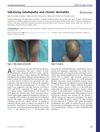
 This case study describes a 9-year-old girl with a homozygous EGFR gene mutation, presenting with tubulopathy and chronic dermatitis, whose ongoing symptoms and management offer insights into this rare genetic condition.
January 2013 in “대한피부과학회지” This article presents a rare case of cicatricial alopecia in a 59-year-old woman after using the epidermal growth factor receptor inhibitor gefitinib.

This study found that injecting growth factor concentrates into the scalp of five patients with androgenic alopecia led to notable improvements in hair density and quality over eight weeks, with patients reporting satisfaction and minimal side effects.
 June 2013 in “Faculty Opinions – Post-Publication Peer Review of the Biomedical Literature”
 FGF9 from certain cells can trigger new hair growth during wound healing, but humans have fewer of these cells, which may limit hair regrowth.
1 citations
,
July 2019 in “Small ruminant research” This study suggests that the NGF/TrkA/CREB system plays a crucial role in promoting outer root sheath cell proliferation in cashmere goats, which may aid in marker-assisted breeding.