January 2026 in “Communications Biology”
 This study constructed a single-cell atlas of hair follicle cells from yaks and taurine cattle, revealing that differences in WNT signaling within dermal papilla cells may be key to the yak's adaptation to cold environments on the Qinghai-Tibet Plateau.
1 citations
,
February 2025 in “Journal of Dairy Science” In this study, researchers found that the SLICK1 allele in cattle may alter local immune regulation, hair growth, and tissue remodeling, as indicated by differential gene expression pathways associated with immune and inflammatory responses in slick vs. nonslick Holsteins.
5 citations
,
May 2024 in “BMC Genomics” This study analyzed the transcriptome of the Tianzhu white yak, identifying differential transcripts that shed light on the molecular mechanisms influencing hair length growth variation in this species.
22 citations
,
September 2022 in “Journal of Animal Science” This study suggests that the PI3K-AKT signaling pathway may significantly influence the development of different hair types in Inner Mongolia cashmere goats.
10 citations
,
October 2021 in “Animal nutrition” This study found that dietary pyridoxine increased hair follicle density in Rex rabbits by activating PI3K/Akt, Wnt, and Notch signaling pathways, which may promote hair growth and delay telogen onset.
 759 citations
,
February 2009 in “Current Biology”
759 citations
,
February 2009 in “Current Biology” This review summarizes fundamental concepts and recent advancements in hair follicle biology, including insights from mouse models into broader molecular and cellular processes relevant to regeneration and development.
 829 citations
,
May 2007 in “Nature”
829 citations
,
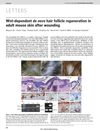
May 2007 in “Nature” Hair follicles can regrow in wounded adult mouse skin using a process like embryo development.
 375 citations
,
February 2006 in “Journal of Cell Science”
375 citations
,
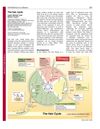
February 2006 in “Journal of Cell Science” This article reviews the stages and regulation of the hair cycle, highlighting molecular regulators involved, but it does not present new research findings.
305 citations
,
December 2000 in “The EMBO Journal” Inhibiting Bmp signaling disrupts hair growth and differentiation.
 61 citations
,
October 1996 in “Development”
61 citations
,
October 1996 in “Development” This study found that combining adult germinative epidermal cells with non-inductive dermal cells can stimulate hair follicle neogenesis, effectively altering the cells' status to enhance induction.