 18 citations
,
April 2016 in “Endocrinology and Metabolism Clinics of North America”
18 citations
,
April 2016 in “Endocrinology and Metabolism Clinics of North America” This review discusses the diagnostic challenges of PCOS in adolescents, noting that the persistence of hyperandrogenism and oligomenorrhea is required for diagnosis, while genetic studies suggest involvement of the hypothalamic-pituitary-ovarian axis.
 17 citations
,
October 2017 in “Scientific reports”
17 citations
,
October 2017 in “Scientific reports” This study found that Super Merino sheep have a higher wool follicle density, finer fleece, and distinct gene expression compared to Small Tail Han sheep, which may inform future breeding and genetic interventions.
 14 citations
,
January 2013 in “Hormone and Metabolic Research”
14 citations
,
January 2013 in “Hormone and Metabolic Research” This study found that in patients with nonclassical 21-hydroxylase deficiency, genotypes do not reliably predict the severity of hyperandrogenic symptoms, suggesting other genetic factors may influence the phenotype.
 12 citations
,
September 2021 in “PLoS ONE”
12 citations
,
September 2021 in “PLoS ONE” In this study, researchers found that interaction between transcription factor EBF1 and gene WNT10A, influenced by a genetic variant, may play a role in hair shaft formation and anagen shortening in male pattern baldness.
 6 citations
,
September 2024 in “Metabolism and Target Organ Damage”
6 citations
,
September 2024 in “Metabolism and Target Organ Damage” This review discusses the role of skin enzymes in drug metabolism and emphasizes the need for models assessing enzyme activity to evaluate the safety and bioequivalence of topical generic drugs, highlighting efforts to standardize testing protocols for transdermal products.
 2 citations
,
April 2010 in “The Open Dermatology Journal”
2 citations
,
April 2010 in “The Open Dermatology Journal” This review discusses the development and role of corneodesmosin in skin and hair follicle integrity, highlighting findings from mouse models and its connection to genetic diseases, with no new experimental results included.
 March 2026 in “Egyptian Journal of Forensic Sciences”
 This review critically examines Forensic DNA Phenotyping, highlighting high accuracy in predicting certain traits but also legal and ethical challenges, particularly around regulatory fragmentation and issues of genetic privacy.
 January 2026 in “Animal Advances”
 In this study of four Chinese goat breeds, black goats exhibited significantly higher melanin content, while Inner Mongolian cashmere goats had longer fiber lengths. These findings highlight genetic variations in coat color and fiber length, informing future breeding programs.
 June 2025 in “Journal of Endocrinological Investigation”
 This review identifies and discusses various endocrine-related causes of hypertension in children and adolescents, emphasizing the role of genetic predispositions and highlighting the need for systematic diagnostic guidelines and genetic sequencing referrals to improve diagnosis and treatment strategies.
 January 2024 in “Wiadomości Lekarskie”
 In this study, a child's diagnosis of Silver-Russell syndrome was confirmed through phenotype data, genetic testing, and the exclusion of other developmental conditions, revealing a need for a multidisciplinary care approach.
 August 2023 in “Physician's journal of medicine”
 This review provides a detailed overview of Hashimoto thyroiditis, discussing its epidemiology, risk factors, genetic and environmental contributors, clinical presentations, diagnostic methods, and treatment options, emphasizing the importance of personalized treatment plans due to varied causes and symptoms.
 May 2023 in “Sučasna pedìatrìâ. Ukraïna”
 In a clinical observation study, researchers documented a case of total alopecia in an 11-year-old child, highlighting a potential link to genetic conditions such as autoimmune polyendocrinopathy candidiasis-ectodermal dystrophy (APECED syndrome) requiring further genetic and serological testing to verify the diagnosis.
 November 2022 in “Van Sağlık Bilimleri Dergisi”
 This study found no association between W locus allele variations and phenotypic traits like eye color, head spotting, and fur length in Turkish Van cats, suggesting other genetic factors should be explored.
 November 2022 in “Gigascience”
 This study identified a 582-bp deletion upstream of LHX2 in cashmere goats, likely linked to hair follicle development and cashmere production, providing insights into genetic factors in cashmere trait selection.
 July 2021 in “Advances in laboratory medicine”
 This article reviews differential diagnosis approaches for 46,XY DSD, proposing a diagnostic algorithm focused on biochemical and genetic data, without presenting new clinical results.
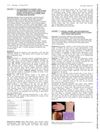
This case report details a child with a specific TNFAIP3 mutation manifesting as a severe SLE/SS phenotype, expanding the known phenotype for this genetic variant.
 43 citations
,
June 2018 in “Clinics in dermatology”
43 citations
,
June 2018 in “Clinics in dermatology” This review discusses the variety of skin disorders associated with atopic dermatitis, exploring their complex relationships and shared genetic and environmental factors, but reports no new clinical results.
 30 citations
,
January 2021 in “Journal of Clinical Immunology”
30 citations
,
January 2021 in “Journal of Clinical Immunology” This study describes various clinical phenotypes associated with FOXN1 mutations, finding that affected individuals may develop different severities of immunodeficiency based on their genetic mutations.
 24 citations
,
January 2000 in “Dermatology”
24 citations
,
January 2000 in “Dermatology” This study found that men with adrenomyeloneuropathy often experience diffuse hair loss and severe male-pattern baldness, potentially due to the X-linked ALD mutation's role in androgenetic alopecia's genetic spectrum.
 21 citations
,
April 2014 in “PLoS ONE”
21 citations
,
April 2014 in “PLoS ONE” In this study, researchers identified a novel KRT74 gene mutation associated with autosomal recessive pure hair and nail ectodermal dysplasia in a Pakistani family, expanding the known genetic causes of the disorder.
 3 citations
,
September 2005 in “Experimental dermatology”
3 citations
,
September 2005 in “Experimental dermatology” This review discusses the formation and structure of the cornified cell envelope in the epidermis, highlighting biochemical pathways and genetic factors, but presents no new experimental results.
 1 citations
,
May 2024 in “Dermatology and Therapy”
1 citations
,
May 2024 in “Dermatology and Therapy” This review article examines the current understanding of frontal fibrosing alopecia, noting its prevalence in different demographics and the roles of genetic and environmental factors in its pathogenesis, while highlighting that treatment approaches remain varied and lack standardization.
 1 citations
,
January 2012 in “Juntendō Igaku/Juntendo igaku”
1 citations
,
January 2012 in “Juntendō Igaku/Juntendo igaku” This study found that a simplified classification based on clinical and morphological features may aid in the diagnosis and initial management of inherited keratinizing disorders, although genetic analysis is essential for definitive diagnosis.
 March 2025 in “HAL (Le Centre pour la Communication Scientifique Directe)”
 This thesis investigates the underlying mechanisms and treatment options for androgenetic alopecia, highlighting the molecular roles of androgens and genetic predispositions, and evaluates current and emerging therapies, such as PROTACs and Janus Kinase inhibitors, to enhance patient management.

This study identified 193 plasma proteins associated with prostate cancer risk, validating 20 high-risk proteins including KLK3, and pinpointed potential drug targets like HSPB1, RRM2B, and PSCA through genetic analysis, offering new insights for biomarkers and treatments.
 October 2007 in “Clinical Biochemistry”
 This study identified a new genotype, V281+I172N/V281L, linked to non-classical 21-hydroxylase deficiency, suggesting it should be considered in genetic panels for the condition.
16 citations
,
November 2024 in “Human Genetics and Genomics Advances” This study identified 24 independent genetic variations and 127 unique genes associated with nociplastic pain, suggesting it is a complex, heritable trait with links to various cognitive and metabolic pathways.
4 citations
,
January 2020 in “Genes” This study found that genetic variation in the KRTAP21-2 gene among crossbred Merino lambs was associated with differences in wool traits, particularly mean staple length.
3 citations
,
January 2025 in “Animal Genetics” In this study, researchers conducting a genome-wide association study on 263 adult female goats identified significant genomic variants linked to coarse hair diameter, particularly emphasizing a crucial region on Chromosome 10. These findings enhance understanding of the genetic factors influencing fiber diameter in goats.
July 2025 in “International Journal of Molecular Sciences” This genetic study identified four new keratin-associated protein genes in sheep, revealing significant sequence variation and suggesting complex evolutionary dynamics, with unique variants in some sheep breeds linking them to Romanov sheep ancestry.