12 citations
,
July 2015 in “Experimental Dermatology” This study found that overexpression of Gsdma3 in mice led to epidermal hyperplasia, skin inflammation, and hair growth defects, suggesting gain-of-function mutations in Gsdma3 cause these conditions.
 6 citations
,
November 2019 in “The application of clinical genetics”
6 citations
,
November 2019 in “The application of clinical genetics” This study identified a significant genetic association between the TNFα gene and alopecia areata susceptibility in the Jordanian Arab population.
1 citations
,
January 2016 in “Journal of Contemporary Medicine” This article reviews androgenetic alopecia and its effects but reports no new clinical results, highlighting that current treatments offer only temporary therapeutic benefits.
2 citations
,
December 2001 in “Dermatologic Therapy” This study found elevated unoccupied type II GC receptors and decreased thioredoxin levels in alopecia areata patients' scalps, which may explain the variable effectiveness of glucocorticoid treatment for hair regrowth.
 2 citations
,
December 2019 in “Journal of The European Academy of Dermatology and Venereology”
2 citations
,
December 2019 in “Journal of The European Academy of Dermatology and Venereology” This letter to the editor provides no abstract and reports no new research findings or results.
February 2020 in “Benha Journal of Applied Sciences” This study found that higher levels of Galectin-3 and HOMA-IR are independent predictors of androgenetic alopecia severity in both male and female patients.
 July 2023 in “JAAD International”
 This study describes androgenetic alopecia as a common non-scarring hair loss condition primarily influenced by genetic factors and androgen sensitivity, notably impacting psychosocial well-being, especially in females and younger males seeking treatment.
 July 2023 in “Institutional Repositories DataBase (IRDB)”
 Malassezia species may contribute to hair loss in AGA patients.
 February 2025 in “Advanced Composites and Hybrid Materials”
 This study reported that in animal studies of androgenetic alopecia, a biodegradable microneedle patch releasing glutamic acid promoted hair regeneration more effectively than daily minoxidil, with higher hair follicle counts and less frequent dosing, showing the potential for clinical application.
 7 citations
,
June 2011 in “Movement Disorders”
7 citations
,
June 2011 in “Movement Disorders” A specific gene mutation is linked to a hereditary form of dystonia that responds well to certain medications.
 October 2011 in “Faculty Opinions – Post-Publication Peer Review of the Biomedical Literature”
 Certain gene variations are significantly linked to hair loss, especially in white people.
 4 citations
,
May 2002 in “Therapeutische Umschau”
4 citations
,
May 2002 in “Therapeutische Umschau” AGA treated with finasteride, minoxidil, and hair transplantation.
 24 citations
,
June 2012 in “BMC Research Notes”
24 citations
,
June 2012 in “BMC Research Notes” This study outlines the Human Gene Correlation Analysis tool, which classifies human genes by coexpression levels and identifies overrepresented annotation terms in correlated gene groups, with no new clinical results reported.
 15 citations
,
December 2013
15 citations
,
December 2013 This study found that in men with androgenic alopecia, moderate to severe cases were associated with the AA genotype of rs1160312, blood vanadium concentrations, and regular consumption of soy bean drinks.
January 2009 in “Journal of Clinical Dermatology” This study suggests that variations in CAG repeat numbers in the androgen receptor gene may not significantly influence the risk of androgenetic alopecia in Korean males.
 50 citations
,
July 2000 in “Dermatologic Surgery”
50 citations
,
July 2000 in “Dermatologic Surgery” Female and male AGA are different diseases.
 62 citations
,
March 2008 in “American Journal of Human Genetics”
62 citations
,
March 2008 in “American Journal of Human Genetics” This study located a potential genetic link for androgenetic alopecia on chromosome 3q26, marking an early step in identifying new susceptibility genes for male pattern baldness.
 October 2012 in “Faculty Opinions – Post-Publication Peer Review of the Biomedical Literature”
 Six new genes linked to early hair loss were found, which also surprisingly connect to Parkinson's disease and lower fertility.
1 citations
,
September 2024 in “Benha Journal of Applied Sciences” This review provides an overview of androgenetic alopecia, detailing its causes, diagnostic methods, and current treatments, noting that combination therapies show promise but newer options like cell-based treatments require more research.
 November 2024 in “Benha Journal of Applied Sciences”
 In this study, the researchers explored how the loss of structural integrity in hair follicles due to reduced α-SMA expression in the vertex area may contribute to androgenetic alopecia.
25 citations
,
July 2006 in “Journal of Neurochemistry” This study found that chronic exposure to and withdrawal of progesterone influenced the expression and function of GABA A receptors in rat hippocampal neurons through its metabolite 3α,5α‐THPROG.
July 2013 in “Faculty of Health; Institute of Health and Biomedical Innovation” This review discusses genetic contributions to androgenetic alopecia and proposes focusing on candidate genes in genome-wide association studies, but it reports no new clinical results.
 October 2012 in “Faculty Opinions – Post-Publication Peer Review of the Biomedical Literature”
 Six new genes linked to early hair loss were found, which also surprisingly connect to Parkinson's disease and lower fertility.
1 citations
,
June 2022 in “Journal of Cosmetic Dermatology” This study in a Korean population identified two novel genetic variants that may increase the risk of androgenetic alopecia, contributing to understanding its genetic basis in non-European populations.
 2 citations
,
January 2019 in “Annals of Dermatology”
2 citations
,
January 2019 in “Annals of Dermatology” Certain gene variations in EGF and EGFR may increase the risk of alopecia areata in Koreans.
 9 citations
,
June 2000 in “Journal of The American Academy of Dermatology”
9 citations
,
June 2000 in “Journal of The American Academy of Dermatology” This study reported that heterozygous carriers of a mutation in the human hairless gene did not differ from healthy homozygotes in the pattern of androgenetic alopecia.
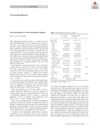 2 citations
,
November 2018 in “Clinical and Experimental Dermatology”
2 citations
,
November 2018 in “Clinical and Experimental Dermatology” This correspondence discusses acne development in male androgenetic alopecia but reports no new clinical findings.
11 citations
,
May 2018 in “Frontiers in plant science” This study found that overexpressing the PCaP2 protein in Arabidopsis enhanced drought tolerance by influencing ABA and SA signaling pathways and regulating root hair growth, suggesting a key role in water deficit response.
 March 2024 in “Plant physiology”
 This study found that the transcription factor GLABRA 2 inhibits ethylene production, regulating root hair growth in Arabidopsis under nutrient deficiency conditions.