 October 2024 in “International Journal of Pharma Professional’s Research (IJPPR)”
 This study developed and characterized Quercetin-loaded nanogels, finding that they showed promising potential for enhanced drug delivery and stability in treating Alopecia, with an optimized batch achieving a drug release of 95.32% over 12 hours.
 August 2024 in “UPI Journal of Pharmaceutical Medical and Health Sciences”
 This review article discusses the current applications and research findings of platelet-rich plasma in musculoskeletal rehabilitation, highlighting its potential clinical utility but reporting no new clinical results.
In this study, researchers developed a method using stencils to create controlled stiffness gradients in alginate hydrogels, revealing that stiffer regions within the gels promote deeper invasion by breast cancer cells, facilitating the study of mechanosensitive cellular behaviors.
 June 2024 in “Frontiers in pharmacology”
 This study found that a 2-deoxy-D-ribose gel stimulated hair follicle growth in mice with androgenic alopecia, showing effects similar to minoxidil without additional benefits from combining the two treatments.

This study developed a topical dutasteride-loaded Insitu-emulgel for treating androgenetic alopecia, finding it effectively controls drug release, enhances skin penetration, and may improve patient compliance compared to traditional topical treatments, though further clinical research is underway.
 February 2024 in “Research Square (Research Square)”
 This study optimized the extraction process for abomasum protein from Tianshan red deer, identifying two proteins with anti-inflammatory and anti-tumor activities, suggesting they could be beneficial in foods and nutraceuticals.
 February 2024 in “Oriental Journal of Chemistry/Oriental journal of chemistry”
 This review reports various ethnomedicinal uses, phytochemical components, and potential pharmacological effects of Eclipta alba, highlighting benefits like wound healing and neuroprotection, though it underscores the need for further mechanism-based studies and clinical trials.
 February 2024 in “Digital Library of Theses and Dissertations (Universidade de São Paulo)”
 This study demonstrated that using a mass spectrometry imaging technique, researchers were able to visualize the incorporation of argan, avocado, and coconut oils into hair fibers, suggesting their potential in cosmetic and alopecia treatments by confirming oil absorption and fiber modification.
 January 2024 in “International Journal of Research Publication and Reviews”
 The herbal hair serum with rosemary, hibiscus, and neem is safe and effective for hair care.

This study found that elastin-like recombinamer (ELR) wound dressings promote tissue regeneration and stability without rejection in ex vivo and in vivo models, indicating potential for hard-to-heal wound treatment.
 January 2024 in “LA Referencia (Red Federada de Repositorios Institucionales de Publicaciones Científicas)”
 This study found that Carbon Quantum Dots effectively detected and quantified Co²⁺ ions and methylcobalamin in tap water with high sensitivity and recovery rates between 95% and 105%.
 September 2023 in “International Journal of Applied Pharmaceutics”
 This study found that a topical gel containing Minoxidil and Tofacitinib citrate showed promise for treating alopecia areata, with formulation F5 demonstrating effective drug release and stability in evaluations.
 August 2023 in “International journal of basic and clinical pharmacology”
 This review article describes the ingredients and evaluation tests for formulating a hair serum aimed at improving hair growth and preventing hair loss, highlighting the roles of Citrus sinensis, Nigella sativa, flax seed, and coconut oil in addressing hair and scalp health.
 June 2023 in “Research Square (Research Square)”
 In this study, utilizing a mixture of crushed sky fruit seeds and sodium salt for goat skin preservation led to a significant reduction in environmental impact, decreasing total dissolved solids by 59% and chloride content by 44%, while maintaining the physical quality of processed leather.
Custom skincare can be made based on genes, fewer cats in Lublin have FeLV/FIV than national average, and studies also looked at small water bodies, river pollution, guppy growth, toxins in biochars, palm oil issues, and pumpkin seed oil for hair strength.
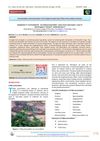 April 2023 in “International journal of pharmaceutical sciences review and research”
 This study concluded that an Emulgel formulation containing Tridax procumbens extract showed promising wound healing and antimicrobial activity, with improved physical properties in the F2 formulation.
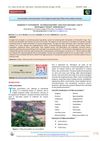 March 2023 in “International journal of pharmaceutical sciences review and research”
 In this study, an Emulgel containing Tridax procumbens extract was formulated and found to have promising physical properties and antimicrobial activity for wound healing.
 February 2023 in “Asian journal of pharmaceutical research and development”
 This survey reports on the types and extraction factors of flavonoids in three aquatic plants from Iraqi marshlands but notes limited information on individual flavonoid profiles and their biological impacts.
 January 2023 in “Marmara University Open Access System”
 This study found that tideglusib delivered topically in a bacterial cellulose hydrogel showed positive effects on the wound healing of rat palatal mucosa, as observed through macroscopic, histomorphometric, and immunohistochemical evaluations.
 December 2022 in “Deleted Journal”
 In this study, topical application of keratin extract from wool promoted hair growth in mice by reducing the time for initiation and completion of growth phases and improving hair quality.
 October 2022 in “International Journal For Multidisciplinary Research”
 This review summarizes Hibiscus rosa Sinensis's phytochemistry, pharmacology, and medicinal uses, noting various beneficial effects and the need for further research on its phytochemicals and clinical applications.
 June 2022 in “Organic communications”
 This study explores potential treatments for post COVID-19 complications using natural substances through molecular docking, but reports no new clinical results and existing treatments remain limited to prophylaxis and therapeutics.

This study demonstrated that cryogelation of human hair keratin allows the development of 3D scaffolds with tunable properties, supporting cell adhesion and proliferation for potential biomedical applications.
 November 2021 in “International journal of life science and pharma research”
 This study reported that a solid lipid nanoparticle-based gel formulation, specifically optimized for psoriasis, improved drug loading capacity and release properties using high-pressure homogenization, suggesting its potential efficacy as a topical treatment.
This study found that sericin dressing containing collagen hydrolysate significantly reduced wound healing time and improved scar quality compared to commercial dressing in split-thickness skin graft donor sites.

This research focused on formulating finasteride, dutasteride, and minoxidil with cyclodextrins to enhance their solubility and skin penetration for topical use, potentially reducing scalp irritation from current alcohol-based preparations.
 February 2020 in “International research journal of pharmacy”
 This study suggests that a topical emulsion containing Camellia sinensis and Allium cepa extracts may show promise for treating alopecia areata in Wistar rats.
 April 2018 in “Journal of Investigative Dermatology”
 This study found that hair follicle stem cells in mice have an unexpected ability to adaptively determine their differentiation pathways, maintaining tissue architecture despite external stimuli.
 April 2018 in “Journal of Investigative Dermatology”
 In this study, researchers found that stabilizing the protein HIF1A in hair follicles promotes glycolysis over oxidative phosphorylation, potentially reducing oxidative stress and supporting hair growth.
 April 2018 in “Journal of Investigative Dermatology”
 This study suggests that human hair follicles may operate their own Cori cycle, synthesizing glycogen from lactate under conditions of lactic acidosis.