 25 citations
,
December 2008 in “Journal of Dermatological Case Reports”
25 citations
,
December 2008 in “Journal of Dermatological Case Reports” This case report describes alopecia areata dermoscopy in an African-American patient, revealing novel patterns such as a diffuse honeycomb-like pigmented network and white dots, suggesting skin color may affect dermoscopic findings.
 6 citations
,
January 2013 in “Case reports in endocrinology”
6 citations
,
January 2013 in “Case reports in endocrinology” This article reviews acromegaloid facial appearance syndrome and presents a case in a 57-year-old woman, emphasizing the need for more cases to understand its clinical features and inheritance patterns.
 7 citations
,
November 2017 in “Cureus”
7 citations
,
November 2017 in “Cureus” This report introduces a new potential sign, paired ear creases of the helix, which may have relevance to cardiovascular disease similar to diagonal ear lobe creases, in a case of coronary artery disease.
26 citations
,
May 1988 in “Pediatric dermatology” This report describes a 15-year-old male with widespread papules due to middermal epithelial cysts containing vellus hairs, also observed in his brother and father.
May 2001 in “Journal of Investigative Dermatology” In this study, Maas-Szabowski and Szabowski revealed that c-Jun and JunB transcription factors, as well as granulocyte macrophage-colony stimulating factor, regulate human keratinocyte growth and differentiation in fibroblast–keratinocyte interactions.
 1 citations
,
October 2021 in “Australasian Journal of Dermatology”
1 citations
,
October 2021 in “Australasian Journal of Dermatology” This letter to the editors describes a case of diffuse congenital hypotrichosis simplex with associated hair shaft fragility but reports no new clinical findings.
13 citations
,
January 2001 in “Pediatric dermatology” This study reports pseudopili annulati in a dark-haired Chinese girl, identifying the unique appearance and structural characteristics of her hair without finding abnormalities in the cuticle and cortex.
 3 citations
,
September 2017 in “Pediatric Dermatology”
3 citations
,
September 2017 in “Pediatric Dermatology” This article discusses contact dermatitis linked to alopecia and hyperpigmentation, but it reports no new clinical results.
15 citations
,
December 2013 in “Clinical Cosmetic and Investigational Dermatology” This study found that levels of the protein MAGP-1, important for skin elasticity, decrease with aging and photoexposure, potentially contributing to skin fragility, sagging, and enlarged pores.
24 citations
,
July 2018 in “British Journal of Dermatology” Contact allergies might contribute to frontal fibrosing alopecia.
 July 2023 in “Clinical, cosmetic and investigational dermatology”
 In this study, reflectance confocal microscopy was used to diagnose periorificial dermatitis, revealing specific skin changes such as hair follicle dilatation, increased vascular density, and inflammation, which help distinguish it from similar conditions.
3 citations
,
December 2024 in “International Journal of Dermatology” This review examined the psychological effects, mechanisms, health associations, and treatments related to premature hair graying, highlighting factors like genetics, oxidative stress, smoking, and diet, with the aim of enhancing understanding and addressing its broader implications.
 1 citations
,
July 2020 in “Benha Journal of Applied Sciences”
1 citations
,
July 2020 in “Benha Journal of Applied Sciences” This study identified that trichoscopy can effectively diagnose frontal fibrosing alopecia by highlighting specific scalp abnormalities in postmenopausal women.
33 citations
,
May 2015 in “JAMA Dermatology” This study identifies comedonal or cystic fibrofolliculomas as novel diagnostic clues for earlier recognition of Birt-Hogg-Dube syndrome, potentially facilitating timely surveillance of associated systemic complications.
March 2004 in “Journal of Investigative Dermatology” Razor bumps are linked to a genetic variant, misoprostol helps erythromelalgia pain, steroid ointments don't affect skin rhythms, and certain antibodies are common in localized scleroderma.
October 2025 in “Dermatology Practical & Conceptual” In this study, UVFD and sUVRD techniques revealed distinctive characteristics of GD lesions, suggesting that GD might be more common in younger individuals and females than previously thought, possibly due to underdiagnosis. Incorporating dermatoscopy in exams may help improve GD detection and management.
3 citations
,
September 2024 in “Journal of the American Academy of Dermatology” Dermatology datasets need more diversity in skin tones and ethnic representation.
 26 citations
,
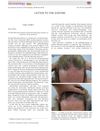
June 2018 in “Australasian Journal of Dermatology”
26 citations
,
June 2018 in “Australasian Journal of Dermatology” Stopping sunscreen use on the forehead led to hair regrowth in a woman with frontal fibrosing alopecia.
 June 2023 in “Pediatric investigation”
 This case report describes a 7-year-old boy with pityriasis versicolor presenting as scalp hypopigmentation, a rare distribution for this fungal infection. Diagnosis was confirmed via Wood's lamp examination and microscopy, and the condition resolved after treatment with topical terbinafine hydrochloride cream.
115 citations
,
April 2010 in “Archives of Dermatology” In this randomized, blinded study, the surgical face-lift improved facial skin laxity by 49% compared to 16% with a minimally invasive fractional radiofrequency treatment, with FRF causing fewer adverse effects.
5 citations
,
November 2013 in “Case reports in dermatology” This case report details a 57-year-old woman with frontal fibrosing alopecia who developed hyperpigmentation after treatment with dutasteride and pimecrolimus, highlighting no previously reported hyperpigmentation association with this combination.
125 citations
,
February 2007 in “The EMBO Journal” Fgfr2b helps maintain healthy skin and prevent cancer.
 155 citations
,
September 2008 in “British journal of dermatology/British journal of dermatology, Supplement”
155 citations
,
September 2008 in “British journal of dermatology/British journal of dermatology, Supplement” This study observed that frontal fibrosing alopecia predominantly affects postmenopausal women, can be associated with lichen planus, and may lead to progressive hairline recession, though this progression is not consistent in all cases.
12 citations
,
November 2011 in “Pediatric dermatology” This case report describes a rare presentation of Becker's nevus in a 16-year-old boy, with two nevi located on the left side of the face extending to the oral mucosa.
 April 2023 in “Journal of Investigative Dermatology”
 This study reported that urban pollution accelerates facial wrinkle development and increases pigmentation severity in Chinese women over 30, whereas UV exposure affects these signs from age 20. After 45, pollution becomes a key contributor to skin aging.
 January 2019 in “Global Dermatology”
 This review discusses the genetic disorder, monilethrix, characterized by fragile, brittle hair and its inheritance patterns, and reports no new clinical results.
 63 citations
,
October 2011 in “Archives of Dermatology”
63 citations
,
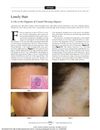
October 2011 in “Archives of Dermatology” Isolated long hairs at the original hairline can help diagnose Frontal Fibrosing Alopecia.
 December 2025 in “Cureus”
 In this case report, a unique immunological mechanism was observed in an 11-year-old girl where the presence of one autoimmune disease appeared to prevent the manifestation of another, leading to the withdrawal of one type of lesion when another appeared.
3 citations
,
January 2016 in “Dermatology online journal” This review discusses the potential relationship between lichen planus pigmentosus and frontal fibrosing alopecia, presenting a case study but reporting no new clinical findings.
 6 citations
,
November 2022 in “Development”
6 citations
,
November 2022 in “Development” This review discusses the developmental origins and diversity of dermal fibroblasts, focusing on their roles in epidermal and hair follicle growth, but reports no clinical results.