 January 2025 in “International Journal of Dermatology Venereology and Leprosy Sciences”
 In this hospital-based study, researchers found that serum ferritin levels were significantly lower in individuals with acne compared to healthy controls, suggesting a possible link between iron deficiency and acne pathogenesis.
7 citations
,
May 1996 in “PubMed” This article outlines the clinical and histological features of milia grouped in plaques on a 59-year-old woman's face but reports no new research findings.
May 2025 in “Skin Appendage Disorders” In this case study, a 74-year-old patient with frontal fibrosing alopecia displayed unique trichoscopic and histopathological features, and treatments like 5-alpha reductase inhibitors and oral minoxidil effectively halted disease progression, highlighting the importance of comprehensive facial analysis for prognosis.
 1 citations
,
January 2013 in “Springer eBooks”
1 citations
,
January 2013 in “Springer eBooks” The document concludes that skin and nail changes can indicate various underlying health conditions.
January 2016 in “Indian Dermatology Online Journal” This case study discusses a 36-year-old female diagnosed with a facial variant of eruptive vellus hair cyst, confirmed by skin biopsy, and highlights the importance of considering this condition in the differential diagnosis of asymptomatic facial papules.
 August 2021 in “Annals of Agricultural and Environmental Medicine”
 This review provides a detailed analysis of frontal fibrosing alopecia, focusing on its prevalence in postmenopausal Caucasian women, associated comorbidities, and potential autoimmune, genetic, hormonal, and environmental factors; it emphasizes the need for improved understanding to enhance diagnosis and treatment.
December 2025 in “JEADV Clinical Practice” This case study reports on a 72-year-old woman with frontal fibrosing alopecia and hair repigmentation, suggesting the rare occurrence of canities reversal could aid in diagnosing FFA.
January 2016 in “UNESP Institutional Repository (São Paulo State University)” This study suggests that the phenotype of melasma in women is influenced by structural and cellular changes across the epidermal-melanin unit, not just melanocyte hypertrophy, highlighting potential roles for dermal damage repair and fibroblast senescence.
 August 2018 in “Journal of The American Academy of Dermatology”
 A 5-year-old girl with a rare skin disorder was effectively treated with skin creams instead of oral medication.
 1 citations
,
April 2017 in “Journal of Investigative Dermatology”
1 citations
,
April 2017 in “Journal of Investigative Dermatology” In this study, D-OCT imaging revealed distinct structural and vascular changes in patients with frontal fibrosing alopecia, highlighting the technique's potential for diagnosing and monitoring the condition's activity.
 October 2023 in “CRC Press eBooks”
 This chapter provides an overview of 11 common hair and nail conditions in children with brown skin, utilizing clinical photographs and a question-and-answer format to discuss conditions such as alopecia areata, telogen effluvium, and nail lichen planus.
 8 citations
,
December 2009 in “Journal of The European Academy of Dermatology and Venereology”
8 citations
,
December 2009 in “Journal of The European Academy of Dermatology and Venereology” This article discusses a novel mutation in the FERMT1 gene identified in a Spanish family with Kindler’s syndrome but reports no new clinical results.
 9 citations
,
September 2009 in “Journal of Cutaneous Medicine and Surgery”
9 citations
,
September 2009 in “Journal of Cutaneous Medicine and Surgery” This study reports cases of androgenetic alopecia patients with depigmented macules on sun-exposed scalp areas, suggesting potential ultraviolet-induced scalp leukoderma not covered in existing dermatology texts.

This review discusses the potential link between contact allergy and frontal fibrosing alopecia, noting the presence of implicated allergens in current literature, but reports no new clinical findings.
 1 citations
,
July 2022 in “The journal of investigative dermatology/Journal of investigative dermatology”
1 citations
,
July 2022 in “The journal of investigative dermatology/Journal of investigative dermatology” In this open-label trial, Tofacitinib was well tolerated and improved IFN and cytokine scores, as well as overall skin pathology, in individuals with Down syndrome and immune skin conditions.
 32 citations
,
September 2017 in “Journal of the American Academy of Dermatology”
32 citations
,
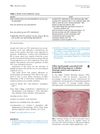
September 2017 in “Journal of the American Academy of Dermatology” In this study, researchers reported that oral isotretinoin effectively treated facial papules in frontal fibrosing alopecia, with histopathologic findings suggesting the involvement of elastic fibers and sebaceous glands in papule formation beyond perifollicular inflammation.
3 citations
,
December 1967 in “Australasian Journal of Dermatology” This review discusses Becker's Melanosis and Hypertrichosis in young males, summarizing cases observed in Melbourne with clinical and histological analyses, but reports no new clinical findings.
14 citations
,
May 1979 in “International Journal of Dermatology” In this study, trichostasis spinulosa was observed in 51 patients with lesions on the nose, where some follicles contained up to 86 hairs each, possibly influenced by endocrine factors and actinic rays.
 3 citations
,
January 2022 in “Journal of The American Academy of Dermatology”
3 citations
,
January 2022 in “Journal of The American Academy of Dermatology” This study found that sunscreen and moisturizer use was associated with a higher likelihood of developing frontal fibrosing alopecia in the reviewed studies.
February 2025 in “Journal of the European Academy of Dermatology and Venereology” This study found that ultraviolet-induced fluorescence dermoscopy enhanced the identification of follicular openings in alopecia areata, potentially aiding in the assessment of disease severity and treatment strategies.
November 2014 in “The Pediatric Infectious Disease Journal” This case study of a 3-and-a-half-year-old girl with skin lesions revealed a diagnosis of extensive suppurative folliculitis with mixed granulomatous reaction upon further examination of hair follicles.
66 citations
,
October 2003 in “Dermatologic clinics” Excision and laser techniques can effectively treat acne keloidalis nuchae.
 January 2025 in “International Journal of Dermatology”
 This case report describes a patient with eruptive tumor of follicular infundibulum, emphasizing the need for dermatologists to include it in the differential diagnosis of acquired facial hypopigmentation.
 September 2024 in “Journal of Medical Case Reports”
 This case report suggests that patients with a history of keratosis pilaris might be predisposed to developing follicular centration in conditions like follicular tinea versicolor, though the exact cause remains unclear.
 73 citations
,
April 2010 in “Anais Brasileiros de Dermatologia”
73 citations
,
April 2010 in “Anais Brasileiros de Dermatologia” This study concluded that dermoscopy enhances the diagnostic capability for cicatricial alopecia beyond clinical inspection and identified novel dermoscopic features such as blue-grey dots.
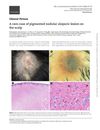
This study reported the case of a 30-year-old man with a bluish-grey scalp nodule that developed over a previously stable hairless plaque, revealing histopathological features consistent with epithelioid cell nests and spindle-shaped dermal melanocytes embedded in collagen.
4 citations
,
January 2015 in “Dermatology Online Journal” This study highlights that smoker's mustache, a tobacco-related hair discoloration on the upper lip, is asymptomatic, generally unnoticed, and may resolve if smoking is discontinued, though patients often continue smoking.
 86 citations
,
July 2012 in “British journal of dermatology/British journal of dermatology, Supplement”
86 citations
,
July 2012 in “British journal of dermatology/British journal of dermatology, Supplement” This report suggests a causal connection between hyaluronic acid filler injections and the development of xanthelasma, possibly through an inflammatory reaction that increases vascular permeability and LDL leakage.
 May 2023 in “Journal of Cosmetic Dermatology”
 This study found that obese and overweight children have higher prevalence of certain skin disorders like keratosis pilaris and acanthosis nigricans, with these conditions being linked to insulin resistance and more likely in children with darker skin tones.
2 citations
,
August 2016 in “Journal of Investigative Dermatology”