 August 2025 in “International Journal of Contemporary Pediatrics”
 This case report presents a rare subtype of hypomyelinating leukodystrophy linked to a PYCR2 gene mutation, emphasizing exome sequencing's value in diagnosing undiagnosed childhood HLDs with atypical symptoms.
 1 citations
,
May 2015 in “Journal of The American Academy of Dermatology”
1 citations
,
May 2015 in “Journal of The American Academy of Dermatology” Lichen planus pigmentosus and fibrosing frontal alopecia in Colombia are likely different stages of the same disease.
 June 2025 in “International Journal of Nephrology and Renovascular Disease”
 This study suggests that PLA2R1 overexpression in PMN affects the podocyte cycle and may involve an additional immune response, which could provide new directions for PMN treatment development.
 17 citations
,
December 2010 in “Journal of Investigative Dermatology”
17 citations
,
December 2010 in “Journal of Investigative Dermatology” This study found that higher levels of the protein Flii were associated with enhanced hair follicle regeneration and longer hair fibers in a mouse model.
 30 citations
,
January 2020 in “Journal of The American Academy of Dermatology”
30 citations
,
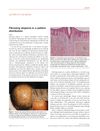
January 2020 in “Journal of The American Academy of Dermatology” This review reports no new clinical results but discusses fibrosing alopecia in a pattern distribution as a distinct scarring alopecia with characteristics of both androgenetic alopecia and lichen planopilaris.
 16 citations
,
February 2010 in “Journal of the European Academy of Dermatology and Venereology”
16 citations
,
February 2010 in “Journal of the European Academy of Dermatology and Venereology” This article is a letter to the editor about fibrosing alopecia in a pattern distribution and reports no new research findings.
 9 citations
,
February 2018 in “The Journal of Dermatology”
9 citations
,
February 2018 in “The Journal of Dermatology” This study identified a novel splice site mutation in the LIPH gene associated with autosomal recessive woolly hair, contributing to understanding the genetic basis of this condition.
March 2026 in “Journal of Investigative Dermatology” Folliculin slows hair growth, and blocking it might help treat hair loss.
July 2021 in “British Journal of Dermatology” In this study, the researchers reported that early diagnosis and treatment of fibrosing alopecia in a pattern distribution may arrest or potentially reverse disease progression, though some patients experienced continued hair loss.
 13 citations
,
January 2018 in “International Journal of Dermatology”
13 citations
,
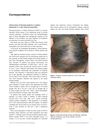
January 2018 in “International Journal of Dermatology” This clinical study on fibrosing alopecia in a pattern distribution among a Latin American population reports no new results but addresses this specific condition in its demographic context.
7 citations
,
September 2013 in “Familial cancer” This review discusses recent insights into Birt–Hogg–Dube syndrome, including the functions of the FLCN gene and clinical recommendations for screening and treatment, but it reports no new experimental results.
 1 citations
,
September 2021 in “CRC Press eBooks”
1 citations
,
September 2021 in “CRC Press eBooks” This chapter reviews trichoscopic-pathologic correlations in Frontal Fibrosing Alopecia and reports no new clinical results; the authors discuss genetics, clinical patterns, and unusual variants associated with this condition.
24 citations
,
January 2018 in “Development” This study found that Frizzled genes Fzd3 and Fzd6 are redundantly involved in controlling hair follicle polarity in mice, but operate through distinct mechanisms, highlighting their complex role in hair orientation.
June 2003 in “Faculty Opinions – Post-Publication Peer Review of the Biomedical Literature” GLABRA2 represses root hair formation by inhibiting a specific gene.
 August 2023 in “JAAD Case Reports”
 This report describes a 57-year-old woman with fibrosing alopecia in a pattern distribution, who experienced hair regrowth with combined treatment including hydroxychloroquine and other topical and oral therapies.
 May 2025 in “Journal of Clinical Images and Medical Case Reports”
 The study observed that patterned fibrosing alopecia, a type of scarring hair loss, appears in some patients after hair transplants, facelifts, and other surgical interventions, sharing features with lichen planopilaris and androgenetic alopecia.
October 2025 in “Clinical and Experimental Dermatology” Among patients with biopsy-proven FAPD in specialized hair clinics, this study found the condition is common in females around 52.5 years old, with treatment generally stabilizing or slightly improving hair loss, despite challenges in differentiating FAPD from androgenetic alopecia.
 179 citations
,
December 2004 in “Journal of The American Academy of Dermatology”
179 citations
,
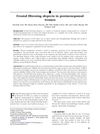
December 2004 in “Journal of The American Academy of Dermatology” This study observed that frontal fibrosing alopecia in postmenopausal women involves selective follicular inflammation, and finasteride treatment may slow disease progression, suggesting a potential androgen-related component.
 May 2025 in “Egyptian Journal of Dermatology and Venerology”
 This study found that specific SNPs in the CYP19A1 gene were associated with Female Pattern Hair Loss in Egyptian women, with altered CYP19A1 gene expression and higher frequencies of related genotypes observed in patients compared to controls.

This study demonstrated that de novo designed bifunctional proteins can target and degrade BCL-xL, leading to cell apoptosis, suggesting a new approach to targeted protein degradation therapy.
 March 2025 in “International Journal of Trichology”
 This case report describes the first observed instance of fibrosing alopecia in a pattern distribution in a child, suggesting the condition is not solely androgen dependent.
This study demonstrated that Reverse Protein Engineering can decrease the size of Firefly Luciferase from 550 to less than 80 amino acids, but further research is needed to ensure these smaller peptides retain bioluminescent activity.
May 2005 in “Molecular Carcinogenesis” This study found that mrp/plf-mRNA expression in murine skin increases in response to different tumor promoters, suggesting its potential as a short-term biomarker for chemical carcinogenesis.
 54 citations
,
December 2014 in “Wound Repair and Regeneration”
54 citations
,
December 2014 in “Wound Repair and Regeneration” This study observed that autologous PRP and PDRN injections improved hair thickness and density in women with pattern hair loss, with combined therapy showing greater improvement in thickness than PDRN alone.
 December 2021 in “Research Square (Research Square)”
 This study found that repeatedly collecting hair follicles from individuals with fragile X syndrome is feasible for measuring FMR1 and FMRP levels in both home and office settings.
39 citations
,
December 1998 in “Journal of Cell Science” This study found that the LEF-1 binding site acts as an enhancer element for the wool keratin intermediate filament gene promoter in hair follicle cortex, with specificity regulated by additional factors.
136 citations
,
July 2014 in “Proceedings of the National Academy of Sciences of the United States of America” This study identified mutations in the FGF5 gene as a cause of extreme eyelash growth in Pakistani families, highlighting a potential target for regulating eyelash growth.
 12 citations
,
January 2015 in “Indian Journal of Dermatology, Venereology and Leprology”
12 citations
,
January 2015 in “Indian Journal of Dermatology, Venereology and Leprology” This case report describes a 67-year-old woman with frontal fibrosing alopecia and her daughter with lichen planopilaris, noting identical HLA D types which suggest a phenotypical link between these conditions.
7 citations
,
September 2024 in “PLANT PHYSIOLOGY” This study in Arabidopsis thaliana found that exposure to volatile compounds from Penicillium aurantiogriseum promotes root hair growth through signaling involving RALF22, ethylene, auxin, and photosynthesis, and that RALF22 plays a crucial role in the plants' response to these compounds.
 37 citations
,
August 2014 in “Journal of experimental botany”
37 citations
,
August 2014 in “Journal of experimental botany” This study identified the AtPRPL1 gene in Arabidopsis thaliana as being involved in cell elongation processes, despite unclear changes in cell wall composition from its altered expression.