In this study, Fumai Paste was found to enhance EGFR expression and accelerate healing in a rat model of vinorelbine-induced skin injury more effectively than magnesium sulfate or saline treatments.
October 2022 in “Hair Transplantation” This article discusses the establishment and global adoption of standardized terminology for follicular unit excision (FUE) by the ISHRS, which aids effective communication among hair restoration practitioners.
 26 citations
,
October 2018 in “British Journal of Dermatology”
26 citations
,
October 2018 in “British Journal of Dermatology” This study found that high frequency use of sunscreen is associated with frontal fibrosing alopecia among women attending a specialist hair clinic in Australia.
 6 citations
,
January 2019 in “Medical Hypotheses”
6 citations
,
January 2019 in “Medical Hypotheses” This hypothesis article explores frontal fibrosing alopecia as a potential autoimmune condition and calls for future research to investigate this possibility, but reports no new clinical results.
 May 2026 in “Scholars Journal of Medical Case Reports”
 In this report, researchers described a 36-year-old woman with frontal fibrosing alopecia resistant to standard treatments, who showed significant improvement after six months on a combination of intralesional betamethasone and oral hydroxychloroquine, suggesting potential benefits of this therapy approach in managing the condition.
April 2024 in “Journal of clinical medicine” This review discusses various therapeutic options for frontal fibrosing alopecia and highlights the need for more research, as existing data are largely retrospective and lack precise treatment guidelines.
 25 citations
,
December 2017 in “Facial Plastic Surgery”
25 citations
,
December 2017 in “Facial Plastic Surgery” This study observed that combining high-potency steroids with pimecrolimus might effectively stabilize hairline recession in frontal fibrosing alopecia patients.
29 citations
,
June 2015 in “Kidney International” This study developed a kidney-specific knockout mouse model lacking the Flcn gene, which recapitulates human Birt-Hogg-Dubé kidney tumorigenesis and shows that mTOR pathway inhibition with rapamycin can suppress tumor growth.
2 citations
,
December 2024 in “Microscopy Research and Technique” This study introduced a novel microscopy system using an Er3 + −doped femtosecond fiber laser, achieving detailed imaging of biological structures in plant and skin samples with improved spatial resolution for various applications, including in vivo imaging.
The authors concluded that capecitabine and high-dose toremifene may be an effective treatment option for patients unable to undergo anthracycline or taxane therapies, based on one woman's cancer management.
 38 citations
,
January 2019 in “International Journal of Women's Dermatology”
38 citations
,
January 2019 in “International Journal of Women's Dermatology” This review discusses potential therapeutic options for frontal fibrosing alopecia by exploring distinct signaling pathways and cellular players, but reports no new clinical findings and emphasizes the need for further trials.
 27 citations
,
February 2017 in “Clinical, Cosmetic and Investigational Dermatology”
27 citations
,
February 2017 in “Clinical, Cosmetic and Investigational Dermatology” In this study, a topical formulation with compounds from the monoterpenoid family significantly improved hair growth indicators like anagen:telogen ratio, hair fall, and visual hair density in men and women with pattern hair loss.
 1 citations
,
July 2016 in “Livestock science”
1 citations
,
July 2016 in “Livestock science” This study suggests that nerve growth factor may support hair follicle growth in Liaoning cashmere goats through pathways involving its receptor, TrkA, particularly during the anagen phase.
3 citations
,
August 2018 in “Medical Journal Armed Forces India/MJAFI” In this study, IPL treatment for six months significantly reduced hair growth in females with faun tail nevus linked to spinal abnormalities.
26 citations
,
May 2023 in “Journal of Nanobiotechnology” In this study, an injectable self-healing bioactive nanoglass hydrogel showed promise for repairing normal and MRSA-infected skin wounds by inhibiting bacterial growth and reducing inflammation.
 September 2017 in “Springer eBooks”
 FUE hair transplants have improved to give more natural results with less scarring and pain.

This review discusses the potential link between contact allergy and frontal fibrosing alopecia, noting the presence of implicated allergens in current literature, but reports no new clinical findings.
 4 citations
,
November 2013 in “Hair transplant forum international”
4 citations
,
November 2013 in “Hair transplant forum international” This abstract lists authors and their affiliations but does not provide any research findings or insights.
 9 citations
,
July 2020 in “Journal of Dermatology”
9 citations
,
July 2020 in “Journal of Dermatology” This study found that diffuse and pseudo-fringe sign patterns are common in Asian patients with frontal fibrosing alopecia, and that treatments combining antiandrogens or antimalarials with topical therapy are effective.
2 citations
,
December 2018 This study found that dermatoscopy can quickly and non-invasively detect facial vellus hair involvement in patients with alopecia frontal fibrosante, occurring frequently and associated with specific facial lesions.
 7 citations
,
January 2009 in “Biological & pharmaceutical bulletin”
7 citations
,
January 2009 in “Biological & pharmaceutical bulletin” This study found that applying ferrous ferric chloride skin lotions to newborn mice stimulated skin cell proliferation and differentiation, increased hair growth, and inhibited alopecia-related hair loss.
November 2025 in “Contact Dermatitis” In this case study, a 34-year-old woman experienced facial allergic reactions to SPF-containing products, and patch tests identified sensitization to salicylates, which when avoided, stabilized her symptoms and her existing frontal fibrosing alopecia, highlighting a possible link to investigate further.
August 2018 in “Journal of the American Academy of Dermatology” 4 citations
,
May 2023 in “Cells” In this study, baricitinib treatment improved the differentiation of skin-derived precursors into adipocytes for diseases like Hutchinson-Gilford progeria syndrome, suggesting potential benefits when combined with lonafarnib.
 41 citations
,
December 2015 in “JAMA Dermatology”
41 citations
,
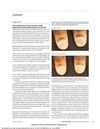
December 2015 in “JAMA Dermatology” Tofacitinib citrate improved nail dystrophy and pain in patients with alopecia universalis without causing side effects.
 2 citations
,
June 2019 in “Boletín médico del Hospital Infantil de México”
2 citations
,
June 2019 in “Boletín médico del Hospital Infantil de México” This study in Mexican adolescents with severe alopecia areata reported that oral tofacitinib treatment resulted in hair growth and reduced alopecia severity without serious adverse effects.
 115 citations
,
March 2019 in “Nature Communications”
115 citations
,
March 2019 in “Nature Communications” This study identified significant genetic associations with frontal fibrosing alopecia at four genomic loci, suggesting it is a genetically predisposed immuno-inflammatory disorder influenced by the HLA-B*07: 02 allele.
19 citations
,
September 2019 in “British Journal of Dermatology” This study found that a novel peptide, FOL-005, derived from osteopontin, significantly inhibited hair growth in human hair follicles both ex vivo and in vivo, suggesting potential as a treatment for unwanted hair growth.
 7 citations
,
August 2018 in “The American Journal of Dermatopathology”
7 citations
,
August 2018 in “The American Journal of Dermatopathology” This study describes a newly observed "inflammatory vellus involvement" pattern in early frontal fibrosing alopecia, which may lead to misdiagnosis due to the absence of typical histological features.
29 citations
,
February 2010 in “British Journal of Dermatology” This study explores the expression of Snail1 in the fibrotic dermis of postmenopausal women with frontal fibrosing alopecia, suggesting a possible link to epithelial-mesenchymal transition.