January 2011 in “한국미용학회지” In this study, Fructus Ligustri Lucidi extract was found to promote the proliferation of human hair dermal papilla cells by activating the ERK and Akt pathways.
 July 2023 in “Indian Journal of Animal Health”
 This study found that fibroblast growth factor 5 may enhance Cashmere goat hair growth by altering the expression of specific genes related to keratin and keratin-associated proteins.
2 citations
,
December 2024 in “Microscopy Research and Technique” This study introduced a novel microscopy system using an Er3 + −doped femtosecond fiber laser, achieving detailed imaging of biological structures in plant and skin samples with improved spatial resolution for various applications, including in vivo imaging.
 1 citations
,
April 2016 in “The American Journal of the Medical Sciences”
1 citations
,
April 2016 in “The American Journal of the Medical Sciences” This article discusses the characteristics of lichen planus pigmentosus and frontal fibrosing alopecia but reports no new clinical findings; the authors review existing knowledge.

This study found a significant discordance between clinical symptoms and dermatoscopic signs with histopathological inflammation in patients with LPP and AFF, affecting diagnostic and therapeutic approaches.
 November 2022 in “The journal of investigative dermatology/Journal of investigative dermatology”
 This study generated a transcriptomic map of human hair follicles, identifying compartment-specific gene expression profiles that can aid in developing targeted therapies for hair follicle disorders.
February 2026 in “Biomedicine & Pharmacotherapy” In this study, researchers developed EPO-derived peptides that enhanced hair growth by stimulating dermal papilla cells and increasing IGF-1 expression without triggering systemic erythropoietic effects in tested models, indicating a promising approach for treating hair loss.
6 citations
,
May 2022 in “Pharmaceutics” This study demonstrates that MPM-FLIM multimodal imaging can effectively assess the delivery and dissolution of zinc pyrithione particles in human skin follicles using different application techniques.
 9 citations
,
January 2015 in “Current problems in dermatology”
9 citations
,
January 2015 in “Current problems in dermatology” This review discusses partial longitudinal-follicular unit transplantation (PL-FUT) for hair loss and notes its potential to multiply hair follicles while preserving donor areas, but reports no new clinical results.
475 citations
,
October 2006 in “Proceedings of the National Academy of Sciences” This study suggests that folliculin, mutated in Birt–Hogg–Dubé syndrome, and its partner FNIP1 may play a role in energy and nutrient sensing through the AMPK and mTOR pathways.
4 citations
,
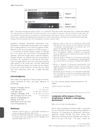
July 2013 in “The Journal of Dermatology” This article reports a case of lupus miliaris disseminatus faciei affecting the scalp, which led to scarring hair loss, but it provides no new experimental findings.
 9 citations
,
July 2010 in “British Journal of Dermatology”
9 citations
,
July 2010 in “British Journal of Dermatology” This article reports on lentiginosis observed within plaques of linear atrophoderma of Moulin and discusses its potential classification as a twin-spotting phenomenon but provides no new clinical research results.
 86 citations
,
July 2012 in “British journal of dermatology/British journal of dermatology, Supplement”
86 citations
,
July 2012 in “British journal of dermatology/British journal of dermatology, Supplement” This report suggests a causal connection between hyaluronic acid filler injections and the development of xanthelasma, possibly through an inflammatory reaction that increases vascular permeability and LDL leakage.
May 2026 in “Advanced Pharmaceutical Bulletin” In this study, black cumin oil-based nanostructured lipid carriers enhanced the delivery and effectiveness of fluticasone for psoriasis in a mouse model, improving skin targeting, inflammation reduction, and permeability compared to standard cream.
 1 citations
,
May 2024 in “Cureus”
1 citations
,
May 2024 in “Cureus” This case series describes five patients with rare facial lichen planopilaris, detailing the clinical presentation and treatment of their pigmentary changes and scarring alopecia.
172 citations
,
March 2019 in “The EMBO Journal” This study found that in Arabidopsis thaliana, the interaction between extracellular leucine-rich repeat extensins and the receptor-like kinase FERONIA helps control vacuolar expansion, crucial for cellular elongation.
19 citations
,
May 2001 in “Endocrinology” This study suggests that Mrp3 may play a role in both wound healing and the hair follicle cycle as a growth factor and/or angiogenesis factor.
 76 citations
,
June 2008 in “Journal of the American Academy of Dermatology”
76 citations
,
June 2008 in “Journal of the American Academy of Dermatology” In this study, key histologic features such as mucinous perifollicular fibroplasia were identified to aid in the diagnosis of lichen planopilaris.
4 citations
,
May 2009 in “Clinical and experimental dermatology” This article discusses flexural follicular lichen planus and reports no new clinical findings.
October 2024 in “Journal of Pakistan Association of Dermatologists” In this cross-sectional study, both follicular lichen planus and discoid lupus erythematosus were identified as common causes of scarring alopecia, affecting young people with a more favorable prognosis for hair regrowth in discoid lupus erythematosus compared to follicular lichen planus.
 155 citations
,
September 2008 in “British journal of dermatology/British journal of dermatology, Supplement”
155 citations
,
September 2008 in “British journal of dermatology/British journal of dermatology, Supplement” This study observed that frontal fibrosing alopecia predominantly affects postmenopausal women, can be associated with lichen planus, and may lead to progressive hairline recession, though this progression is not consistent in all cases.
 July 2015 in “Journal of the Dermatology Nurses’ Association”
 This review covers the clinical presentation and challenges in treating frontal fibrosing alopecia in postmenopausal women and concludes that more research is needed to understand its etiology and develop effective treatments.
 73 citations
,
June 2001 in “Endocrinology”
73 citations
,
June 2001 in “Endocrinology” In this study, researchers found that disrupting the PRL gene in mice led to earlier hair molting, especially in females, suggesting that PRL inhibits murine hair cycle events.
 August 2016 in “Journal of Investigative Dermatology”
 This case report identifies a novel LIPH gene mutation linked to autosomal recessive woolly hair/hypotrichosis in a Japanese boy, expanding the spectrum of known mutations associated with this condition.
2 citations
,
June 2013 in “Journal of Clinical Pathology” This article reviews the role of LMNA gene mutations, particularly in Hutchinson–Gilford progeria syndrome, but does not report new experimental findings.

This article reports a rare case of a postmenopausal woman with coexisting lichen planus pigmentosus and classic lichen planopilaris, alongside a review of related literature.
 December 2023 in “Journal of General Procedural Dermatology and Venereology Indonesia”
 The abstract highlights that lichen planus can manifest as cicatricial alopecia or lichen planopilaris, while discoid lupus erythematosus, a common form of lupus erythematosus, typically causes scarring alopecia. Results are not reported here.
 32 citations
,
March 2014 in “PLOS ONE”
32 citations
,
March 2014 in “PLOS ONE” This study demonstrates that FMOD deficiency in mice alters TGF-β ligand and receptor expression during wound healing stages, leading to delayed wound closure and increased scar size.
 September 2013 in “Hair transplant forum international”
 This abstract describes frontal fibrosing alopecia, a type of cicatricial alopecia identified in post-menopausal women, and reports no new clinical findings.
 23 citations
,
January 2010 in “Journal of The American Academy of Dermatology”
23 citations
,
January 2010 in “Journal of The American Academy of Dermatology” This article discusses the efficacy and safety of mycophenolate mofetil and hydroxychloroquine for treating lichen planopilaris and reports no new clinical results.