7 citations
,
November 1997 in “Reproduction Fertility and Development” In this study, subcutaneous injections of murine epidermal growth factor in marsupial pouch young inhibited the formation of hair follicles and associated structures, altering normal follicle development.
 20 citations
,
January 2016 in “Intractable & Rare Diseases Research”
20 citations
,
January 2016 in “Intractable & Rare Diseases Research” In this clinical experience, treating frontal fibrosing alopecia with oral finasteride, hydroxychloroquine, tacrolimus, and excimer laser was associated with optimal results in patients with active inflammation.
The researchers found that melatonin implantation in Cashmere goats influenced PDGFA gene expression and hair growth cycles, indicating it may control hair phase transformation from growth to catagen and telogen.
 18 citations
,
June 2017 in “Journal of The American Academy of Dermatology”
18 citations
,
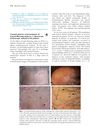
June 2017 in “Journal of The American Academy of Dermatology” In this study, trichoscopy consistently identified typical findings of frontal fibrosing alopecia, revealing three unusual clinical patterns in 18.4% of patients, which may aid in the differential diagnosis when clinical presentations are atypical.
 129 citations
,
January 2009 in “International Journal of Trichology”
129 citations
,
January 2009 in “International Journal of Trichology” This study found that trichoscopy criteria can distinguish female androgenic alopecia from chronic telogen effluvium, with specific features achieving 98% diagnostic specificity.
April 2026 in “Journal of Dermatological Treatment” This study concluded that in female pattern hair loss patients, CGF and i-PRF treatments were more effective than PRP in increasing target area hair count, with i-PRF having the lowest adverse event rate.
 102 citations
,
April 2014 in “International Journal of Dermatology”
102 citations
,
April 2014 in “International Journal of Dermatology” This study found that early intervention and treatment with intralesional triamcinolone acetonide may stabilize hairline recession in patients with frontal fibrosing alopecia, although further research is needed for definitive treatment guidelines.
 July 2023 in “Journal of Education, Health and Sport”
 This literature review reports that micro-needle radiofrequency is increasingly recognized in aesthetic medicine as a safe, effective treatment for various skin conditions, but further research is needed to optimize treatment parameters for the best outcomes.
April 2025 in “Journal of Bioscience and Bioengineering” Centrifugal forces can help prepare hair follicle germs for hair regeneration.
 1 citations
,
April 2021 in “Journal of The American Academy of Dermatology”
1 citations
,
April 2021 in “Journal of The American Academy of Dermatology” Some overweight or obese men with long-term frontal fibrosing alopecia may have abnormal sex hormone levels.
475 citations
,
October 2006 in “Proceedings of the National Academy of Sciences” This study suggests that folliculin, mutated in Birt–Hogg–Dubé syndrome, and its partner FNIP1 may play a role in energy and nutrient sensing through the AMPK and mTOR pathways.
 April 2017 in “Journal of Investigative Dermatology”
 This case study reports that a heterozygous missense GJA1 mutation, p.Gly138Ser, in a 2-year-old boy with oculodentodigital syndrome primarily resulted in syndactyly, fifth finger hypoplasia, and hypotrichosis, without neurological or craniofacial abnormalities.
December 2023 in “Animals” In this study, researchers analyzed miRNA and gene expression in the hair follicles of FMD during different hair cycle stages, identifying differential expression patterns and key pathways involved in hair follicle development and growth.
8 citations
,
January 2005 in “SKINmed Dermatology for the Clinician” This case report details three patients with follicular mycosis fungoides, highlighting an impressive response to bexarotene in advanced cases, suggesting potential for further research on this treatment's effectiveness.
83 citations
,
February 1991 in “Development” This study found that Fos protein expression is closely linked to epithelial cell differentiation, particularly during cornification and cell death, with overexpression observed in keratinization-blocked mutant epidermis.
6 citations
,
February 1989 in “PubMed” This study suggests that glycation of hair proteins in diabetic patients may serve as a useful indicator of long-term blood glucose trends and associations with diabetic complications.
 7 citations
,
January 2009 in “Biological & pharmaceutical bulletin”
7 citations
,
January 2009 in “Biological & pharmaceutical bulletin” This study found that applying ferrous ferric chloride skin lotions to newborn mice stimulated skin cell proliferation and differentiation, increased hair growth, and inhibited alopecia-related hair loss.
 February 2026 in “Frontiers in Medicine”
 This study found that fibrosing alopecia in a pattern distribution in Hispanic male patients often resembles androgenetic alopecia, with a tendency for earlier onset compared to European and North American populations.
 January 2017 in “NASA Technical Reports Server (NASA)”
 This study suggests that radiation-induced changes in FGF18 gene expression in the skin may predict later reductions in bone mass, as observed in irradiated mice.
November 2025 in “Cureus” In this case report, researchers describe a 21-year-old male with a forehead lesion exhibiting typical clinical and histopathologic signs of follicular mucinosis, contributing to understanding of this rare condition through a detailed case analysis and associated literature review.

This review discusses the role of fibroblast growth factors and their receptors in maintaining and repairing epithelial tissues, highlighting their importance in epithelial homeostasis and response to injuries without reporting new clinical results.
23 citations
,
December 2008 in “Pediatric neurology” This study reports two new cases of Gomez-Lopez-Hernandez syndrome and suggests that trigeminal anesthesia and/or partial scalp alopecia may be key criteria for diagnosis.
 September 2017 in “Journal of Investigative Dermatology”
 This study found that fermented mackerel oil increased hair growth by promoting dermal papilla cell proliferation and cell cycle progression through wnt/β-catenin signaling activation in vibrissa follicles.
51 citations
,
May 1984 in “Journal of the American Academy of Dermatology” In this study, the authors observed that cell-mediated immune mechanisms may be involved in the pathogenesis of benign follicular mucinosis, based on the cellular and immunological characteristics of two patient cases.
1 citations
,
August 2024 in “Anais Brasileiros de Dermatologia” This review discusses the non-follicular skin manifestations of frontal fibrosing alopecia and how they affect diagnosis and treatment, but reports no new clinical results.
 18 citations
,
November 2012 in “Australasian Journal of Dermatology”
18 citations
,
November 2012 in “Australasian Journal of Dermatology” This case report describes a 66-year-old man with frontal fibrosing alopecia, a rare lichen planopilaris variant, presenting with scarring alopecia at the hairline and extensive body hair loss.
 3 citations
,
November 2020 in “Clinical, Cosmetic and Investigational Dermatology”
3 citations
,
November 2020 in “Clinical, Cosmetic and Investigational Dermatology” This review summarizes the current treatment modalities for frontal fibrosing alopecia and provides a practical guide for clinicians, but reports no new clinical results.
 64 citations
,
January 2015 in “BioMed Research International”
64 citations
,
January 2015 in “BioMed Research International” In this study, topical application of fibroblast growth factors was found to promote hair growth by inducing and prolonging the anagen phase in telogenic C57BL/6 mice, suggesting potential as hair growth-promoting agents.
1 citations
,
December 2012 in “Journal of dermatological science” This study introduces ficlatuzumab, an anti-HGF monoclonal antibody, in combination with gefitinib in a phase 2 trial to address EGFR TKI resistance in Asian NSCLC patients.
 23 citations
,
April 2021 in “Journal of Clinical Medicine”
23 citations
,
April 2021 in “Journal of Clinical Medicine” This review compiles existing data on frontal fibrosing alopecia and highlights the promise of 5-alpha reductase inhibitors as a treatment option, while noting the need for clarity on its cause and progression.