April 2026 in “JURNAL FARMASI DAN ILMU KEFARMASIAN INDONESIA” In this study, the researchers successfully developed a Spanlastic gel containing EGCG for transdermal application, significantly increasing EGCG skin permeability with optimal entrapment efficiency, zeta potential, and vesicle size.
1 citations
,
February 2023 in “Actas Urológicas Españolas (English Edition)”  5 citations
,
February 2018 in “Military medicine”
5 citations
,
February 2018 in “Military medicine” This case study reports a U.S. Naval fighter pilot with recurrent central serous retinopathy who became the first to receive a waiver for unrestricted flight despite permanent defective visual acuity.
 17 citations
,
May 2011 in “Movement Disorders”
17 citations
,
May 2011 in “Movement Disorders” Finasteride significantly reduced tics and obsessive-compulsive symptoms in patients with Tourette syndrome.
 July 2018 in “European Medical Journal”
 This meeting review discusses recent advances in systemic psoriasis treatments, emphasizing the impact of dimethylfumarate monotherapy on understanding psoriasis and treatment strategies; it reports no new clinical results.
April 2019 in “Journal of Investigative Dermatology” This study found that frontal fibrosing alopecia involves distinct molecular changes, such as downregulation of steroid and cholesterol pathways and upregulation of fibrotic and immune response genes, which may help guide treatment strategies.
9 citations
,
October 2017 in “Frontiers in plant science” This study found that the peach gene CTG134 mediates auxin-ethylene crosstalk, affecting root hair growth and hormone-regulated processes in plants.
 August 2026 in “ACTA MEDICA IRANICA”
 This study found that women with female pattern hair loss exhibited hormonal imbalances, with the Free Androgen Index being a particularly effective diagnostic marker.
 May 2023 in “Journal of Pakistan Medical Association”
 This study found that women with polycystic ovary syndrome had significantly higher levels of serum and follicular fluid Gremlin-1 compared to healthy controls, suggesting potential diagnostic utility for these biomarker levels.
 10 citations
,
June 2020 in “Journal of Cosmetic Dermatology”
10 citations
,
June 2020 in “Journal of Cosmetic Dermatology” This study found a high prevalence of genital Lichen sclerosus and autoimmune comorbidities in patients with frontal fibrosing alopecia, suggesting a possible shared autoimmune process.
This study identified CXXC5 as a key mediator of hair loss induced by PGD2 and DHT via suppression of the Wnt/β-catenin pathway, with implications for potential therapeutic targets.

In this case report, a female patient with Graham-Little-Piccardi-Lassueur Syndrome and hidradenitis suppurativa showed significant improvement in symptoms, including hair loss and lesions, after six months of treatment with tofacitinib, with no recurrence or adverse effects over a two-year follow-up.
 20 citations
,
January 2013 in “Evidence-based complementary and alternative medicine”
20 citations
,
January 2013 in “Evidence-based complementary and alternative medicine” This study found that TGPC plus CGT was more effective than CGT alone in reducing alopecia areata severity in children over 12 months, with similar safety profiles.
June 1996 in “Journal of Dermatological Science”  8 citations
,
June 2019 in “Journal of Ginseng Research”
8 citations
,
June 2019 in “Journal of Ginseng Research” This study found that a gintonin-enriched fraction from ginseng promoted hair growth in mice by stimulating dermal papilla cell proliferation and increasing hair follicles and weight.
January 2025 in “Journal of Ethnopharmacology” This study found that external application of DGD activates the Wnt/β-catenin signaling pathway, promoting hair follicle anagen phase entry, and is a more effective and safer treatment for androgenetic alopecia in mice compared to oral administration.
 September 2024 in “Advanced Biomedical Research”
 In this study, chick embryo extract enhanced neuronal differentiation and trophic factor expression in rat hair follicle stem cells, suggesting potential improvements for stem cell therapies in neurodegenerative diseases.
1 citations
,
December 2012 in “Journal of Dermatological Science” FGF18 controls hair growth rest phase.
3 citations
,
September 2018 in “Current Drug Delivery” This study found that a finasteride topical gel formulation using propylene glycol and Tween® 80 showed significantly enhanced permeation compared to a control formulation without these enhancers.
 September 2024 in “Journal of the American Academy of Dermatology”
 This study found that a new compounded topical solution for alopecia was clinically tolerable and did not cause irritation, while also showing potential to enhance hair growth through fibroblast proliferation and gene expression.
 27 citations
,
February 2017 in “Clinical, Cosmetic and Investigational Dermatology”
27 citations
,
February 2017 in “Clinical, Cosmetic and Investigational Dermatology” In this study, a topical formulation with compounds from the monoterpenoid family significantly improved hair growth indicators like anagen:telogen ratio, hair fall, and visual hair density in men and women with pattern hair loss.
24 citations
,
November 2013 in “Molecular Medicine Reports” This study demonstrated that human hair follicle stem cells can be efficiently differentiated into endothelial-like cells using VEGF and bFGF, suggesting their potential as a novel cell source for vascular tissue engineering.
 April 2018 in “Journal of Investigative Dermatology”
 This study found that high skin expression of amphiregulin in acute graft-versus-host disease was associated with severe disease grade, poor overall survival, and increased non-relapse mortality.
1 citations
,
January 2024 in “Journal of Feline Medicine and Surgery Open Reports” In this study, the researchers describe a case of feline demodicosis that presented with dermatological lesions but lacked the typical signs of pruritus or overgrooming, and they report successful off-label treatment using a single spot-on application of fluralaner.
 237 citations
,
June 2013 in “Nature Medicine”
237 citations
,
June 2013 in “Nature Medicine” This study found that fibroblast growth factor 9, initially secreted by γδ T cells, plays a key role in modulating hair follicle regeneration in mice after skin wounds.
 January 2011 in “Web journal anti-aging medicine/Anti-aging medicine”
 In this study, kamishoyosangoshimotsuto extract improved skin moisture, texture, and brightness, as well as hair thickness and strength in women with skin and scalp hair problems over 24 weeks.
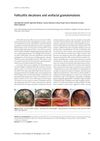 January 2018 in “Advances in Dermatology and Allergology”
 Treatment with dapsone, topical corticosteroids, and antibiotics improved the man's skin conditions.
 September 2022 in “Hair transplant forum international”
 This article introduces the coeditor of the current edition of Forum but provides no new research findings.
January 2023 in “RSC Advances” This study found that two eco-friendly analytical methods for quantifying Finasteride and Tadalafil in a new dosage form were effective, green, and suitable for quality control.

This study found that garlic exosomes induced hair growth in rats by increasing anagen follicle counts and activating multiple signaling pathways, including Wnt-1, β-catenin, and TGF-β1.