 13 citations
,
September 2010 in “Journal of Dermatological Science”
13 citations
,
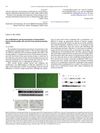
September 2010 in “Journal of Dermatological Science” Researchers made a cell line that grows quickly and can help with hair growth research.
 October 2023 in “Dermatology practical & conceptual”
 In this case report, folliculitis decalvans with frontal fibrosing alopecia was observed in a patient with a dark phototype, highlighting the phenotypic spectrum of folliculitis decalvans and lichen planopilaris.
 August 2021 in “Case Reports”
 This report describes a case where a woman with frontal fibrosing alopecia initially presented with symptoms resembling rosacea, but further investigation led to a diagnosis of FFA, resulting in a treatment change to oral finasteride and hydroxychloroquine.
12 citations
,
January 1987 in “Carcinogenesis” This study found that a single application of TCDD on the skin of hairless mice altered epidermal differentiation, changing keratin expression patterns similarly to a known tumor promoter.
 October 2024 in “Biology”
 This review discusses the role of dermal papilla cells in hair follicle formation and their potential use in cell therapy for hair loss, but reports no new research findings.
 30 citations
,
January 2020 in “Journal of The American Academy of Dermatology”
30 citations
,
January 2020 in “Journal of The American Academy of Dermatology” This review reports no new clinical results but discusses fibrosing alopecia in a pattern distribution as a distinct scarring alopecia with characteristics of both androgenetic alopecia and lichen planopilaris.
November 2024 in “Journal of Investigative Dermatology” ATP-sensitive potassium channels are important for hair growth.
8 citations
,
August 2017 in “Skin appendage disorders” Red dots on the upper chest may be an early sign of certain types of hair loss.
January 2016 in “Indian dermatology online journal” This case study diagnosed a 60-year-old woman with frontal fibrosing alopecia after histopathological analysis showed characteristic scarring patterns in the hairline area.
1 citations
,
September 2024 in “Journal of the American Academy of Dermatology” Farudodstat may effectively treat alopecia areata without harmful side effects.
 January 2017 in “Open Journal of Endocrine and Metabolic Diseases”
 This case report identifies an adolescent with symptoms indicative of Dunnigan-type partial lipodystrophy, emphasizing the need for early diagnosis to manage associated metabolic complications and improve self-esteem.
February 2025 in “Archives of Dermatological Research” This study observed that fibrosing alopecia in a pattern distribution shows varied histological features and may resemble lichen planopilaris with initial diffuse distribution, potentially leading to scarring alopecia.
5 citations
,
November 2013 in “Case reports in dermatology” This case report details a 57-year-old woman with frontal fibrosing alopecia who developed hyperpigmentation after treatment with dutasteride and pimecrolimus, highlighting no previously reported hyperpigmentation association with this combination.
 July 2020 in “CRS 2020 Virtual Annual Meeting”
 This study found that the newly developed microarray patches for intradermal delivery of finasteride showed high drug content and significantly improved skin deposition compared to existing methods.
60 citations
,
December 1988 in “Journal of Biochemical Toxicology” In this study, TCDD administered to male rats down-regulated EGF receptor in liver plasma membranes and increased protein kinase activity, suggesting EGF receptor–mediated toxicological effects.
12 citations
,
January 2013 in “Indian dermatology online journal” This case report details a 21-year-old woman with dermatopathia pigmentosa reticularis, presenting with generalized reticulate hyperpigmentation, diffuse noncicatricial alopecia, onychodystrophy, palmoplantar keratoderma, and poorly developed dermatoglyphics.
 July 2022 in “Research Square (Research Square)”
 This study found that Egyptian women with frontal fibrosing alopecia had lower serum PPARγ levels and a higher occurrence of PPARG gene polymorphism compared to healthy controls, suggesting a potential role for PPARγ in the condition's development.
 September 1997 in “BioMed Research International”
 This review discusses the current understanding of the epidemiology, pathogenesis, clinical manifestations, and diagnosis of female pattern hair loss and reports no new research results.
 8 citations
,
March 2020 in “Frontiers in Cell and Developmental Biology”
8 citations
,
March 2020 in “Frontiers in Cell and Developmental Biology” This study developed a DPC cell line by introducing mutant CDK4, Cyclin D1, and TERT, making it a promising tool to study downstream signaling pathways activated by testosterone in androgenetic alopecia.
10 citations
,
January 2012 in “Case reports in medicine” This report describes two cases where patients developed vitiligo as a side effect of diphencyprone treatment for alopecia areata, highlighting the need to inform patients about this potential adverse effect.
July 2025 in “Journal of Investigative Dermatology”  41 citations
,
June 2006 in “Journal of Investigative Dermatology”
41 citations
,
June 2006 in “Journal of Investigative Dermatology” This study identified three genes with significantly higher expression in androgen-sensitive beard dermal papilla cells compared to androgen-insensitive scalp cells, suggesting potential novel signaling pathways in hair follicles.
 86 citations
,
August 2011 in “Toxicological sciences”
86 citations
,
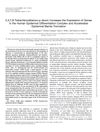
August 2011 in “Toxicological sciences” In this study, researchers found that TCDD exposure accelerated differentiation and altered gene expression in human epidermal cells, indicating the epidermal barrier as a target of TCDD-activated AHR.
 April 2016 in “The Journal of Sexual Medicine”
 This report analyzed an FDA adverse event database and aimed to evaluate and describe post-finasteride syndrome potentially related to dutasteride, but it does not report new clinical findings.
May 2015 in “Cancer research” This study found that persistent significant alopecia was a common side effect following FEC-docetaxel chemotherapy, with a 33.4% global incidence, highlighting the need for awareness and potential preventative measures like cooling caps during treatment.
1 citations
,
February 2023 in “Pharmaceutics” This article reviews cell proteomic footprinting technology and its application in improving the authentication and quality control of cell-based immunotherapeutics, without providing new clinical results.
 6 citations
,
January 2020 in “Skin Pharmacology and Physiology”
6 citations
,
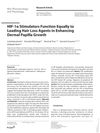
January 2020 in “Skin Pharmacology and Physiology” This study demonstrated that caffeine, minoxidil, and the HIF-1α-stimulating agent deferiprone significantly enhanced dermal papilla cell proliferation in a 3D culture model, suggesting deferiprone as a potential alternative to minoxidil.
 6 citations
,
January 2024 in “Annals of Dermatology”
6 citations
,
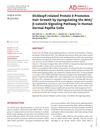
January 2024 in “Annals of Dermatology” In this study, treatment with recombinant DKK2 was shown to significantly stimulate hair progenitor cell growth and enhance hair shaft elongation in ex vivo human hair follicle cultures by activating the Wnt/ẞ-catenin signaling pathway, suggesting a potential role for DKK2 in promoting hair growth.
 11 citations
,
August 2017 in “Journal of Chromatographic Science”
11 citations
,
August 2017 in “Journal of Chromatographic Science” This study established a rapid and accurate ultra-performance liquid chromatographic method for chemical fingerprinting and analyzing Platycladi cacumen, effectively distinguishing batches based on geographical and climatic conditions.
31 citations
,
December 2016 in “Anais Brasileiros de Dermatologia” This review discusses the fibrogenic effects of TGFβ1, the regulatory role of PPAR, and the potential involvement of DHEA in frontal fibrosing alopecia, but reports no new clinical results.