 4 citations
,
January 2021 in “International Journal of Medical Sciences”
4 citations
,
January 2021 in “International Journal of Medical Sciences” This study suggests that miR-182 may play an essential role in hallux valgus development by regulating FGF9 expression, indicating a potential therapeutic target for its treatment.
 July 2023 in “Indian Journal of Animal Health”
 This study found that fibroblast growth factor 5 may enhance Cashmere goat hair growth by altering the expression of specific genes related to keratin and keratin-associated proteins.
 December 2024 in “Stem Cell Research & Therapy”
 This study found that OCT4-overexpressing human hair follicle mesenchymal stem cells show promise for artificial hematopoiesis by enhancing self-renewal through cytoskeletal remodeling and the beta-catenin-dependent adherens junction pathway.
March 2026 in “FEBS Open Bio” This study found that 5-aminolevulinic acid combined with ferric ammonium citrate stimulated hair follicle growth and induced hair-like structures in human hair follicle models, suggesting its potential as a treatment for hair loss.
 February 2019 in “Obstetrics and gynaecology cases - reviews”
 This study compared hirsutism levels, hand measurements, testosterone, and DHEAS levels in women aged 18 to 38 but does not report new definitive findings.
 6 citations
,
January 2018 in “International Journal of Trichology”
6 citations
,
January 2018 in “International Journal of Trichology” This report describes the first known case of frontal fibrosing alopecia in a genetically unrelated couple, suggesting the potential role of environmental factors in its development.
 October 2023 in “arXiv (Cornell University)”
 This study investigated the ability of a human hair keratin dimer to absorb the pollutants diclofenac and perfluorobutane sulfonate, finding high binding affinities that suggest potential for hair-derived materials in water filtration technologies.
July 2024 in “Journal of Investigative Dermatology” PP405 may help hair growth by activating hair follicle stem cells.
58 citations
,
April 1993 in “Developmental Biology” This study found that subcutaneous injections of basic fibroblast growth factor in neonatal mice delayed the development and hair growth cycles of hair follicles compared to controls.
 April 2018 in “Journal of Investigative Dermatology”
 In this study, injecting Fetuin A into embryonic mouse wounds led to scar formation, suggesting the protein may play a role in scar development by promoting collagen production.
53 citations
,
June 2019 in “JEADV. Journal of the European Academy of Dermatology and Venereology/Journal of the European Academy of Dermatology and Venereology” This study observed that abnormal hormone levels were associated with lower disease activity in frontal fibrosing alopecia, while thyroid disorders were a common comorbidity among the affected population.
3 citations
,
January 1993 in “Toxicological Sciences” This study found that 2-ethylhexanoic acid impaired fertility in Wistar rats and delayed postnatal development of pups, suggesting potential reproductive toxicity at certain dosages.
 March 2025 in “Journal of Cosmetic Dermatology”
 This study explored the effects of TTFE on male androgenic alopecia, finding that topical application increased hair density, follicular diameter, and scalp hydration while reducing water loss and sebum production in a 12-week trial.
28 citations
,
October 2014 in “Development” This study revealed that frizzled 3 can fully rescue polarity defects in frizzled 6-null mice, while frizzled 6 can partially rescue defects in frizzled 3-null mice, highlighting conserved signaling roles in these proteins.
47 citations
,
June 2017 in “The FEBS journal” This study found that CRISPR/Cas9-induced loss-of-function mutations in the FGF5 gene significantly increased wool length and yield in genetically modified Chinese Merino sheep compared to wild-type controls.
1 citations
,
January 2021 in “Springer Proceedings in Materials” This study demonstrates a sample preparation method for wool follicles that allows for clear keratin labeling and ultrastructural preservation in microscopy, reducing common artefacts from conventional fixation techniques.
 5 citations
,
January 2018 in “Annals of Dermatology”
5 citations
,
January 2018 in “Annals of Dermatology” A 308 nm excimer laser successfully treated a boy with a rare skin condition after about a year of weekly sessions.
54 citations
,
November 1995 in “The Journal of Clinical Endocrinology & Metabolism” In this study, females with 5 alpha-reductase-2 deficiency exhibited decreased body hair, normal sebum production, and delayed menarche, suggesting a role for DHT in hair growth and menstrual function.
 1 citations
,
January 2024 in “Archives of Endocrinology and Metabolism”
1 citations
,
January 2024 in “Archives of Endocrinology and Metabolism” This study found that self-assessed mFG and Hirsuta scores have low specificity for diagnosing hirsutism in clinical settings, though they may still be useful for screening in epidemiological studies.
 1 citations
,
August 2022 in “International Journal of Molecular Sciences”
1 citations
,
August 2022 in “International Journal of Molecular Sciences” In this study, FGF12 was found to promote hair growth in mice by inducing the anagen phase of hair follicles, suggesting potential for hair loss therapy.

This case report describes a transgender woman who achieved a soft, feminine hairline nine months post-hair transplant using follicles from both the occipital scalp and pubic area.
3 citations
,
December 2025 in “Biomaterials Research” In this study, researchers developed a new hydrogel incorporating fibroblast growth factor 21 that improved wound healing in diabetic mice by reducing inflammation and enhancing skin repair, suggesting strong potential for future clinical application in diabetic wound management.
 July 2013 in “Hair transplant forum international”
 This report describes the integration of follicular unit extraction (FUE) into a medical practice and notes a learning curve for both the physician and staff, but presents no clinical results.
 April 2023 in “World Journal Of Advanced Research and Reviews”
 This study in Morocco found that all women with frontal fibrosing alopecia presented frontotemporal hairline recession, with trichoscopic features such as perifollicular erythema and follicular hyperkeratosis being indicative of the condition, and suggested a potential link between cosmetic products or emotional factors and the disease.
15 citations
,
July 1998 in “PubMed” This study found that fentanyl accumulates differently in mouse hair after systemic administration compared to external loading, suggesting ionizable functionalities of hair influence drug retention from organic solutions.
 January 2016 in “Hair transplant forum international”
 This article reports a notification from Dr. Greg Williams to the FUE Research Committee, but it provides no new research findings.
 July 2018 in “DOAJ (DOAJ: Directory of Open Access Journals)”
 This study found that finasteride delivered through a nano-transferosomal gel showed improved penetration through skin layers compared to a conventional gel, suggesting a potential alternative for oral administration.
 31 citations
,
April 2010 in “British journal of dermatology/British journal of dermatology, Supplement”
31 citations
,
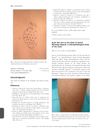
April 2010 in “British journal of dermatology/British journal of dermatology, Supplement” This report describes two patients with frontal fibrosing alopecia who developed acute hair loss on their limbs, revealing that the limb alopecia had similar histological features to scalp alopecia.
The researchers reported that human foreskin fibroblasts isolated by enzyme digestion method proliferated faster and were purified more quickly than those isolated by the inverted tissue culture method; additionally, post-psoralen photoactivation therapy moderately repaired UVB-induced damage in these fibroblasts, suggesting potential clinical applications.
1 citations
,
October 2025 in “Journal of Investigative Dermatology” In this study of women with frontal fibrosing alopecia, delgocitinib cream improved the molecular signature of lesions and demonstrated potential as a treatment, showing significant transcriptomic changes and some clinical improvements over 12 weeks compared to a cream vehicle.