In this study, researchers found that an injectable solution of low-molecular-weight hyaluronic acid and amino acids significantly improved skin rejuvenation and elasticity in the labia majora of post-menopausal women over 12 weeks, with a reported 25% or greater aesthetic improvement and high patient satisfaction.

This review discusses the potential of extracellular vesicles from various sources for skin rejuvenation and cosmetic use, noting promising results, especially with mesenchymal stem cell-derived vesicles, but reports no new clinical results.
 91 citations
,
July 2010 in “Tissue Engineering Part A”
91 citations
,
July 2010 in “Tissue Engineering Part A” This study found that low oxygen conditions and ECM degradation products increased the proliferation and migration of perivascular stem cells without altering their phenotype, suggesting potential roles in tissue repair.
 1 citations
,
January 2023 in “Burns and trauma”
1 citations
,
January 2023 in “Burns and trauma” This study found that tdDPC-EVs significantly improved wound healing by enhancing angiogenesis through the KLF4/VEGFA axis, offering advantages over traditional DPC-EVs.
 67 citations
,
February 2020 in “Journal of Ginseng Research”
67 citations
,
February 2020 in “Journal of Ginseng Research” This review evaluates and classifies the non-saponin components of Korean Red Ginseng, emphasizing their combined role with saponins in the plant's bioactivity, but reports no new clinical results.
 18 citations
,
September 2020 in “International Journal of Nanomedicine”
18 citations
,
September 2020 in “International Journal of Nanomedicine” This study found that both allogeneic and xenogeneic small extracellular vesicles from adipose tissue similarly enhanced soft tissue regeneration and wound healing in rat models, implying similar therapeutic effects across species.
 January 2026 in “Journal of Biomedical Research”
 This review discusses the potential of small extracellular vesicles (sEVs) as next-generation therapeutics, noting their ability to overcome biological barriers and modulate cellular environments for various diseases.
 46 citations
,
January 2020 in “Theranostics”
46 citations
,
January 2020 in “Theranostics” This study demonstrated that OSA hydrogels enhanced the stability and retention of dermal papilla-derived extracellular vesicles, which significantly improved hair regeneration in both cultured human hair and a mouse depilation model.
 11 citations
,
December 2014 in “The American journal of pathology”
11 citations
,
December 2014 in “The American journal of pathology” This study found that a genetic deletion causing truncated desmoglein 3 protein in mice led to severe pathologies, including cyclic hair loss and immunodeficiency, suggesting possible implications for human desmosome-related diseases.
 May 2024 in “International journal of nanomedicine”
 This review highlights the potential of extracellular vesicles derived from medicinal plants as therapeutics for diseases such as cancer and inflammation, suggesting they may enhance the clinical use of herbal preparations, despite the challenges posed by extract complexity and individual variability.
 January 2024 in “Wiadomości Lekarskie”
 This preclinical study found that exercise-induced extracellular vesicles delayed breast cancer tumor growth in mice, potentially by enhancing the immune response within the tumor microenvironment.
 May 2022 in “Gastroenterology”
 This study investigated the possible role of neutrophil extracellular traps in contributing to fibrosis in stenotic Crohn's disease.
 5 citations
,
March 2024 in “Acta Scientiarum Polonorum Technologia Alimentaria”
5 citations
,
March 2024 in “Acta Scientiarum Polonorum Technologia Alimentaria” This study synthesized existing research on 11 tropical seed varieties, underscoring their potential in food, pharmaceutical, and agricultural industries due to their phytochemicals and nutrients, such as phenolics and vitamins, which could reduce waste and support sustainable practices.
 January 2026 in “Frontiers in Materials”
 This review discusses the potential of metal organic frameworks for drug delivery in wound treatment, highlighting their unique properties and recent research advancements, but reports no new clinical results.
 April 2024 in “Journal of cancer research and clinical oncology”
 This review discusses the isolation, characterization, and potential clinical applications of tissue-derived extracellular vesicles in cancer diagnosis, prognosis, and treatment, noting their significance but highlighting the risks and need for appropriate protocols.
 12 citations
,
January 2010 in “European Journal of Dermatology”
12 citations
,
January 2010 in “European Journal of Dermatology” In this study, an ethanol extract of Crinum asiaticum was observed to significantly increase hair-fiber lengths and promote hair growth in rat vibrissa follicles and C57BL/6 mice.
 March 2026 in “Folia Histochemica et Cytobiologica”
 This review highlights LTBP1 as a critical integrator in disease processes, showing its dual role in cancer progression and suppression, its pathological influence in fibrosis, and its contribution to various disorders, suggesting its potential as a biomarker and therapeutic target.
 July 2025 in “Scientific Reports”
 In this study, researchers identified six novel prognostic biomarkers for bladder cancer and developed a predictive model that effectively stratifies patients into high-risk and low-risk groups based on immune cell infiltration differences and gene expression.
April 2023 in “Journal of Investigative Dermatology” HA-iMSC-EVs can improve skin aging by boosting cell growth and restoring collagen and elastin.
 April 2018 in “Journal of Investigative Dermatology”
 This study suggests that mechanical tension significantly impacts lymphocyte function, and that a complete lymphocyte population is essential for effective wound healing and reducing inflammation.
21 citations
,
March 2025 in “Journal of Extracellular Vesicles” This review discusses how using hydrogels as a three-dimensional culture platform for mesenchymal stem cells might affect the production of extracellular vesicles, highlighting challenges in standardization and opportunities to boost EV yield via combined hydrogels and bioreactor methods.
 238 citations
,
March 2013 in “Development”
238 citations
,
March 2013 in “Development” This study found that adipocytes play a crucial role in skin wound healing by facilitating fibroblast recruitment and dermal reconstruction during the healing process.
 December 2016 in “Paleontological Journal”
 This study developed an in vitro artificial hair germ model using dermal papilla cells and skin keratinocytes to explore early stages of hair follicle regeneration.
 1 citations
,
January 2019 in “Elsevier eBooks”
1 citations
,
January 2019 in “Elsevier eBooks” This chapter reviews the use of electrospun matrices in creating tissue-engineered skin substitutes and reports no new clinical results; it emphasizes the need for a cell-friendly microenvironment.
 1 citations
,
January 2018 in “Recent clinical techniques, results, and research in wounds”
1 citations
,
January 2018 in “Recent clinical techniques, results, and research in wounds” This review discusses the similarities between wound healing and embryonic development, focusing on signaling pathways and their potential for developing new wound healing strategies, and reports no new clinical results.
 December 2023 in “bioRxiv (Cold Spring Harbor Laboratory)”
 This study observed that extracellular matrix scaffold membranes performed less effectively in wound healing for aged mice compared to younger ones, with senescent SPP1+ macrophages potentially hindering epidermal and fibroblast repair abilities.
9 citations
,
May 2025 in “Stem Cell Research & Therapy” This review discusses how extracellular vesicles play a dual role in age-related diseases by contributing to both disease pathogenesis and potential therapeutic strategies through the transfer of specific molecules.
 320 citations
,
December 2018 in “Frontiers in Immunology”
320 citations
,
December 2018 in “Frontiers in Immunology” This review explores how preconditioning mesenchymal stromal cells can impact their secretome's therapeutic potential in regenerative medicine, emphasizing immunomodulatory and regenerative functions, but provides no new clinical results.
 211 citations
,
November 2018 in “Nature Cell Biology”
211 citations
,
November 2018 in “Nature Cell Biology” This article discusses the coordinated roles of different epidermal stem cells and other cell types in the skin's wound healing process and reports no new experimental results.
 124 citations
,
June 2020 in “Cell Stem Cell”
124 citations
,
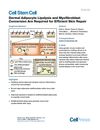
June 2020 in “Cell Stem Cell” This study found that in mice, dermal adipocytes initiate inflammation and aid repair after skin injury by releasing lipids, suggesting a role in managing inflammatory diseases and impaired wound healing.