June 2025 in “Healthy-Mu Journal” The optimized Cinchonine gel effectively fights acne bacteria and is safe for twice-daily use.
 1 citations
,
June 2014 in “Vìsnik farmacìï”
1 citations
,
June 2014 in “Vìsnik farmacìï” This study developed an emulsion formulation with optimal properties for androgenetic alopecia treatment using saw palmetto and Japanese Sophora extracts, evaluated for stability and release of active ingredients.
 November 2021 in “International journal of life science and pharma research”
 This study reported that a solid lipid nanoparticle-based gel formulation, specifically optimized for psoriasis, improved drug loading capacity and release properties using high-pressure homogenization, suggesting its potential efficacy as a topical treatment.
 12 citations
,
January 2009 in “Journal of Oleo Science”
12 citations
,
January 2009 in “Journal of Oleo Science” The researchers reported that sterol surfactants with a bulky planar structure effectively solubilized ultraviolet ray absorbers, offering a stable solution more efficiently than other surfactants.
February 2006 in “Inpharma Weekly”  July 2024 in “Revista Científica de Estética e Cosmetologia”
 This study aimed to develop a dermocosmetic exfoliating formulation using babassu fibers for androgenetic alopecia treatment, but found that although the formulation met sensory standards, it was unstable in sunlight and heat, suggesting a need for optimization before commercialization.
 November 2023 in “The journal of investigative dermatology/Journal of investigative dermatology”
 In this study, topical application of adipose stem cell exosomes was found to reduce facial redness in atopic dermatitis patients treated with dupilumab, while improving skin hydration and decreasing inflammation markers over 12 weeks.
 9 citations
,
August 2005 in “Experimental Dermatology”
9 citations
,
August 2005 in “Experimental Dermatology” In this study, the researchers report that a modified epimorphin-derived peptide shows potential for hair follicle regeneration, especially when used with 1% minoxidil in mice.
42 citations
,
February 1996 in “Journal of Investigative Dermatology” This study found that spermidine, a polyamine, plays an essential role in hair growth in sheep follicles, while spermine is not required for normal follicle function.
 6 citations
,
September 2022 in “Frontiers in pharmacology”
6 citations
,
September 2022 in “Frontiers in pharmacology” In this study, Epimedii Folium extract was found to enhance melanin production and promote pigmentation through mechanisms involving the MAPK/ERK1/2 pathway in both in vitro and in vivo models.
 May 2026 in “Zenodo (CERN European Organization for Nuclear Research)”
 In this review, the authors provide a comprehensive overview of Equisetum arvense (horsetail) as a promising natural ingredient in cosmetics, highlighting its antioxidant, anti-aging, anti-inflammatory, and wound-healing properties, while also noting challenges related to standardization and clinical validation.
 March 2024 in “Jurnal Ilmu Kesehatan Hewan”
 In this case report, treatment involving anthelmintic pyrantel pamoate and antiparasitic sarolaner effectively reduced pruritus and physical symptoms of scabiosis and ancylostomyosis in a puppy, with notable improvements observed by day 14.
116 citations
,
April 2022 in “Science Translational Medicine” This study found that the hydrophilic PTK-UR foam with EG7 repeats significantly improved wound healing in porcine skin wounds compared to other scaffolds, suggesting potential for synthetic biomaterial applications.
8 citations
,
January 2024 in “Current Research in Food Science” This study found that using composite alginate hydrogels containing Aloe vera, CMC, and tragacanth can improve the encapsulation efficiency and protect pumpkin seed protein hydrolysates from degradation during simulated gastrointestinal digestion, potentially increasing their applicability as functional food components.
 1 citations
,
December 2018 in “Talenta Conference Series Tropical Medicine (TM)”
1 citations
,
December 2018 in “Talenta Conference Series Tropical Medicine (TM)” This study evaluated the antifungal activity of lemongrass oil in anti-dandruff gel shampoo formulations and found that a 10% lemongrass oil concentration was the most effective at inhibiting the growth of the dandruff-causing fungus Pityrosporum ovale.
6 citations
,
December 2024 in “International Journal of Biological Macromolecules” This study introduced a novel exosome-loaded sprayable hydrogel (ADA-aPF127@LL18/Exo) that significantly enhanced wound healing in a deep partial thickness burn model, showing improved antibacterial efficacy and promoting tissue recovery processes like epithelialization and hair follicle regeneration.
1 citations
,
January 2024 in “Journal of Food Processing and Preservation” This study found that adding microcapsulated pumpkin seed protein hydrolysate to aloe vera drinks improved antioxidant activity, taste, and shelf life, with chitosan-alginate microcapsules effectively inhibiting microbial growth during 30 days of refrigerated storage.
18 citations
,
September 2021 in “Colloids and surfaces. B, Biointerfaces” This study explored the development of polymeric nanoparticles for topical spironolactone delivery, finding that larger nanoparticles (180 nm) enhanced drug targeting to hair follicles significantly more than smaller ones or non-nanoparticle formulations, offering promise for safer acne and alopecia treatments.
 2 citations
,
June 2023 in “Plants”
2 citations
,
June 2023 in “Plants” This paper reviews extraction methods for obtaining polysaccharides from brown macroalgae like Sargassum, highlighting their antiviral, antimicrobial, and antitumoral bioactivities in both in vivo and in vitro studies, while also discussing challenges in research and commercialization of Sargassum-based products.
August 2026 in “Fabad Journal of Pharmaceutical Sciences” This study developed a Neusilin® US2-based solid self-nanoemulsifying drug delivery system for finasteride that showed improved stability and drug delivery, with complete dissolution comparable to standard Propecia® tablets.
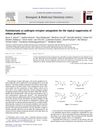 5 citations
,
September 2011 in “Bioorganic & Medicinal Chemistry Letters”
5 citations
,
September 2011 in “Bioorganic & Medicinal Chemistry Letters” This study identified pantolactam based compounds as effective topical antagonists of the androgen receptor, reducing sebum components in a hamster model.
4 citations
,
August 2025 in “Journal of Food Science” This review highlights that Tremella fuciformis polysaccharide exhibits various bioactivities, such as antioxidant and immune-modulating effects, and explores its potential applications in food, pharmaceutical, and cosmetic industries.
7 citations
,
September 2021 in “Antimicrobial Agents and Chemotherapy” This study found that olorofim demonstrated potent in vitro and in vivo antifungal activity against dermatophytes, resolving skin lesions in a guinea pig model similar to clotrimazole, suggesting it may be a promising treatment for dermatophytosis.
 January 2023 in “Our Dermatology Online”
 An old recipe called "Champigny Saumure" might help treat a rare scalp condition.
9 citations
,
March 2008 in “British Journal of Dermatology” This article describes a case of hypertrichosis potentially induced by using efalizumab but provides no new clinical study results.
 July 2023 in “Revista Ibero-Americana de Humanidades, Ciências e Educação”
 This study found that combining ultrasound with vacuum therapy showed promise in reducing cellulite and improving skin texture more effectively than individual treatments, albeit with mild, temporary side effects; ongoing research is needed to standardize protocols and understand the mechanisms involved.
 January 2025 in “International Journal For Multidisciplinary Research”
 In this study, the researchers developed and evaluated eco-friendly poly-herbal soap strips using plant extracts from Lantana camara, Moringa Oleifera, and Corn silk, finding that the strips exhibited superior physicochemical properties and significant anti-fungal activity compared to conventional anti-fungal soaps.
 February 2026 in “Cosmetics”
 This study found that upcycled postbiotic cell-free supernatants from Limosilactobacillus fermentum MG901 and MG4237 protected human dermal papilla cells from oxidative stress, enhancing wound-healing capacity and mitochondrial function, suggesting potential as a sustainable cosmetic ingredient for hair loss alleviation.
9 citations
,
September 2019 in “Clinical Cosmetic and Investigational Dermatology” In this article, the authors reported that calcipotriol/betamethasone dipropionate aerosol foam significantly improved scalp psoriasis symptoms in three patients by reducing itching and improving flaky patches within a four-week treatment period, confirming its efficacy and enhanced skin penetration compared to older formulations.
December 2025 in “Journal of Drug Discovery and Therapeutics” This review discusses spanlastics, advanced elastic vesicles used in drug delivery to enhance bioavailability of poorly soluble drugs, offering improved stability and targeted delivery compared to traditional systems like liposomes and nanoparticles, thus reducing side effects and enhancing therapeutic outcomes.