 4 citations
,
July 2012 in “Genesis”
4 citations
,
July 2012 in “Genesis” This study reported that a Megsin-Cre transgene enables genetic manipulation primarily in skin, forestomach, and esophagus tissues, offering a new tool for studying development and diseases in these areas.
 6 citations
,
April 2023 in “Frontiers in plant science”
6 citations
,
April 2023 in “Frontiers in plant science” In this study, NREs from lentil root nodules, specifically Serratia plymuthica 33GS and Serratia sp. R6, significantly enhanced lentil growth, altered root exudation, and modulated rhizospheric microbial communities in a greenhouse setting.
12 citations
,
January 2021 in “Journal of Cutaneous and Aesthetic Surgery” This systematic review describes current findings on the use of recombinant epidermal growth factor (rhEGF) for skin aging and wound healing, emphasizing its potential benefits but highlighting the need for more controlled studies to optimize dosing and treatment protocols.
October 2025 in “International Journal of Molecular Sciences” This study demonstrated that a novel hydrogel combining extracellular vesicles from chemically induced mammary epithelial cells with chitosan significantly enhanced skin wound healing in a rat model.
17 citations
,
January 2014 in “Dermatology Online Journal” This study examined a specific approach in hair transplants called Follicular Unit Extraction (FUE) and looked at how often attempts to harvest grafts did not result in a usable hair follicle unit.
21 citations
,
January 2006 in “Hormone Research in Paediatrics” In this case study, a girl with hereditary vitamin D resistant rickets had a novel mutation in the VDR gene that affected hair cycling without causing total alopecia, suggesting ligand-independent VDR function in hair cycling.
5 citations
,
April 2017 in “The journal of investigative dermatology/Journal of investigative dermatology” This study reports on an ongoing Phase I/IIa clinical trial of ex vivo gene therapy for treating severe Recessive Dystrophic Epidermolysis Bullosa, involving six adult participants with COL7A1 mutations resulting in deficient type VII collagen production.
This study introduced ElixirSeeker2, a computational framework for designing anti-aging peptides, and found that some newly identified peptides significantly delayed cellular senescence and enhanced cellular and locomotor functions in aged Caenorhabditis elegans.
 13 citations
,
April 2001 in “Journal of The American Academy of Dermatology”
13 citations
,
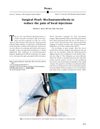
April 2001 in “Journal of The American Academy of Dermatology” Using a vibrating device during injections can help reduce pain.
 27 citations
,
October 2011 in “British Journal of Dermatology”
27 citations
,
October 2011 in “British Journal of Dermatology” This study builds on previous findings by associating female pattern hair loss with gene polymorphisms related to oestrogen activity, suggesting oestrogen's role in the condition.
September 2002 in “Oncology Times” This study presented at the ASCO Annual Meeting reported that the epidermal growth factor receptor antibody ABX-EGF showed preliminary efficacy in renal cell cancer patients, with tolerable side effects, while bortezomib demonstrated clinical benefit in a significant proportion of multiple myeloma patients.
December 2020 in “American Journal of Transplantation” This article discusses a journal-based CME activity on rare viral skin eruptions in pediatric transplant patients and reports no new clinical results; it aims to improve physicians' knowledge and treatment of this condition.
1 citations
,
May 2017 in “Journal of cosmetic and laser therapy” This study found that lasers and light devices may alleviate recalcitrant skin side effects in cancer patients treated with EGFR inhibitors, offering an alternative for those who do not respond to traditional therapies.
 December 2024 in “Cell Communication and Signaling”
 This study found that subcutaneous adipose tissue-derived extracellular vesicles (AT-EVs) protect skin from photodamage by enhancing fibroblast proliferation and reducing oxidative stress compared to those from adipose-derived stem cells.
16 citations
,
February 2009 in “Clinical neurology and neurosurgery” In this study, patients with epilepsy who switched from immediate-release to extended-release divalproex sodium did not experience significant changes in seizure frequency, but most preferred the new formulation due to a subjective decrease in tremor during daily activities.
 September 2024 in “Stem Cell Research & Therapy”
 This study found that extracellular vesicles derived from hyaluronic acid-stimulated induced pluripotent stem cells significantly improved hair growth in a model of androgenetic alopecia in mice by enhancing Wnt/β-catenin signaling and regulating androgen receptor activity, showing comparable results to the commonly used treatment finasteride.
January 2007 in “Bristol Research (University of Bristol)” This study diagnosed epidermolysis bullosa in eight calves across four UK farms, characterized by skin lesions and excluding mutations in keratin genes as the cause.
222 citations
,
January 2003 in “Critical Reviews in Therapeutic Drug Carrier Systems” This review discusses the capabilities of ethosomes as drug delivery carriers and reports improved outcomes in a clinical study with an ethosomal acyclovir formulation.
 March 2026 in “Cosmoderma”
 This clinical study found that using a cream or lotion as an additional treatment alongside standard care for atopic dermatitis significantly reduced symptoms and improved skin moisturization and barrier function within 28 days compared to standard care alone in participants with mild-to-moderate eczema.
 March 2026 in “Frontiers in Cell and Developmental Biology”
 This review discusses the potential role of vascular endothelial cells as signaling niches influencing epithelial stem cell states in the skin, emphasizing the need for further exploration in this area.
 August 2025 in “Annals of Medicine”
 This review discusses recent advances in using extracellular vesicles as a potential treatment for alopecia and highlights ongoing challenges in their clinical application and mass production; no new clinical results are reported.
13 citations
,
June 2017 in “Biochimie open” This study determined that the human steroid 5α-reductase enzymes localize to the endoplasmic reticulum in HeLa cells, with protein tagging affecting expression and inducing protein aggregates for some isoforms.
22 citations
,
February 2007 in “Developmental neurobiology” This study found that variations in Kv1 channel gene expression in the electric organ of Sternopygus correlate with sex differences and individual variations in their electric communication signals.
July 2025 in “Burns & Trauma” In this study, researchers developed a new SFL-3D system to produce extracellular vesicles from rejuvenated dermal papilla cell spheroids, which demonstrated significant antifibrotic effects in reducing hypertrophic scarring, highlighting their potential for precision-targeted scar management.
 193 citations
,
February 2015 in “Nature Communications”
193 citations
,
February 2015 in “Nature Communications” Fungi-produced compounds can change plant root growth.
 6 citations
,
February 2021 in “Journal of Ovarian Research”
6 citations
,
February 2021 in “Journal of Ovarian Research” In this study, 150 kHz electromagnetic radiation reduced the number and size of follicular cysts in a rat model of polycystic ovary syndrome without causing significant morphological damage to developing follicles.
 220 citations
,
March 2020 in “Advanced functional materials”
220 citations
,
March 2020 in “Advanced functional materials” This review discusses the mechanisms and potential therapeutic benefits of mesenchymal stromal cell-derived extracellular vesicles delivered via biomaterials, but reports no new clinical results.
 September 2023 in “Research Square (Research Square)”
 This study describes the development of a prototype clinical expert system that uses a belief rule-based inference methodology to improve the risk stratification and diagnosis of polycystic ovary syndrome by addressing uncertainties in clinical data and domain knowledge.
 March 2016 in “Journal of the European Academy of Dermatology and Venereology”
 The April 2016 JEADV issue covered various dermatology topics, including psoriasis, psoriatic arthritis, mTOR inhibitors, autoimmune diseases, photodynamic therapy, viral DNA in skin diseases, chronic hand eczema, and female hair loss.
December 2024 in “CONICET Digital (CONICET)” This study found that the small signaling peptide RALF22 plays a key role in root hair growth response to volatile compounds emitted by Penicillium aurantiogriseum through ethylene, auxin, and photosynthesis signaling in Arabidopsis.