This study suggests that ethyl acetate extract of Equisetum debile may be effective for functional food and nutraceutical use due to its strong 5α-reductase, IL-6 inhibition, and lipid peroxidation activities without cytotoxic effects.
 41 citations
,
April 2016 in “Journal of experimental botany”
41 citations
,
April 2016 in “Journal of experimental botany” This research suggests that the barley protein RACB supports cell polarity functions rather than interfering with immunity, as it aids nucleus positioning during fungal attack rather than affecting early immune responses.
 March 2023 in “International journal of pharmaceutical sciences review and research”
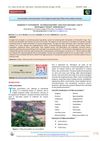
 In this study, an Emulgel containing Tridax procumbens extract was formulated and found to have promising physical properties and antimicrobial activity for wound healing.
25 citations
,
April 2008 in “Clinical and experimental dermatology” This case series describes Erythromelanosis follicularis faciei et colli in five Indian patients, suggesting it may be more common than currently reported.
January 2025 in “Dermatological Reviews” This study reports that Cyperus rotundus L. (nut grass) shows promise as a natural hair removal agent, with compounds targeting hair follicles and potentially offering an alternative to chemical depilatories, demonstrated by its efficacy in clinical trials and comparable results to some laser treatments.

In this study, researchers observed that during zebrafish fin regeneration, osteoblast Erk activity, influenced by Fgf receptor signaling, forms gradients scaling with amputation length, which predicts regenerative tissue growth and skeletal structure size.
 12 citations
,
January 2016 in “Journal of Orofacial Orthopedics / Fortschritte der Kieferorthopädie”
12 citations
,
January 2016 in “Journal of Orofacial Orthopedics / Fortschritte der Kieferorthopädie” This study identified a novel mutation in the EDA gene, which may impair protein stabilization and be involved in the development of oligodontia and mild ectodermal dysplasia phenotypes.
 July 2022 in “Dermatology practical & conceptual”
 This study found that a topical henna formulation may improve symptoms like itching, burning, and redness in patients with recessive dystrophic epidermolysis bullosa, but larger controlled studies are needed.
38 citations
,
October 2001 in “British Journal of Dermatology” This study identified a new keratin, K6irs, as a potential histological marker for the inner root sheath of hair follicles in mice and humans, and as a candidate gene for hereditary hair defects.
11 citations
,
September 2023 in “Nature Communications” In this study, researchers found that the cell surface protein Lrig1 plays a crucial role in regulating the suppressive function of regulatory T cells, suggesting it as a potential target for treating autoimmune diseases, as evidenced by experiments in mouse models.
11 citations
,
November 2018 in “British Journal of Dermatology” In this study, adults with persistent facial erythema of rosacea showed significantly greater improvement when treated with once-daily oxymetazoline cream compared to a vehicle, and using baseline photographs in assessments enhanced the accuracy by reducing perceived vehicle effects.
3 citations
,
February 2023 in “Journal of Investigative Dermatology” Ch55 may help reduce skin scarring and fibrosis.
July 2025 in “Journal of Investigative Dermatology” Resident memory T cells and necroptosis may drive fibrosis in eosinophilic fasciitis and morphea.
 4 citations
,
July 2014 in “International Journal of Dermatology”
4 citations
,
July 2014 in “International Journal of Dermatology” This case report describes the occurrence of eruptive vellus hair cysts in twin patients, adding to the literature on this dermatological condition.
 13 citations
,
March 2022 in “Cell Death and Differentiation”
13 citations
,
March 2022 in “Cell Death and Differentiation” This study found that while autonomous Sema3A expression limited keratinocyte migration and delayed wound healing, non-autonomous application of recombinant Sema3A with EGF enhanced wound repair in mice.
117 citations
,
April 2008 in “Developmental biology” This study identified that Eda-A1 unexpectedly induces placode inhibitors dkk4 and lrp4, indicating the importance of tightly regulated signaling for proper ectodermal organ development.
 February 2026 in “Trials”
 The Exfoliate-Dissolve-Repair skincare approach may effectively treat keratosis pilaris and reduce the need for corticosteroids.
22 citations
,
March 2023 in “Bioengineering” This review discusses stem cell therapy as a promising treatment for epidermolysis bullosa, highlighting preliminary successes in treating skin lesions but noting the need for further research on effectiveness and safety.
 7 citations
,
July 2018 in “Biological & Pharmaceutical Bulletin”
7 citations
,
July 2018 in “Biological & Pharmaceutical Bulletin” This study found that Phyllanthus urinaria extract displayed significant anti-alopecia properties in a mouse model, showing potential as an anti-5α-reductase agent for androgenic hair loss.
40 citations
,
November 2021 in “International Journal of Molecular Sciences” This review highlights the role of keratin mutations in epidermolysis bullosa simplex and the resulting chronic inflammation, but it presents no new experimental findings.
 February 2026 in “MedBA Medicine”
 This study identified potential new adverse drug reaction signals for erlotinib, used in lung and pancreatic cancer treatment, by analyzing a large dataset of case reports, indicating further clinical studies are necessary to confirm these findings.
 15 citations
,
January 2019 in “Experimental Dermatology”
15 citations
,
January 2019 in “Experimental Dermatology” In this study, full-thickness wounding on Lanyu pigs led to scar formation and disrupted cell markers, while partial-thickness wounding allowed limited regeneration of rete ridges and papillary dermis.
 8 citations
,
October 1998 in “Comparative Biochemistry and Physiology Part C: Pharmacology, Toxicology and Endocrinology”
8 citations
,
October 1998 in “Comparative Biochemistry and Physiology Part C: Pharmacology, Toxicology and Endocrinology” Proscar (finasteride) blocks 5α-reductase in sea urchin ovaries and testes, suggesting potential treatment for androgen-related conditions.
22 citations
,
December 2013 in “Stem cells and development” This study found that treating skin wounds with a combination of epidermis-derived epithelial-like stem/progenitor cells and platelet-rich plasma improved tissue repair and increased vascularization and elastin content compared to platelet-rich plasma alone.
 April 2023 in “Journal of Investigative Dermatology”
 This study found that NIMP-R14-conjugated nanoparticles, loaded with roflumilast, effectively targeted neutrophils to reduce inflammation and improve symptoms in a mouse model of psoriasiform dermatitis, suggesting potential for targeted therapy in autoimmune skin diseases.
 5 citations
,
January 2016 in “Stem Cells International”
5 citations
,
January 2016 in “Stem Cells International” This study found that epidermal stem cells in nonglabrous skin are connected to the distal end of the arrector pili muscle, which may play a role in epidermal renewal and wound healing.
4 citations
,
June 2020 in “DOAJ (DOAJ: Directory of Open Access Journals)” This case report describes a 30-year-old woman diagnosed with both Rhupus and Rowell syndromes, and details her presentation and treatment plan, without reporting specific treatment outcomes.
 3 citations
,
February 2020 in “International Journal of Research in Dermatology”
3 citations
,
February 2020 in “International Journal of Research in Dermatology” According to this source, dermaroller therapy is increasingly used in dermatology for conditions like acne scars and melasma due to its cost-effectiveness, minimal adverse effects, and ability to enhance topical treatment absorption, making it a popular resurfacing option across all skin types.
2 citations
,
November 2009 in “DSpace (Federal University of Santa Catarina)” Brunfelsia uniflora has good antioxidant properties and moderate antibacterial activity.
This study demonstrated that Reverse Protein Engineering can decrease the size of Firefly Luciferase from 550 to less than 80 amino acids, but further research is needed to ensure these smaller peptides retain bioluminescent activity.