25 citations
,
April 2008 in “Clinical and experimental dermatology” This case series describes Erythromelanosis follicularis faciei et colli in five Indian patients, suggesting it may be more common than currently reported.
149 citations
,
March 1981 in “American Journal of Ophthalmology” This study found that Demodex folliculorum and Demodex brevis mites can cause eyelid follicular and glandular changes, potentially contributing to ocular disease in humans.
5 citations
,
November 2001 in “Auris Nasus Larynx” This case report presents a rare instance of Winer's dilated pore in a 51-year-old female, emphasizing its pathological features and the need for accurate differential diagnosis to avoid misinterpreting it for more serious conditions.
 December 2023 in “Ophtha Therapy”
 In this study, the aim was to define the indications, diagnostics, and surgical techniques for eyebrow lift procedures, noting that the primary complication is a visible scar, especially concerning for individuals with a tendency for keloid formation.
May 2025 in “Dermatology Online Journal” This report describes a rare case of eyelash overgrowth and eyelid irritation in a woman treated with erlotinib for lung adenocarcinoma, highlighting a potential side effect of the drug.
8 citations
,
March 2005 in “JDDG Journal der Deutschen Dermatologischen Gesellschaft” This case report describes a patient with glaucoma who developed reversible hyperpigmentation and hypertrichosis after using bimatoprost eye drops, aiming to explore prostaglandin analogues' potential roles in hair and depigmentation therapies.
11 citations
,
June 2024 in “Clinical ophthalmology” This study highlights that Demodex mites, commonly found on human skin, can cause significant eye and skin issues such as blepharitis, rosacea, and dermatitis when present in abnormally high densities, underscoring the need for targeted management strategies.
 73 citations
,
January 1997 in “British Journal of Ophthalmology”
73 citations
,
January 1997 in “British Journal of Ophthalmology” This study found that three wall orbital decompression by the coronal approach effectively reduces proptosis in Graves' ophthalmopathy patients with fewer complications compared to other techniques.

This review synthesizes existing research on eyelid pilomatrixomas, highlighting the challenges in diagnosis and the importance of understanding their presentation and management strategies.
11 citations
,
January 2021 in “British Journal of Dermatology” This report describes a new case of syndromic ichthyosis caused by compound heterozygous mutations in AP1B1, detailing the associated clinical features and molecular consequences in the patient.
May 2023 in “bioRxiv (Cold Spring Harbor Laboratory)” This study reported the first comprehensive transcriptome atlas of the extraorbital lacrimal gland in mice, identifying over 41 cell subclasses and revealing significant cell-cell communication networks, particularly among innate lymphoid cells.
 January 2018 in “The Sewanee Review”
 This abstract is a poetic narrative that recounts a personal experience involving hair loss, medical examinations, and reflections on life, but it reports no scientific findings or new clinical results.
July 2019 in “Dermatologic Surgery” This abstract provides contact information for François Kuonen at the Lausanne University Hospital Center and reports no new research findings.
 August 2022 in “Case reports in medicine”
 This case report describes a 19-year-old female with systemic lupus erythematosus who exhibited eyelash trichomegaly, a rare disorder involving changes in eyelash characteristics, alongside diffuse alopecia.
 January 2017 in “SM dermatology journal”
 This article presents eyebrow transplantation techniques developed from over 1,000 procedures at the authors' clinic, with no new clinical outcomes reported.
 9 citations
,
November 2017 in “Journal of Glaucoma”
9 citations
,
November 2017 in “Journal of Glaucoma” This case report documents a patient experiencing paradoxical depigmentation of the periocular skin after one year of using latanoprost, a finding not previously associated with this medication.
20 citations
,
January 1997 in “Dermatology” This case report describes a 16-year-old with ectrodactyly-ED-clefting syndrome, where scarring alopecia with follicular involvement appeared during puberty, possibly due to anatomic hair abnormalities.
 13 citations
,
March 2015 in “Plastic and reconstructive surgery. Global open”
13 citations
,
March 2015 in “Plastic and reconstructive surgery. Global open” In this case report, eyelash transplantation with leg hair resulted in less frequent maintenance and no need for perming compared to using nape hair donor sources.
June 2026 in “Journal of Clinical Microbiology” This abstract reports no new research findings; it includes an educational image of microorganisms found in a skin biopsy.
 22 citations
,
April 2013 in “Dermatologic surgery”
22 citations
,
April 2013 in “Dermatologic surgery” In this study, daily application of bimatoprost 0.03% ophthalmic solution for 9 months significantly improved eyebrow appearance in individuals with mild to moderate eyebrow hypotrichosis, without observed side effects.
 15 citations
,
November 2009 in “Clinical and Experimental Dermatology”
15 citations
,
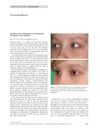
November 2009 in “Clinical and Experimental Dermatology” This case study describes a 16-year-old girl with alopecia areata affecting her eyelashes and eyebrows, who showed very limited response to treatment with topical mometasone furoate and subsequent partial hair loss upon stopping the treatment.
 11 citations
,
August 2004 in “Facial Plastic Surgery”
11 citations
,
August 2004 in “Facial Plastic Surgery” This review describes endoscopic techniques for rejuvenating the upper two-thirds of the face, highlighting their safety, reliability, and fewer complications compared to traditional open procedures, and reports no new clinical results.
 February 1994 in “PubMed”
 Telogen effluvium is a type of temporary hair loss.
1 citations
,
September 2025 in “Eye” This pharmacovigilance study found that certain systemic medications, including finasteride, bortezomib, and dupilumab, were disproportionately reported in association with eyelid disorders like blepharitis, meibomian gland dysfunction, and chalazia, suggesting these drugs may contribute to these conditions though benefits might still outweigh the risks.
May 2022 in “International Journal of Trichology” In this case report, topical application of fluocinolone acetonide acetate ointment increased hair length and thickness in three family members with congenital hypotrichosis.
60 citations
,
August 2009 in “Journal of the American Academy of Dermatology” This study describes five patients with porokeratotic adnexal ostial nevus, a rare skin disorder, highlighting its clinical features and proposing a new encompassing term for related conditions.
March 2003 in “Clinics in Dermatology” 19 citations
,
January 2020 in “Journal of Biophotonics” This study found that using a PEG-400/oleic acid mixture as an optical clearing agent enhanced the detection depth of particles in skin without causing dehydration, based on tests in rats and further testing in vivo.