 24 citations
,
January 2012 in “Indian Journal of Dermatology, Venereology and Leprology”
24 citations
,
January 2012 in “Indian Journal of Dermatology, Venereology and Leprology” This study suggests that hypersensitivity and increased serum IgE levels might contribute to the pathogenesis of diffuse alopecia areata through intense local inflammatory infiltration.
2 citations
,
July 2011 in “International Journal of Dermatology” This case report describes three instances of eosinophilic pustular folliculitis lacking visible pustules, which histopathology confirmed involve eosinophilic infiltration around hair follicles.
1 citations
,
January 2013 in “Annals of Dermatology” This case report describes an 11-year-old girl with eosinophilic pustular folliculitis that showed significant improvement with naproxen after being unresponsive to other treatments.
February 2026 in “Bioscientia Medicina Journal of Biomedicine and Translational Research” This case report highlights the importance of considering eosinophilic pustular folliculitis in adolescent patients with persistent papulopustular eruptions to avoid misdiagnosis and ensure effective anti-inflammatory treatment.
 January 2024 in “Brazilian Journal of Veterinary Pathology”
 In this case report, veterinarians observed a 16-year-old mare with symptoms including chronic weight loss, pruritus, muscle atrophy, and lameness, which gradually progressed to neurological issues despite initial treatment.
 59 citations
,
January 2002 in “Dermatology”
59 citations
,
January 2002 in “Dermatology” This study suggests the existence of a new subtype of alopecia, called 'acute diffuse and total alopecia of the female scalp (ADTAFS)', characterized by acute, diffuse hair loss primarily in women and a rapid recovery.
 22 citations
,
June 2013 in “Australasian Journal of Dermatology”
22 citations
,
June 2013 in “Australasian Journal of Dermatology” Early stage bald spots are linked to skin inflammation and damage to the upper part of the hair follicle.
May 2020 in “The journal of investigative dermatology/Journal of investigative dermatology” This study reported that specific inhibition of the classical complement pathway with BIVV009 prevented C3 deposition along the dermal-epidermal junction in bullous pemphigoid, reflecting its potential efficacy.
 10 citations
,
March 1990 in “The Journal of Dermatology”
10 citations
,
March 1990 in “The Journal of Dermatology” In this study, a psoriatic patient developed retinoid-induced granulation tissue after long-term oral etretinate therapy, suggesting prolonged use may lead to delayed wound healing.
 May 2023 in “Tạp chí Da liễu học Việt Nam”
 This study involving Vietnamese patients with alopecia areata found that histopathological examination is crucial for diagnosis, noting diverse features including peribulbar lymphocytic infiltration and varying hair follicle characteristics across disease stages, with eosinophils and necrosis observed in some cases.
 1 citations
,
July 2009 in “Journal of dermatology”
1 citations
,
July 2009 in “Journal of dermatology” This case report describes a 29-year-old Japanese man with follicular mucinosis, suggesting nestin-positive, multipotent hair follicle stem cells may be involved in reticular epithelial degeneration of the outer root sheath.
26 citations
,
July 1992 in “International Journal of Dermatology” In this study, treating refractory alopecia universalis with low-dose cyclosporine A and prednisolone improved symptoms, with no recurring alopecia six months post-treatment and enhancements in immunologic function.
 November 2023 in “Clinical, Cosmetic and Investigational Dermatology”
 This case report identified a maculopapular rash in a 76-year-old male, occurring 2 months after starting Finasteride for prostatic hyperplasia, with clinical and histologic evidence suggesting a drug-induced skin eruption.
 March 2023 in “Research Square (Research Square)”
 In this study, researchers found that changes in immune cell infiltration and immune-related gene expression may contribute to the immune microenvironment changes in male androgenetic alopecia.
1 citations
,
June 2025 in “Journal of Veterinary Internal Medicine” In this case study, a miniature donkey with multisystemic eosinophilic epitheliotropic disease was euthanized due to laminitis despite treatment for pruritus, inappetence, hypertriglyceridemia, and alopecia.
September 2011 in “Chinese Journal of Dermatology” This case report describes a 69-year-old man diagnosed with folliculotropic mycosis fungoides after initially being treated for folliculitis, highlighting emerging skin lesions despite subsequent photochemotherapy and acitretin treatment.
January 2019 in “University of Liverpool” This study found that equine eosinophilic granuloma and mast cell tumors exhibit distinct histological and molecular features, with eosinophilic granulomas showing more mineralization and mast cell tumors having unique macrophage activity.
 1 citations
,
June 2014 in “International Journal of Dermatology”
1 citations
,
June 2014 in “International Journal of Dermatology” This correspondence discusses follicular mucinosis in association with pregnancy but does not report new clinical results, instead calling attention to the observed connection.
 September 2023 in “Clinical, cosmetic and investigational dermatology”
 In this case report, a rare form of chronic cutaneous lupus, lupus erythematosus profundus, was treated effectively with topical and systemic therapies, leading to improvement and healing of ulcerations, though resulting in atrophic scars and macules.
 20 citations
,
March 2019 in “Nutrients”
20 citations
,
March 2019 in “Nutrients” This study found that Rumex japonicus extract may help reduce symptoms of atopic dermatitis by inhibiting inflammatory responses in both cell cultures and a mouse model.
 4 citations
,
January 2017 in “Ciência Rural”
4 citations
,
January 2017 in “Ciência Rural” This case report highlights that equine multisystemic eosinophilic epitheliotropic disease should be considered in horses presenting with skin lesions and gastrointestinal symptoms, as illustrated by the progression in a 5-year-old horse despite treatment.
 11 citations
,
January 1993 in “Dermatology”
11 citations
,
January 1993 in “Dermatology” In this study, researchers found histopathological similarities between L-tryptophan eosinophilic myalgia syndrome and idiopathic eosinophilic fasciitis, with certain unique inflammatory features present in the former.
 5 citations
,
July 1991 in “Journal of The American Academy of Dermatology”
5 citations
,
July 1991 in “Journal of The American Academy of Dermatology” This case report describes a patient with eosinophilia-myalgia syndrome who experienced severe, persistent telogen effluvium.
 4 citations
,
January 1987 in “Journal of The American Academy of Dermatology”
4 citations
,
January 1987 in “Journal of The American Academy of Dermatology” A man with both skin lesions and lung cancer improved quickly with chemotherapy, suggesting the skin condition might be a reaction to immune system injury.
 4 citations
,
July 1994 in “Clinics in Dermatology”
4 citations
,
July 1994 in “Clinics in Dermatology” This review discusses the emergence and impact of eosinophilia-myalgia syndrome related to L-tryptophan and offers insights into environmental factors affecting sclerodermatous conditions, with no new research findings presented.
 8 citations
,
November 1990 in “Archives of Dermatology”
8 citations
,
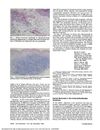
November 1990 in “Archives of Dermatology” This case report details a woman with eosinophilia-myalgia syndrome associated with L-tryptophan ingestion, highlighting skin lesions with abundant dermal mucin.
 2 citations
,
January 2014 in “Elsevier eBooks”
2 citations
,
January 2014 in “Elsevier eBooks” This review discusses drug-induced hypersensitivity syndrome and drug reaction with eosinophilia and systemic symptoms, highlighting clinical features, potential viral reactivations, and treatment, but reports no new clinical findings.
 2 citations
,
August 2022 in “Emergency medicine international”
2 citations
,
August 2022 in “Emergency medicine international” This study found that a key gene signature, including FGF11, highlights the immunologic nature of keloid lesions, distinguishing them from normal fibroblasts and scars.
 19 citations
,
June 2011 in “British Journal of Dermatology”
19 citations
,
June 2011 in “British Journal of Dermatology” Severe digestive issues in DRESS need early endoscopy for better treatment.
 39 citations
,
January 2012 in “Acta dermato-venereologica”
39 citations
,
January 2012 in “Acta dermato-venereologica” This study examined 27 DRESS patients diagnosed in Thailand, identifying phenytoin, allopurinol, and nevirapine as common causes, with a 3.7% mortality rate and systemic corticosteroids being a common treatment.