 12 citations
,
November 2011 in “International Journal of Dermatology”
12 citations
,
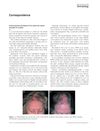
November 2011 in “International Journal of Dermatology” A woman developed a scalp condition from using minoxidil, which improved with a different treatment but left scarring.
 3 citations
,
August 2023 in “Drug safety”
3 citations
,
August 2023 in “Drug safety” This source reports that trastuzumab deruxtecan improves outcomes in HER2-positive and HER2-low metastatic breast cancer, emphasizing the need for careful adverse event monitoring, particularly for interstitial lung disease, and managing emetic risk to maximize benefits.
July 2024 in “Journal of Investigative Dermatology” ATR04-484 ointment shows promise for treating skin issues from cancer therapies.
1 citations
,
November 2023 in “Journal of Spinal Cord Medicine” This study suggests that IT PEP injection may have beneficial effects after spinal cord injury, but additional research is necessary to better understand and optimize its clinical application.
9 citations
,
August 2023 in “Molecules” This study found that the peptides RMYYY and VMYMI displayed stronger binding energy and more frequent interactions with HPGDS compared to the native inhibitor, suggesting potential as future therapeutic drugs.
August 2011 in “BIO-PROTOCOL” This protocol paper details methods for live imaging and analysis of dividing germline stem cells in C. elegans and reports no new research findings.
31 citations
,
January 2008 in “Gynecological endocrinology” In this study, two different estroprogestin treatments significantly improved skin conditions and decreased androgen levels in hyperandrogenic women, with EE/DRSP showing more pronounced hormonal changes and skin improvements compared to EE/CMA.
 47 citations
,
December 2016 in “Scientific Reports”
47 citations
,
December 2016 in “Scientific Reports” This study found that women with PMS were more likely to use suppression rather than reappraisal for emotion regulation, and increased suppression was linked to higher skin conductance levels in these women.
This study found that while parabens in haircare products were within legal limits, all samples contained dibutyl phthalate, raising concerns about chronic exposure to endocrine disruptors.
8 citations
,
March 2022 in “Cancers” This study found that proton minibeam radiotherapy demonstrated a potential tissue-sparing effect in epidermis models by spatially confining DNA damage, suggesting reduced side effects in radiotherapy.
 4 citations
,
January 2022 in “Journal of Bioscience and Bioengineering”
4 citations
,
January 2022 in “Journal of Bioscience and Bioengineering” This study demonstrated that electrical stimulation via a polypyrrole-modified electrode enhanced trichogenic gene expression in human dermal papilla cells, leading to increased hair growth in a mouse model.

This case report describes a 45-year-old male with atrial fibrillation who developed acute generalized exanthematous pustulosis after starting metformin for prediabetes, highlighting a rare dermatologic reaction.
15 citations
,
August 1991 in “Histochemistry and Cell Biology” Enhancing Factor is found in growing tissues like young mouse intestines and skin but not in adults.
 3 citations
,
November 2022 in “Advances in Clinical and Experimental Medicine”
3 citations
,
November 2022 in “Advances in Clinical and Experimental Medicine” The authors reported that electrochemotherapy and electroporation-based treatments, both with and without cytotoxic drugs, show promise as safer and more effective options for breast cancer treatment, including metastatic cases and palliative care, in vitro and in vivo.
11 citations
,
December 2013 in “Clinical and experimental dermatology” This study reports a case of a child with congenital skin fragility, alopecia, and cardiomyopathy due to compound heterozygous mutations in the DSP gene causing desmoplakin deficiency.
3 citations
,
September 2024 in “International Journal of Molecular Sciences” This review examines how mathematical modeling of the MAPK pathway, enhanced by single-cell proteomic data, improves understanding of regulatory mechanisms, predicts system behavior, and guides experimental research, emphasizing recent developments in modeling and inference.
May 2023 in “Zenodo (CERN European Organization for Nuclear Research)” This study highlights the potential of forensic DNA phenotyping using Next Generation Sequencing to predict eye, hair, and skin color, aiding criminal investigations, though adoption faces challenges due to incomplete genetic understanding and ethical, social, and legal concerns.
 1 citations
,
January 2024 in “IEEE access”
1 citations
,
January 2024 in “IEEE access” This study found that their proposed method for facial image restoration using Denoising Diffusion Probabilistic Models produced higher-quality results compared to traditional methods, particularly improving face recognition accuracy with different types of masks.
This study found that isolated human scalp hair follicles express PGE2 genes and EP2 protein, suggesting PGE2 may play a crucial role in regulating hair growth.
22 citations
,
March 2017 in “Journal of the Formosan Medical Association” This report presents the Taiwanese Dermatological Association's 2016 consensus on defining and managing skin toxicities from EGFR-TKI treatments, providing comprehensive guidelines for clinicians in Taiwan.
 March 2025 in “FEBS Journal”
 This study found that Epiprofin acts as a negative regulator of parathyroid hormone transcription, with potential implications for controlling PTH production in hyperparathyroidism.
 April 2019 in “Journal of Investigative Dermatology”
 This study demonstrated that gene-corrected 3D skin constructs from RDEB patient-derived iPSCs, grafted onto immunocompetent mice, showed normal collagen VII expression after two months.
 8 citations
,
June 2022 in “Frontiers in bioengineering and biotechnology”
8 citations
,
June 2022 in “Frontiers in bioengineering and biotechnology” This study found that a collagen patch made with fibroblast-derived extracellular matrix (fdECM) extracted from human lung fibroblasts enhanced wound healing by promoting wound contraction, angiogenesis, and skin remodeling in full-thickness skin wound models, including those with diabetic ulcers.
25 citations
,
March 2021 in “Australasian Journal of Dermatology” This case study reports a 70-year-old man with treatment-resistant pityriasis rubra pilaris achieving complete clinical remission with ustekinumab, adding to evidence supporting biologic therapy when TNF inhibitors are unsuitable.
August 2025 in “American Journal of Dermatopathology” In this study, researchers presented cases of cellular neurothekeoma in three male family members with early-onset in infancy, suggesting a potential genetic component and inheritance pattern, which deviates from the typical presentation seen mostly in women between 20–30 years.
 32 citations
,
April 2013 in “Anais Brasileiros de Dermatologia”
32 citations
,
April 2013 in “Anais Brasileiros de Dermatologia” This article reviews the diagnosis and management of inherited epidermolysis bullosa and reports no new clinical findings; it emphasizes the importance of clinical and histopathological evaluation.
 6 citations
,
January 2011 in “Journal of pediatric endocrinology & metabolism/Journal of pediatric endocrinology and metabolism”
6 citations
,
January 2011 in “Journal of pediatric endocrinology & metabolism/Journal of pediatric endocrinology and metabolism” This report details the case of an 11-year-old girl with APECED syndrome carrying a unique homozygous mutation in the AIRE gene, the first of its kind documented.
 4 citations
,
September 2011 in “American Journal of Clinical Dermatology”
4 citations
,
September 2011 in “American Journal of Clinical Dermatology” This case series suggests that EE/CMA 0.03mg/2mg may help manage dermatological disorders related to androgen excess, as evidenced by symptomatic improvements in the four patients treated.
7 citations
,
March 1990 in “Pigment Cell Research” This animal study observed that while topical MBEH and intraperitoneal phenol induced hair graying in eumelanic mice, they had little effect on pheomelanic mice, and amcinonide reduced certain epidermal melanocytes in both.
1 citations
,
October 2011 in “Hospital Pharmacy” This article highlights the importance of recognizing, preventing, and reporting adverse drug reactions to the FDA's MedWatch program, but does not present new research findings.