22 citations
,
January 2012 in “Mediators of inflammation” This review discusses the potential benefits of nonantibiotic macrolides for treating inflammatory skin disorders and reports no new clinical results.
 133 citations
,
May 2016 in “Cell Host & Microbe”
133 citations
,
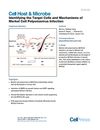
May 2016 in “Cell Host & Microbe” In this study, human dermal fibroblasts were identified as natural host cells that support productive Merkel cell polyomavirus infection, and the MEK antagonist trametinib was introduced as an effective inhibitor to control the virus.
 50 citations
,
September 2016 in “The Journal of Clinical Endocrinology and Metabolism”
50 citations
,
September 2016 in “The Journal of Clinical Endocrinology and Metabolism” This study found no evidence of androgen deficiency or decreased peripheral androgen action in men with persistent sexual symptoms after finasteride use, but identified links to depressed mood and abnormal brain function.
 32 citations
,
April 2014 in “The journal of investigative dermatology/Journal of investigative dermatology”
32 citations
,
April 2014 in “The journal of investigative dermatology/Journal of investigative dermatology” This study demonstrates that keratin K2 is crucial for proper keratinocyte structure and function in specific mouse skin areas, and its deficiency leads to cellular aggregates and skin abnormalities.
 24 citations
,
June 2012 in “BMC Research Notes”
24 citations
,
June 2012 in “BMC Research Notes” This study outlines the Human Gene Correlation Analysis tool, which classifies human genes by coexpression levels and identifies overrepresented annotation terms in correlated gene groups, with no new clinical results reported.
 23 citations
,
May 2019 in “Expert Opinion on Therapeutic Patents”
23 citations
,
May 2019 in “Expert Opinion on Therapeutic Patents” This review discusses AR-modulating agents developed between 2012 and 2018, highlighting challenges with ligand-binding domain antagonists and proposing nonconventional approaches targeting other domains as promising strategies.
 20 citations
,
August 2017 in “PLoS ONE”
20 citations
,
August 2017 in “PLoS ONE” This study identified and updated the annotation of 61 keratin genes in dogs and horses, improving the genome annotation in these species through RNA-seq data comparison.
 14 citations
,
April 2019 in “Genes”
14 citations
,
April 2019 in “Genes” This study identified a genetic locus associated with coat type in domestic dogs, showing certain variants linked to single-coated breeds and suggesting potential regulatory roles.
 13 citations
,
December 2017 in “CNS Neuroscience & Therapeutics”
13 citations
,
December 2017 in “CNS Neuroscience & Therapeutics” In this study, finasteride was found to inhibit the dopaminergic system and reduce open-field behaviors in adolescent male rats by decreasing dopamine levels and related proteins.
 9 citations
,
November 2019 in “Cell calcium”
9 citations
,
November 2019 in “Cell calcium” This study found that a mutation causing Stormorken syndrome in mice led to skeletal abnormalities and unusual hair growth, showcasing the STIM1 R304W protein’s role in bone development and cell fate.
 5 citations
,
January 2024 in “Journal of Cancer”
5 citations
,
January 2024 in “Journal of Cancer” In this phase II clinical study, combining anlotinib with standard platinum-based chemotherapy showed promising outcomes and prognosis in treating extensive small-cell lung cancer, with high disease control and response rates.
 1 citations
,
June 2017 in “The Journal of Clinical Endocrinology and Metabolism”
1 citations
,
June 2017 in “The Journal of Clinical Endocrinology and Metabolism” Finasteride use may cause sexual dysfunction; more research needed.
 September 2025 in “Cureus”
 This review suggests that GLP-1 receptor agonists may improve various dermatologic conditions, but larger studies are needed to confirm these findings.

This study reported a significant association between the SNP rs2479106 in the DENND1A gene and PCOS in Saudi Arabian females, while no association was found for SNPs rs10818854 and rs10986105.
 June 2017 in “The Journal of Clinical Endocrinology and Metabolism”
 Finasteride's sexual side effects not caused by androgen deficiency or SRD5A inhibition.
1 citations
,
July 2025 in “Chemosensors” This study developed a closed-loop system for emergency wound care that monitors infection in real-time using biomarkers and delivers amikacin-loaded liposomes for treatment, integrating a conductive hydrogel for environmental protection and antibacterial benefits.
July 2024 in “Journal of Investigative Dermatology” PH-762 shows promise in treating skin cancer by effectively targeting and silencing PD-1 in tumors with minimal side effects.
143 citations
,
May 2017 in “Nature cell biology” This study found that the transcription factor Gata6 regulates the sebaceous duct lineage identity and plays a crucial role in epidermal wound healing by enabling dedifferentiation and broader lineage capabilities in post-mitotic cells.
 March 2025 in “Nature Communications”
 This study used human stem cell-derived skin organoids to model EV-A71 infection, revealing that various skin cell types are susceptible to the virus and identifying a potential drug target and replication inhibitor, suggesting its utility for studying skin infectious diseases and drug screening.
November 2025 in “Journal of Investigative Dermatology” KLHL24-mutant stem cells help understand skin and heart disease.
 3 citations
,
April 2016 in “Journal of The American Academy of Dermatology”
3 citations
,
April 2016 in “Journal of The American Academy of Dermatology” A woman had a severe skin reaction from the drug imiquimod, used for skin cancer, highlighting the need for awareness of rare but serious side effects.
July 2022 in “Journal of Investigative Dermatology” February 2026 in “ACS Omega” This study developed a multifunctional hydrogel, QTMP-Gel, which significantly accelerated wound healing in an oral mucositis hamster model by providing antioxidant and antibacterial effects, reducing inflammation, and controlling infection.
1 citations
,
November 2022 in “Journal of Investigative Dermatology” This study found that ALRN-6924, a clinical-stage dual inhibitor, can selectively protect human scalp hair follicles from paclitaxel-induced toxicity and damage by inducing transient cell cycle arrest in healthy cells without affecting cancer cells, potentially reducing chemotherapy-induced alopecia.
 April 2017 in “Journal of Investigative Dermatology”
 In laboratory tests and mouse models, this study found that the novel IPC analog SIG-1451 may offer potent anti-inflammatory effects for treating allergic skin inflammation, potentially outperforming some current therapies in specific inflammatory phases.
114 citations
,
September 1985 in “Journal of Investigative Dermatology”  1 citations
,
March 2004 in “Journal of the American Academy of Dermatology”
1 citations
,
March 2004 in “Journal of the American Academy of Dermatology” This study discusses two cases of acneiform skin eruptions associated with the use of the EGFR inhibitor ZD1839 in prostate cancer treatment, emphasizing the need for dermatologists to be aware of potential skin reactions.
8 citations
,
March 2022 in “Cancers” This study found that proton minibeam radiotherapy demonstrated a potential tissue-sparing effect in epidermis models by spatially confining DNA damage, suggesting reduced side effects in radiotherapy.
3 citations
,
July 2023 in “Cells” This study found that topical application of recombinant human MG53 protein mitigated nitrogen mustard-induced skin injuries in mice by preserving epidermal integrity and hair follicle structure.