3 citations
,
March 1998 in “PubMed” This case report describes a 70-year-old woman whose acquired ichthyosis resolved and darker hair regrew after removing a leiomyosarcoma, highlighting a possible association between the two conditions.
 June 2022 in “Indian journal of clinical and experimental opthalmology”
 This case report details the ocular complications of Hutchinson-Gilford Progeria syndrome in a 20-year-old Bangladeshi patient, highlighting symptoms like dry eyes, Meibomian gland dysfunction, and cataracts.
 11 citations
,
November 1990 in “Archives of Dermatology”
11 citations
,
November 1990 in “Archives of Dermatology” This case report describes a patient with eosinophilia-myalgia syndrome, likely linked to L-tryptophan use, who developed a skin rash characterized by cutaneous mucinosis.
July 1979 in “Archives of Dermatology” This case report describes a 68-year-old woman with benign mucous membrane pemphigoid and unusual keratotic plaques on her extremities, associated with longstanding mouth and eye symptoms and phalangeal swelling.
 December 2025 in “Portuguese Journal of Dermatology and Venereology”
 In this study, researchers conducted a retrospective analysis of 16 cases of erosive palmoplantar lichen planus in North East India, finding a higher prevalence in pediatric and male patients, with common clinical features including plantar involvement and histopathological indicators such as basal cell degeneration.
 6 citations
,
May 2015 in “Veterinary Clinics of North America: Equine Practice”
6 citations
,
May 2015 in “Veterinary Clinics of North America: Equine Practice” This article reviews common skin diseases in horses, organized by clinical feature, and highlights the need for more comprehensive comparative research; no new clinical results are presented.
December 2024 in “Veterinary Dermatology” This case report identified cutaneous epitheliotropic T-cell lymphoma in a 3-year-old male sugar glider after skin biopsies, highlighting the need for thorough diagnostic evaluations in exotic pets.
 4 citations
,
January 2015 in “Türk Patoloji Dergisi”
4 citations
,
January 2015 in “Türk Patoloji Dergisi” This review discusses the skin manifestations of endocrine diseases and reports no new clinical findings, emphasizing the importance of recognizing these signs for early diagnosis.
1 citations
,
January 2023 in “Annals of Indian Academy of Neurology” This case report describes a middle-aged woman whose scalp condition, cutis verticis gyrata, was an early sign of systemic amyloidosis that went undiagnosed until after she experienced a stroke.
34 citations
,
February 2012 in “International Journal of Dermatology” This study found that exogenous ochronosis from hydroquinone use in melasma treatment has distinctive dermatoscopic features that may aid in diagnosis without needing a biopsy.
June 2018 in “Journal of the American Veterinary Medical Association” Three related Persian cats have a rare, likely hereditary skin condition causing hair loss and poor coat quality, with limited treatment options.
22 citations
,
December 2016 in “Journal of Pakistan Association of Dermatologists” This review discusses dermatologic changes in chronic renal failure patients undergoing hemodialysis and reports no new clinical results.
June 2023 in “International Journal of Dermatology” This study reviewed 41 cases of lichen planus pigmentosus in patients from southeastern Tunisia, highlighting its prevalence among older individuals and notable differences compared to patterns observed in an Indian cohort.
 December 2023 in “Asian journal of medical sciences”
 This study from S.C.B. Medical College explored the clinico-etiological and histopathological patterns of erythroderma, observing psoriasis as the most common cause, followed by idiopathic cases and atopic or drug-induced dermatitis, highlighting the need for careful management and awareness of alternative medicine use.
November 2021 in “European Heart Journal Supplements” This case report describes a woman with systemic lupus erythematosus who developed chronic thromboembolic pulmonary hypertension, leading to improved right heart function after treatment with diuretics, anticoagulants, corticosteroids, and immunosuppressants.
1 citations
,
October 2023 in “European Journal of Dermatology” In this study, combining hair transplantation with platelet-rich plasma was found to be more effective than hair transplantation alone in reducing hair loss, improving hair regeneration, and decreasing skin lesions in patients with androgenic alopecia.
 April 2024 in “Indian dermatology online journal”
 This case report describes a 53-year-old woman with a rare presentation of trichostasis spinulosa on her breast and abdomen, featuring itchy, comedo-like lesions. Dermoscopy revealed diagnostic features that may eliminate the need for a biopsy, highlighting the potential for non-invasive diagnosis in such cases.
 April 2026 in “The National Medical Journal of India”
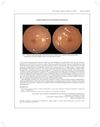
 This case report highlights a 42-year-old woman with systemic lupus erythematosus who exhibited fundus changes indicating retinal vasculitis, underlining the importance of regular ocular fundus examinations for early detection of severe disease complications.
 2 citations
,
March 2020 in “Skin”
2 citations
,
March 2020 in “Skin” This report highlights hyperpigmentation as an underreported side effect of topical cidofovir treatment for trichodysplasia spinulosa.
 April 2023 in “Journal of Investigative Dermatology”
 This study found that alopecia areata patients have higher odds of certain comorbidities like ulcerative colitis and vitiligo, while showing lower odds for conditions like hypertension and type 2 diabetes compared to healthy controls.
33 citations
,
October 2014 in “Veterinary Dermatology” This review discusses the molecular biology, diagnosis, and pathology of epidermolysis bullosa in animals and reports no new clinical findings.
 July 2022 in “The journal of investigative dermatology/Journal of investigative dermatology”
 This case study reports that a 26-year-old woman with epidermolysis bullosa prurogompsa also presented with unique findings of co-existing muscular dystrophy and immune-based myasthenia gravis, with significant improvement following steroid treatment.
7 citations
,
January 2013 in “Indian dermatology online journal” This report describes a rare case of a three-day-old male with ichthyosis hystrix type of epidermal nevus, featuring specific skin and hair symptoms but no nail or skeletal abnormalities.
 1 citations
,
April 2025 in “Clinical Cosmetic and Investigational Dermatology”
1 citations
,
April 2025 in “Clinical Cosmetic and Investigational Dermatology” This study reports two cases of erlotinib-induced erosive pustular dermatosis of the scalp in patients with non-small cell lung cancer, emphasizing the need for dermatological monitoring during EGFR inhibitor therapy.
August 2004 in “Veterinary Dermatology” This case report describes a 9‐year‐old red panda with progressive hair loss linked to bilateral granulosa cell tumors, suggesting an underlying endocrine abnormality.
 23 citations
,
April 2004 in “American Journal of Ophthalmology”
23 citations
,
April 2004 in “American Journal of Ophthalmology” This case report found that topical bimatoprost usage in a female Hispanic patient with open-angle glaucoma was associated with hypertrichosis and increased pigmentation of vellus hairs on the malar region.
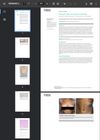
This case report describes a pediatric instance of follicular atopic dermatitis in a dark-skinned patient, highlighting its unique clinical and dermoscopic features, such as purplish to brownish scaly papules and specific dermoscopic patterns, which are crucial for enhancing diagnostic accuracy in similar cases.
13 citations
,
January 2021 in “The American journal of gastroenterology” In this study, sirolimus treatment reduced the size of venous malformations and improved anemia, transfusion dependence, and quality of life in patients with blue rubber bleb nevus syndrome, though mild adverse effects were reported.
2 citations
,
January 2012 in “ACTA SCIENTIAE VETERINARIAE” This case report describes the successful topical treatment of a horse with a Pythium insidiosum infection using amphotericin B and DMSO, leading to significant wound healing and hair regrowth.
1 citations
,
April 2021 in “Annals of Otology Rhinology & Laryngology” This report highlights the diagnosis of a giant congenital blue nevus with secondary cutis verticis gyrata in a 20-year-old Asian male, underscoring the need for clinicopathologic correlation due to overlapping features with cerebriform intradermal nevi.