 82 citations
,
May 2009 in “Development”
82 citations
,
May 2009 in “Development” This study found that downregulation of EGF and KGF signaling is necessary for hair follicle initiation in placodes, revealing a new role for KGF in hair follicle formation in mice.
2 citations
,
December 2015 in “DOAJ (DOAJ: Directory of Open Access Journals)” This study reports that targeted anticancer therapies frequently cause skin-related side effects, which may impact patient adherence and quality of life, but these effects are positively correlated with treatment response.
EGF affects hair and skin development.
1 citations
,
January 2022 in “bioRxiv (Cold Spring Harbor Laboratory)” This study found that injury-induced proliferation of wild-type cells can suppress oncogenic growth in Ras-mosaic skin.
 November 2025 in “Cancer Management and Research”
 This study highlighted Keratin 17's critical role in cancer therapy resistance across several malignancies, involving various signaling pathways, and identified it as a significant biomarker and potential therapeutic target, particularly in reversing resistance.
 32 citations
,
June 2012 in “PLoS ONE”
32 citations
,
June 2012 in “PLoS ONE” This study found that locally injected zalutumumab in healthy volunteers induced a papulopustular rash similar to systemic EGFR inhibitors, and that IL-8 inhibition reduced this dermatological side effect.
14 citations
,
March 2015 in “Stem Cell Research & Therapy” This study indicates that ABCG2 expression identifies interfollicular keratinocyte progenitor cells in human epidermis and suggests it could help enrich these stem cells for research and treatment.
2 citations
,
January 2004 in “Linchuang pifuke zazhi” In a reported case, the use of ZD1839 (Iressa), an EGFR tyrosine kinase inhibitor, resulted in hair changes and acneiform eruptions as cutaneous side effects.
 July 2024 in “Journal of Investigative Dermatology”
 In this animal study, researchers found that the simultaneous deletion of ERBB2 and ERBB3 in mice results in impaired skin differentiation, inflammation, and sebaceous gland alteration, leading to skin lesions, while highlighting potential side effects in cancer therapies targeting these receptors.
September 2016 in “Journal of dermatological science” This study suggests that FGF18 may enhance radioresistance in telogen hair follicles by inducing cell cycle arrest, potentially serving as a radioprotector against radiation-induced hair follicle damage.
323 citations
,
November 1984 in “Journal of Investigative Dermatology”  6 citations
,
January 2010 in “Neoplasma”
6 citations
,
January 2010 in “Neoplasma” In this study, researchers found that shorter CA repeats in the ERbeta gene are correlated with PSA expression, and PSA immunoexpression is associated with increased disease-free survival in breast cancer.
41 citations
,
February 2005 in “Experimental Cell Research” This study suggests that the MAEG protein may facilitate epithelial–mesenchymal interactions during hair follicle development by binding to RGD-binding integrins like α8β1.
 17 citations
,
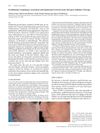
January 2010 in “Acta Dermato Venereologica”
17 citations
,
January 2010 in “Acta Dermato Venereologica” This report details a case of a 43-year-old woman developing yellowish papular eruptions alongside typical acneiform skin reactions on her cheeks and chest following a switch from cetuximab to panitumumab treatment.
 February 2013 in “Journal of the American Academy of Dermatology”
 In this study, the HairCheck device was reported to accurately assess changes in hair density and diameter, suggesting its usefulness in monitoring alopecia progression and treatment response.
4 citations
,
October 2019 in “Skin Appendage Disorders” This case report describes the first known instance of hair and eyebrow hyperpigmentation in a patient after seven months of gefitinib treatment for non-small cell lung cancer.
 November 2005 in “Reactions Weekly”
 A man treated with gefitinib for lung cancer grew new hair on his bald scalp.
December 2023 in “Journal of Thoracic Disease” Increased EGFR gene variations may predict chemotherapy outcomes in small cell lung cancer patients.
 4 citations
,
June 1998 in “The Journal of Clinical Endocrinology & Metabolism”
4 citations
,
June 1998 in “The Journal of Clinical Endocrinology & Metabolism” This study found that keratinocyte growth factor is a potent mitogen in human hyperplastic prostate cells, suggesting it plays an important role in prostate growth by acting in a paracrine manner.
April 2019 in “Journal of Investigative Dermatology” This study developed an Asian human sebocyte cell line from breast skin tissue that can be used for sebaceous gland biology investigations, showing that Y27632 may promote cell growth through EGFR-CRAF-MEK-ERK and AKT pathways.
August 2024 in “Postgraduate Medical Journal” A rare skin reaction from cancer treatment was successfully managed with topical treatments and antihistamines.
10 citations
,
January 2020 in “Biomedicine & Pharmacotherapy” This study found that XiaoZhenFang (XZF) reduced skin toxicities caused by Erlotinib in a mouse model, likely through mechanisms involving inflammation and EGFR-related pathways.
This study observed that mesenchymal stem cell-conditioned medium accelerated burn wound healing in rats by enhancing epidermal growth factor presence, improving wound closure, collagen density, and re-epithelialization compared to the control.
March 2022 in “International Journal of Trichology” This case study reported that prolonged use of the cancer drug Erlotinib in a postmenopausal woman was associated with trichomegaly and hypertrichosis, highlighting the importance of considering medication history in such cases.
 1 citations
,
April 2023 in “Science Advances”
1 citations
,
April 2023 in “Science Advances” This study found that sustained ERK activity during tissue regeneration in spiny mice is linked to fibroblast growth factor and ErbB signaling, while inhibiting ERK shifted regeneration toward scarring.
10 citations
,
December 1990 in “Archives of Dermatological Research” 28 citations
,
July 1993 in “The journal of investigative dermatology/Journal of investigative dermatology”  2 citations
,
June 2005 in “Clinical Oncology”
2 citations
,
June 2005 in “Clinical Oncology” This case report documents new hair growth in a 57-year-old man with androgenic alopecia after receiving gefitinib treatment for non-small-cell lung cancer.
January 2014 in “China Animal Husbandry & Veterinary Medicine” This study found that EGF, IGF-Ⅰ, and IGF-Ⅰ R are extensively expressed in mink skin and hair follicles, suggesting these genes play crucial roles in their development.
29 citations
,
June 2014 in “Experimental Cell Research” This study found that treating mouse epidermal neural crest stem cells with EGF and FGF2 increased their proliferation and enhanced their neuronal differentiation potential.