 10 citations
,
November 2015 in “Experimental Dermatology”
10 citations
,
November 2015 in “Experimental Dermatology” The study observed that mRAGE expression is prevalent in keratinocytes of the healthy human epidermis and may regulate inflammation and apoptosis to maintain skin homeostasis rather than responding to aging processes.
1 citations
,
May 2017 in “Journal of cosmetic and laser therapy” This study found that lasers and light devices may alleviate recalcitrant skin side effects in cancer patients treated with EGFR inhibitors, offering an alternative for those who do not respond to traditional therapies.
48 citations
,
March 1993 in “The Laryngoscope” This study found that EGF receptors are aberrantly regulated and persist in cholesteatoma epithelium, suggesting a hyperproliferative character compared to normal human skin.
112 citations
,
August 1984 in “Journal of Investigative Dermatology” 120 citations
,
May 2012 in “Experimental Cell Research” This study found that VEGF stimulates the proliferation of human hair follicle dermal papilla cells via the VEGFR-2/ERK pathway, without involving p38, JNK, or AKT signaling.
193 citations
,
June 1990 in “Journal of Investigative Dermatology”  3 citations
,
August 2021 in “Research Square (Research Square)”
3 citations
,
August 2021 in “Research Square (Research Square)” This study found that increased mRNA expression of the Ectodysplasin-A2-Receptor, observed across multiple species and tissues, may exacerbate inflammation during aging, suggesting potential benefits of blocking EDA2R/EDA-A2 signaling.
136 citations
,
March 1998 in “Oncogene” This study found that transgenic mice overexpressing E2F1 in their epidermis developed skin tumors, confirming in vivo that deregulated E2F1 activity can contribute to tumor development.
2 citations
,
January 2001 in “Medical Journal of National Defending Forces in Northwest China” This study found that endogenous EGF may facilitate the healing of second-degree scald wounds in mice through autocrine, paracrine, and endocrine mechanisms.
169 citations
,
September 2002 in “British journal of dermatology/British journal of dermatology, Supplement” This study reports that ZD1839 (Iressa), an anticancer drug, was associated with acneiform eruptions and hair growth abnormalities due to its inhibition of epidermal growth factor receptor signaling in the skin.
May 2025 in “Dermatology Online Journal” This report describes a rare case of eyelash overgrowth and eyelid irritation in a woman treated with erlotinib for lung adenocarcinoma, highlighting a potential side effect of the drug.
In this study, researchers observed that oncogenic HrasG12V in single murine epidermal cells leads to an initial increase in progenitor cell renewal, but ultimately results in balanced cell fate choices that limit clone growth.
November 2024 in “NeoReviews” This case report details an extremely low-birth-weight preterm neonate presenting with unique dermatologic symptoms, leading to a diagnosis of neonatal inflammatory skin and bowel disease due to a novel homozygous EGFR gene mutation, highlighting the importance of genetic testing in ambiguous cases.
65 citations
,
September 2023 in “Cell Reports Medicine” This review examined the common side effects of FGFR inhibitors like erdafitinib, pemigatinib, and futibatinib, and detailed strategies for managing them, highlighting that proactive monitoring and appropriate interventions can effectively mitigate these toxicities.
 February 2026 in “MedBA Medicine”
 This study identified potential new adverse drug reaction signals for erlotinib, used in lung and pancreatic cancer treatment, by analyzing a large dataset of case reports, indicating further clinical studies are necessary to confirm these findings.
 January 2023 in “European journal of gynaecological oncology”
 This study found that depletion of KRT17 in endometrial cancer reduced cell growth, motility, and angiogenesis, suggesting KRT17 as a potential therapeutic target.
November 2023 in “Journal of Skin and Sexually Transmitted Diseases” In this case report, a 65-year-old woman with non-small cell lung cancer experienced scarring alopecia with papulo-pustular lesions on the scalp due to gefitinib treatment, marking it as a rare instance of gefitinib-induced erosive pustular dermatosis of the scalp.
August 2016 in “Journal of Investigative Dermatology” Activating Nrf2 can improve wound healing by increasing hair follicle stem cells.
 59 citations
,
April 2016 in “Cell Reports”
59 citations
,
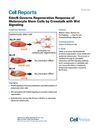
April 2016 in “Cell Reports” This study demonstrated that EdnrB signaling promotes melanocyte stem cell proliferation and differentiation, enhancing hair and epidermal melanocyte regeneration, especially under conditions of active Wnt signaling.
 January 2023 in “Open Life Sciences”
 This study found that VEGFR-2 activation may play a role in hair follicle differentiation, proliferation, and apoptosis by co-expressing with several key proteins in normal human scalp skin.
January 2001 in “Chinese Journal of Reparative and Reconstructive Surgery” This study found that endogenous EGF may play a role in epidermal development and wound healing, while the absence of bFGF in embryonic rats' skin could contribute to non-scar healing.
116 citations
,
December 2003 in “Acta Dermato Venereologica” This study reports that Iressa, an anti-cancer agent, commonly causes acneiform eruptions and xerosis as cutaneous side effects, similar to other agents targeting epidermal growth factor receptors.
128 citations
,
March 1996 in “Journal of Investigative Dermatology” Increased IGF-1R expression is linked to thicker skin growth.
8 citations
,
December 2007 in “Journal of Thoracic Oncology” Erlotinib can cause significant but temporary hair loss in lung cancer patients.
6 citations
,
July 2015 in “JAAD Case Reports” This study describes a case of erlotinib-induced alopecia, unresponsive to traditional corticosteroid treatments, that was successfully managed with doxycycline, suggesting a novel approach for EGFR inhibitor-associated alopecia.
September 2002 in “Oncology Times” This study presented at the ASCO Annual Meeting reported that the epidermal growth factor receptor antibody ABX-EGF showed preliminary efficacy in renal cell cancer patients, with tolerable side effects, while bortezomib demonstrated clinical benefit in a significant proportion of multiple myeloma patients.
21 citations
,
April 2008 in “Toxicologic Pathology” This study found that CI-1033 caused skin lesions in rats that resemble effects seen in humans receiving EGF receptor inhibitors, suggesting this animal model can help explore the mechanisms behind this cutaneous toxicity.
5 citations
,
July 2022 in “Genes” This study found that EGR1 promotes the proliferation of dermal papilla cells, suggesting its close association with hair follicle growth and development.
22 citations
,
March 2017 in “Journal of the Formosan Medical Association” This report presents the Taiwanese Dermatological Association's 2016 consensus on defining and managing skin toxicities from EGFR-TKI treatments, providing comprehensive guidelines for clinicians in Taiwan.
 August 2013 in “Nature Reviews Drug Discovery”
 New treatments for cancer and skin disorders show promise in disrupting harmful cell interactions and promoting hair growth.