 18 citations
,
February 2022 in “Cell Death Discovery”
18 citations
,
February 2022 in “Cell Death Discovery” In this study, researchers found that hair follicle-derived mesenchymal stem cells, modified to overexpress extracellular matrix protein 1, significantly improved liver function and reduced liver damage in cirrhotic mice by inhibiting hepatic stellate cell activation and TGF-β/Smad signaling.
 31 citations
,
August 2005 in “The American Journal of Dermatopathology”
31 citations
,
August 2005 in “The American Journal of Dermatopathology” This study investigated the histopathology of ectodermal dysplasia/skin fragility syndrome, identifying specific skin and hair abnormalities associated with PKP1 gene mutations in two young female patients.
August 2016 in “The journal of investigative dermatology/Journal of investigative dermatology” This study observed that ECMs produced by papillary fibroblasts showed the largest fibers and supported keratinocyte differentiation better than reticular fibroblast matrices, informing biomimetic material design for skin tissue engineering.
 2 citations
,
June 2017 in “Pediatric Dermatology”
2 citations
,
June 2017 in “Pediatric Dermatology” This case report describes a 2-year-old boy in critical condition who developed anagen effluvium, possibly due to hypotension and hypoxia triggering hair follicle apoptosis.
 21 citations
,
January 2015 in “Dermatologic Therapy”
21 citations
,
January 2015 in “Dermatologic Therapy” This letter discusses a case of erosive pustular dermatosis of the scalp linked to topical latanoprost use for androgenetic alopecia, but reports no clinical results.
January 2023 in “Psychology” This study reported that seed germination and root hair growth were significantly enhanced after exposure to an individual whose depression was treated with Emotional Freedom Techniques, suggesting that human mood may influence seed viability.
3 citations
,
August 2024 in “Frontiers in Immunology” This source reports that understanding how skin cells and immune cells interact may lead to better treatment options for inflammatory skin diseases like psoriasis and atopic dermatitis, emphasizing the role of epithelial-immune microenvironments in disease pathogenesis.
 April 2019 in “Journal of The American Academy of Dermatology”
  April 2023 in “Journal of Investigative Dermatology”
 In this study, researchers found that the protein eIF4E is crucial for keratinocyte proliferation in psoriasis, suggesting it as a potential treatment target for the condition.
December 2025 in “Journal of Surgery” This systematic review and meta-analysis explored the use of dermoelectroporation to enhance the delivery of exosomes derived from human placental mesenchymal stem cells, suggesting potential applications in regenerative medicine.
 13 citations
,
January 2012 in “Case reports in dermatological medicine”
13 citations
,
January 2012 in “Case reports in dermatological medicine” An 84-year-old man got a rare scalp condition from using imiquimod cream, which was cured with systemic steroids.
 November 2023 in “Journal of cosmetic dermatology”
 This report describes three cases of erythromelanosis follicularis faciei et colli showing significant improvement in facial telangiectasia following treatment with a 595-nm pulsed dye laser, with minimal recurrence observed during follow-up.
 December 2017 in “Journal of The American Academy of Dermatology”
 The document explains how to claim CME credit by diagnosing and treating hair loss conditions in two patient cases.
 91 citations
,
July 2010 in “Tissue Engineering Part A”
91 citations
,
July 2010 in “Tissue Engineering Part A” This study found that low oxygen conditions and ECM degradation products increased the proliferation and migration of perivascular stem cells without altering their phenotype, suggesting potential roles in tissue repair.
4 citations
,
August 2024 in “International Journal of Molecular Sciences” This study found that a combination of natural compounds (escin, bromelain, ginkgo biloba, and sage miltiorrhiza) reduced platelet adhesion to activated endothelium in laboratory settings by inhibiting adhesion molecule transcription and reducing pro-inflammatory cytokines, potentially preventing initial steps of the coagulation cascade.
 14 citations
,
July 2012 in “Journal of the American Academy of Dermatology”
14 citations
,
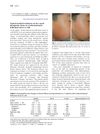
July 2012 in “Journal of the American Academy of Dermatology” This study found that topical tacalcitol improved roughness and scaling in erythromelanosis follicularis faciei et colli, although it was less effective for facial erythema.
 August 2009 in “Australian Prescriber”
 This article discusses dutasteride, a new drug for managing benign prostatic hyperplasia, and highlights the need for further experience to confirm its safety and efficacy.
44 citations
,
September 2016 in “American Journal Of Pathology” This study identified a subpopulation of neural crest-derived progenitor cells in human corneal endothelial tissue from normal and Fuchs endothelial corneal dystrophy donors, which may have potential for future cell therapy development.
 March 2022 in “Hair transplant forum international”
 This commentary discusses the ongoing challenges of practicing medicine, particularly in hair restoration, during the COVID era, and emphasizes a physician's duty without presenting new research findings.
2 citations
,
October 2021 in “Clinical and experimental dermatology” In this study, Cyperus rotundus essential oil was found to have significantly better depigmenting effects than hydroquinone for treating axillary hyperpigmentation, with additional benefits in reducing inflammation and hair growth, making it a cost-effective and safe treatment option.
 December 2025 in “Clinical Cosmetic and Investigational Dermatology”
 This case study describes a rare instance of subacute cutaneous lupus erythematosus on the chin, highlighting the effectiveness of using dermoscopy and reflectance confocal microscopy for accurate diagnosis and monitoring, which led to significant lesion improvement with corticosteroid and immunomodulatory treatment over 19 weeks.
26 citations
,
June 2020 in “The Journal of Allergy and Clinical Immunology In Practice” This case study highlights that even short-term use of hydroxychloroquine for COVID-19 can potentially lead to acute generalized exanthematous pustulosis as an adverse effect.
 February 2025 in “Cureus”
 In this case report, a 31-year-old man developed erosive pustular dermatosis of the scalp after hair transplant surgery, highlighting potential surgical trauma as a trigger for this condition in younger patients.
December 2022 in “Indian Journal of Endocrinology and Metabolism” This study found that six months of combined estrogen-progestin pill therapy led to a significant reduction in serum AMH levels and improvement in hyperandrogenic symptoms among women with PCOS.
 May 2024 in “Animal genetics”
 The researchers investigated a Maine Coon cat with suspected classical Ehlers-Danlos Syndrome and discovered a heterozygous deletion in the COL5A1 gene, underscoring the value of whole-genome sequencing for precise veterinary diagnostics.
 25 citations
,
November 2018 in “Cell reports”
25 citations
,
November 2018 in “Cell reports” This study found that the ablation of Esrp1 and Esrp2 disrupts epithelial tight junctions by affecting Arhgef11 isoform expressions, highlighting a potential mechanistic link between splicing alterations and epithelial barrier defects.
21 citations
,
September 2019 in “Journal of the American Academy of Dermatology” Ixekizumab effectively treats generalized pustular psoriasis.
 7 citations
,
August 2005 in “British Journal of Dermatology”
7 citations
,
August 2005 in “British Journal of Dermatology” This study reported improvement of psoriatic onychopachydermoperiostitis symptoms with the use of etanercept.
 9 citations
,
February 2019 in “Journal of Clinical Research in Pediatric Endocrinology”
9 citations
,
February 2019 in “Journal of Clinical Research in Pediatric Endocrinology” In this study, children with classical congenital adrenal hyperplasia were found to have increased epicardial fat thickness, which was associated with subclinical atherosclerosis markers and left ventricular dysfunction, especially in poorly controlled cases.
 3 citations
,
June 2023 in “Journal of cosmetic dermatology”
3 citations
,
June 2023 in “Journal of cosmetic dermatology” This study found that a topical cream containing CBD and EPA reduced signs of extrinsic skin aging, including wrinkle volume and skin elasticity, in clinical and laboratory settings.