18 citations
,
October 2024 in “Medical Science Monitor” This review discusses the mechanisms of skin barrier impairment in acne vulgaris and suggests strategies for its repair but reports no new clinical results.
6 citations
,
February 2010 in “Biotechnology and bioprocess engineering” This study investigated optimizing the differentiation process of UC-MSCs into dermal papilla-like tissues for potential hair follicle therapy and highlighted the potential to reduce associated costs by evaluating cell density and growth factors.
1 citations
,
May 2024 in “PubMed” This study highlights the insufficient research on how dermal adipose tissue regulates the hair cycle through signaling molecules, noting that further investigation is necessary to understand its specific mechanisms.
 6 citations
,
June 2021 in “Developmental biology”
6 citations
,
June 2021 in “Developmental biology” This study found that dermal EZH2 plays a crucial role in controlling fibroblast differentiation by regulating Wnt/β-catenin and retinoic acid signaling during skin development.

This study developed a topical dutasteride-loaded Insitu-emulgel for treating androgenetic alopecia, finding it effectively controls drug release, enhances skin penetration, and may improve patient compliance compared to traditional topical treatments, though further clinical research is underway.
 August 2025 in “Zanco Journal of Medical Sciences”
 In this interventional therapeutic study, both intralesional triamcinolone acetonide and vitamin D3 showed significant improvement in alopecia areata, with terminal regrowth more frequently observed in the steroid group, although differences were not statistically significant.
36 citations
,
May 2005 in “BMC dermatology” This study found that topical diphenylcyclopropenone was effective in treating severe alopecia areata but had a high relapse rate and was often accompanied by side effects like eczema and lymphadenopathy.
 21 citations
,
January 2005 in “Pediatric Dermatology”
21 citations
,
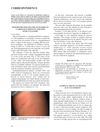
January 2005 in “Pediatric Dermatology” An 8-year-old girl with vitiligo developed extra hair growth on her knee after using tacrolimus ointment.
 March 2026 in “Mendeley Data”
 This study found that human dermal papilla cells are embedded in a basement membrane-like extracellular matrix, which is essential for their aggregation and function, as supported by evidence that Matrigel enhances dermal papilla cohesion and gene expression compared to collagen I, which promotes cell dispersion.
 August 2024 in “Indian Journal of Skin Allergy”
 This review outlines the current state of stem cell therapy in dermatology, highlighting its potential for treating a variety of skin disorders and conditions, while emphasizing the need for further controlled studies to standardize treatment and fully understand its efficacy and limitations.
5 citations
,
February 2023 in “Frontiers in Veterinary Science” This study found that ovine dermal papilla cells exhibit robust aggregation and alkaline phosphatase activity, regulated by Wnt/β-catenin signaling, providing insights for improving wool performance and hair regeneration therapies.
 September 2017 in “Journal of Investigative Dermatology”
 Certain products and treatments can improve hair health and growth.
7 citations
,
August 2008 in “Immunogenetics” A gene mutation in mice causes increased mast cells and disorganized hair follicles in their skin.
 19 citations
,
December 2016 in “PLOS ONE”
19 citations
,
December 2016 in “PLOS ONE” This study found that proteins secreted by early-passage dermal papilla cells, including SDF1, MMP3, biglycan, and LTBP1, may play significant roles in hair follicle regeneration.
 October 2023 in “RECIMA21 - Revista Científica Multidisciplinar - ISSN 2675-6218”
 This article discusses how vitamin D supplementation impacts human aesthetics and health, with effects varying positively or negatively based on different dermatological conditions.
2 citations
,
January 2019 in “Dermatologic Surgery” This overview describes the Dermatologic Surgery journal's extensive focus on peer-reviewed dermatologic surgery content, but it reports no new research findings.
September 2025 in “OPAL (Open@LaTrobe) (La Trobe University)” This study found that topical treatment with 7DHC and BM15766 reduced hair growth in mice compared to those treated with Ethanol/DMSO, and hair did not recover after treatment ceased, alongside increased apoptotic cells and decreased expression of specific genes.

This study used an ex vivo human skin model to show that tropical conditions disrupt skin homeostasis, resulting in epidermal thickening and junctional flattening, and found that Kombucha tea extract may help preserve skin structure under such stress.
September 2016 in “European Journal of Pediatric Dermatology/PD. European journal of pediatric dermatology” This article discusses the characteristics and challenges of treating ulerythema ophryogenes, noting the limited effectiveness of emollients, vitamin A, retinoids, and transient response to corticosteroids, with some success using dye laser therapy.
January 2026 in “Dermatologic Therapy” In this retrospective study, dupilumab treatment in young children with alopecia areata and atopic features was linked to full hair regrowth without serious adverse events, though findings from this small cohort should be interpreted cautiously.
 19 citations
,
May 1992 in “International Journal of Dermatology”
19 citations
,
May 1992 in “International Journal of Dermatology” This article discusses less commonly used and experimental treatments for vitiligo, focusing on therapies other than psoralen, but does not report new clinical results.
87 citations
,
August 1974 in “Journal of Investigative Dermatology” This study developed a three-dimensional model for studying hair follicle development, showing that immortalized dermal papilla cells retain certain differentiation activities and can induce tubule formation in vitro.
November 2024 in “Dermatology Online Journal” Dupilumab may help treat alopecia areata, but more research is needed.
14 citations
,
January 2014 in “Tropical Journal of Pharmaceutical Research” In this study, a hydroalcoholic extract of Urtica dioica L. showed potential for use as an adjunct topical treatment for tinea corporis in guinea pigs infected with Microsporum canis.
 128 citations
,
October 2011 in “Development”
128 citations
,
October 2011 in “Development” This study found that adult mouse dermis can be reprogrammed by epidermal cues to resemble neonatal dermis, with changes in fibroblast proliferation and extracellular matrix composition.
May 2022 in “Journal of the Egyptian Society of Parasitology” This study found that Demodex folliculorum mites were detected in 1.6% of acne patients, with a higher prevalence in adolescents and those with severe acne.
2 citations
,
September 2024 in “Journal of the American Academy of Dermatology” Deuruxolitinib is generally safe for treating alopecia areata.
January 2006 in “Chinese Journal of Medical Aesthetics and Cosmetology” This study found that microencapsulated human hair dermal papilla cells successfully induced hair follicle regeneration on the dorsal skin of nude mice, unlike control groups with free cells or empty microcapsules.
 22 citations
,
January 2009 in “Medical mycology”
22 citations
,
January 2009 in “Medical mycology” In this case report, researchers identified Arthroderma vanbreuseghemii as the cause of a familial fungal infection, which was successfully treated with itraconazole and topical terbinafine cream.